Home

November 14, 2011

The summer after I graduated high school, I left home. I worked on the boardwalk in Wildwood, NJ with Israelis, Moroccans, Canadians, French and Russians. Those people did crazy things to me. They introduced me to the world. They pulled at my insides, sparks flew, something felt very right, like a calling to turn my life over to God. I was eighteen and still remember sitting in Frieda’s tiny, one-room apartment on Young Avenue. She was a woman with whom I sold t-shirts. A ton of Israelis, after their stint in the army, would live in a kibbutz and would have connections to others who were making tons of money ironing decals on t-shirts at the Jersey shore. Word of mouth sent her here. She knew she could make money under the table for the summer while getting to know America.  In the winter, she, along with everyone else, migrated to Fort Lauderdale, and then back again, year after year, never entirely settling down. There was something familiar in the ebb and flow of the way she lived her life. But I could never put my finger on it.

On a hotplate plugged into the wall she made me “Israeli coffee” and poured it in a tea glass, with sugar. We talked about life on the kibbutz, Shimon Peres and the Palestinians. “We are all human,” she said. She taught me how to say I love you, in Hebrew, which incited me to go around to all my other friends and ask them how to say I love you in their language. By the end of the summer, I could say I love you in English, Hebrew, Arabic, French, Russian and Hungarian.

It may have begun then.

When I turned 20, I moved to Paris and lived in a one-room chambre de bonne on rue Rimbuteau. I read a lot of Henry Miller, got laid, dropped out of my French classes at the Alliance Francaise and existed in such a state of poverty that my friend Karen and I would steal food from her stepdad’s house during the day, and then at night, we’d flirt with rich exchange students at the Violon Dingue trying to get them to buy us free drinks. I was even homeless for a few days and spent a good 24-hours with a transient, tattooed, pierced, skinhead named Will West who kept me laughing through my vagrancy. We would stay at free night clubs all around Les Halles and dance like zombies until seven in the morning, until the cafes opened and then, we could sit for hours with the alcoholics and street people, drinking cheap coffee and toasted baguette for ten francs. Je ne regrette rein.
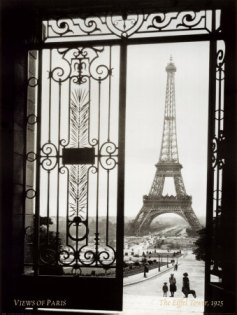
When my mother dragged me home in the fall of ’89, I applied for a job as a cashier at John Wanamaker’s. The woman who interviewed me read my application and saw that I had just come back from France. She smiled and said, “Coming back to reality, eh?” It wasn’t long after that that I repacked my bags and took a bartending gig in Greenland. I’ll show you reality, bitch.

Sondrestromford, was a US and Danish military base right below the arctic circle. It was cold as hell. Thirty degrees below zero could turn a flower to shattered glass. There were no trees. Just gray, monochrome hills with dark skies and the occasional aurora borealis. A fjord the color of wet cement cut along the base.  I served drunks at the Officer’s Club and dated an American bodybuilder who taught me how to lift weights–there was nothing else to do up there but use the indoor gym, hunt musk ox and make money. I did that for a good five months before realizing that some realities are rather dim. So, I came back home.

Part of the experience of being away from home, was longing for home. There was a weird dichotomy there. It was like what someone said to me about living in Paris. The only way to continue to love Paris, is to leave. So, for many years, I lived at home to the point of wanting to vomit, I hated it so much, only to pack my bags, and live somewhere else for a time, until I missed home again. Back home, back out again. Back home, back out again. Just like that.

The older I got, though, the length of time it took to get to the point of missing home shortened. Until eventually, I did the unthinkable. I married and settled down. Granted, I married a Spaniard, which afforded me several costly trips back and forth to Madrid. Kids have to visit their Abuelos, you know. But the truth is, for the first time in my life, I actually liked home. I no longer wanted to run away. Making peace with the idea of stability, continuity, and permanence was a trip in itself. Something I had never known. The drawback is that kids force you into such a state of routine that you end up feeling trapped. At least I did. Drop off, pick up, drop off, pick up, breakfast, lunch, dinner, bed-time at exactly eight. Repeat, repeat, repeat, repeat, repeat, repeat, repeat.  Nothing to jostle the monotony. So, you join the Junior Women’s Club. You go to Longaberger basket parties. You volunteer at school to serve lunches. You ask your mother to babysit so you and your husband can actually be alone and scream during sex. When that only happens once every six months, you go back to school and get a degree and have an affair. Well, you don’t have an affair. He does. And well, then you get to a point where you kinda fondly remember the monotony. But, that’s another story.

Permanence wasn’t my thing anyway. And so, in 2004, three events occurred which, even in their bad sad miserable way, allowed me to reclaim my inherent nature: my father died, I divorced and I finally got my college degree (the last was a direct consequence of my years as a stable New Jerseyan, and while this in itself, was not a bad event, there is something paradoxically safe and pleasing about having a dream that never comes true). When these three things happened, my tether broke. And when a tether on a hot air balloon breaks, there’s no telling which way the wind will blow it.

Do I even bother to mention all the road trips I ultimately took across America in those post-divorce years? Twenty eight days on the road? Long stays with my kids in the Utah desert? Twelve hour car rides that had me fantasizing about the practicality of wearing a Depends undergarment so as not to make so many damn pee stops?

Travel is in my blood. Which gets me thinking. It probably didn’t begin with Wildwood. It didn’t begin with Paris or Greenland or week-long trips to Long Beach Island, or summers in Philly, or any of the trips I actually took to simply get away from home, get away from me. It began much further back than that.

In ’67, my mother and father eloped. They packed up my mother’s 1963 Chevy Nova and headed to Vegas. A year later, they made their way back to the West Coast, to Anaheim, where my father wanted to write jingles for TV commercials and become a famous singer in a band. Hollywood, Los Angeles, the West Coast–they never amounted to much, save one thing–  I was born there in May of ’68. In November, we came home to Jersey–to whose home I do not know. I’m guessing we stayed in a spare bedroom at my grandparents’ house until my father found a job and made his first down payment on a place in Cherry Hill on Browning Road.   We never took trips after that. Heck, we never took them to begin with. By the time my brothers were born, we never hopped on a plane as a family and went to Disney World or the Grand Canyon, let alone two states over to visit the local attractions. Day trips we took. I think we made one jaunt out to Chicago to visit relatives. And there was a week or two on LBI almost every summer. But, we were broke. And when my father did have money, he spent it paying off bad debt, instead of “wasting it” on vacations.

And who needed a vacation anyway when life itself was a vacation?

Which brings me to this: we moved every year, for fourteen years. A new house every year, sometimes less than a year if my father couldn’t pay the bills. Adapting, readapting, not adapting so well. Moving in anger; moving in fear. Moving with our tail between our legs. Moving out of shame and necessity because we had burned our bridge. We had failed. We weren’t moving to anything, now that I think of it. We were running away. Well, I wasn’t running away. It wasn’t me who couldn’t pay the bills. I was just along for the ride.

But a funny thing happens to a child whether she likes it or not. She inherits her parents’ hopes and fears and everything in between.  The circular reasoning that makes up 90 percent of the gray matter in her head. There was, in fact, a box of dolls I no longer played with that remained packed for many years because my mother was sick and tired of unpacking them. This frustrated me for a time because, of the few friends I was able to make, most had a wall of pretty little knick knacks, dolls, and porcelain (or plastic) horses on display with which they no longer played. I did not. My walls were bare. And so, when I was finally old enough to take these dolls out of the box, to pull them from their captive bundle of newsprint and bubble wrap, I didn’t even like them anymore. And so, I ended up throwing them away or maybe giving them away to another little girl who might have appreciated them more than I. Their traditional spot on a dusty, permanent shelf, where they could have sat throughout my entire childhood, held no meaning for me. And yet, I was embarrassed for so long at the transience of my life. Even now, when I explain my past to people (because traveling 14 times in 15 years is a bit much for a kid, don’t you think), they ask, “Was your father in the military?” I can’t say that I’m not slightly ashamed to have to say, “No, he was not.”

And I won’t get into why we did move all those years. My childhood was a rich fabric of insanity, joy and adventure. I’ll leave it at that.

But here’s the thing. Every house was a home, a world unto itself –like a country, with a different language spoken within its borders. Each closet, to my child’s eye, was a landmark, a monument; each new kitchen, served a new regional cuisine. Every backyard was a continent, a varied landscape with fields that stretched to the horizon, or snowcapped mountains, or dark forests; seascapes, city lines, quiet, fenced-in corners pulsing with tiger lilies and skies broken to pieces with big white clouds. We traversed New Jersey, then up to New Hampshire, then back again. We lived in farmhouses, big houses, small houses, ranchers and even, what my mother not-so-fondly called, a cardboard box. My life is thusly divided into fourteen different worlds, with a myriad of experiences.  The cliché “home is where the heart is,” aptly applies.

In less than a week I’ll be in Holland. A month ago it was Bear Creek for work. Then Sedona.  Followed by Baltimore and now NYC. The instability of all this travel wears me out. Some days, I’d simply rather stay home. And yet, there is the eternal, inborn wax and wane, the coming and going, the internal rotating door that can’t be tuned out. An opportunity to adapt, readapt, not adapt so well. At the heart of it, I suppose, I’m used to the discomfort, the inconvenience. It has meaning. It’s who I am. The doll on the shelf can’t shake a stick at the story I will tell and retell. And to me, the significance of that is far greater than any gift I may bring back home to decorate my walls.  More importantly, the child in me is finally OK with the idea that there’s no need to unpack.


Raising the dead

November 11, 2011

I cried this morning. No. I sobbed.

Pernille sent me an email regarding D and I being picked up at the airport upon our arrival in Amsterdam. We’ve known for quite some time we’d be going; we already have our tickets. So Pernille’s email was simply relating a few particulars on how we’d get from the airport to the hotel. Amsterdam is still very much happening! Within the email, however,  it listed the ways in which the others in our group would be coming into the city on or around the 21st. We would be coming in from Philadelphia. C would be flying in from London. And E would be taking the train in from Germany, I believe, and didn’t need any help getting to the hotel. It was this last bit that reminded me of trains. And this last bit that reminded me I needed to look at a map of Europe before heading to The Netherlands. It’s been a while since I’ve needed to know where anything was in Europe except Spain. Ergo, I’ve forgotten much of my geography. And if there’s one thing I can’t stand it’s the isolationist mentality of the American who knows very little of the world save how to get to Disneyland.

Google maps. Zoom in: Amsterdam on the Markermeer sea, across the North Sea from Great Britain. To the east of Germany. To the north of Denmark, Norway, Sweden. To the south of Brussels.

To the south of Brussels. Zoom out. Draw an imaginary line with finger below Brussels. Bingo.

There it was. Staring me in the face. The proximity of Amsterdam to France, and more importantly, Paris. I sobbed with happiness and release. Twenty-two years of trying to get back to a place I could never emotionally give up. Like a torchbearer for a lost love. Four and half hours by car; three hours and nineteen minutes by high-speed train. A six a.m. ride from Station Amsterdam Centraal will get us to Paris-Nord by 9:35. Petit dejeuner at Les Deux Magots. A stroll through Les Halles.  Notre Dame.  Saint Michel. Jardin du Luxembourg. My old flat on rue Rimbuteau. Le Violon Dingue. Lunch at La Closerie des Lilas. Hemingway. Fitzgerald. Henry Miller. Ezra Pound. James Joyce. Dorothy Parker. Camille Claudel. Kiki. Picasso. Ford Madox Ford. DH Lawrence. Rodin. Anais Nin. Gertrude Stein. John Dos Passos. The Louvre. Sacre Coeurs. Dinner in Montparnasse.

The Eiffel Tower.

In the years that followed my father’s death I kept having dreams that he would come back to life. I would know he was dead in the dream and then suddenly, I would walk into a secret room that I never knew existed in his house, and he’d be there in front of me, smoking a cigarette and saying something casually obvious like, “See! I’m not really dead. Just hiding out.” I would cry hysterically and hug him, and think, the nightmare is over; I have my father back. It’s that feeling of raising the dead, that it’s as simple as booking one simple train ride, on the right website, from the comfort of your home. You only have to know how to figure out the puzzle. Like Dorothy’s ruby slippers. I’ve always had the power to “go back.” And yet, if somebody told me it was that easy, I wouldn’t have believed it. I had to figure it out for myself.

But alas! Perhaps this is all too good to be true. I am waiting on Pernille to get back to me, regarding whether or not we are free to travel that day or have events that I might need to be present for. I am hoping for the former. I’ve come so far. I would hate to think I was given supernatural powers to resurrect the dead only to have them taken away and be turned back into a human. I may have to remind myself that the dead are long buried and there is no bringing them back. That Paris is still very muchly out of reach. At least in this lifetime. Quelle injustice!


A touchy subject, even for the world of film

November 11, 2011

In a few days, D and I are headed to Amsterdam for the International Documentary Film Festival of Amsterdam (IDFA) where a film I took part in, “Love Addict,” will debut. And while I’m thrilled to once again be part of the art world, schmoozing with a great clique of writers, directors, producers and photographers, in Europe no less, I am a little leery.

For starters, the documentary is a topic of interest that might not be, how shall I put this, all that well received. It’s about weakness and that’s something some people have a hard time witnessing. People might laugh. We will, after all, be in Europe. “Oh those Americans,” they’ll say, “Always angst ridden and falling apart over the most luxurious and invented of possible problems.” And it’s true. Love addiction isn’t really about love or anything lofty like that. It’s not even about something as ugly yet facinating as being addicted to sex, meth, hoarding or any of the more lowbrow dysfunctions. It’s about the psychology of personal defense mechanisms and how that plays out in a person’s life. It’s about whining over not being loved, but feeling stuck and doing nothing about it because you don’t believe in yourself. Superficial, self-centered stuff that probably should have been dealt with at age 13, not 43.

And let’s face it. The documentary is not based on “real” suffering, in the broader sense, the kind you find in places like war-ravaged Iraq or Sierra Leone. We didn’t film a heated polemic on climate change or the impending doom of global food shortages. This is self-imposed, I can’t control my behavior stuff that causes suffering. It’s akin to over-eating, over-spending, gambling, drinking. It’s the addiction argument. We participate in these behaviors of over-indulgence and over-consumption and suffer the consequences, then wonder what the hell happened when we fall flat on our faces. We wonder how it got this bad. And why it can’t be stopped. So we call it a “disease.” Really, it’s like cancer; it spreads. Obsessing over that which we cannot have and putting up with bad behavior from others becomes the dominant response. It gets to the point where good judgment is lost. It gets to the point where a husband smacks his wife across the face. It gets to the point where she stays because she “loves” him. She stays “for the kids.” Or she stays because she’s scared to death to be alone.

Sure, people might snicker over my American sensibility for personal growth. And they might even get that uncomfortable feeling in the pit of their stomachs when the director toys with the idea of a woman who resorts to stalking a la Fatal Attraction, or another who dates a kid fifteen years her junior with no job and no real ability to handle an adult relationship, let alone take care of himself. Through most of the documentary, in fact, you find yourself asking, is this a real problem or do these people simply suck at managing their lives. In the beginning you feel like, clearly, anyone labeled a love addict is sick in the head. In the end, you wonder, “Could this be me?”

And that’s a good question.

Maybe the cultural dilemma of how men and women treat each other within a relationship is not as black and white as the media would have you think. Maybe love addiction is a lot subtler than the Hollywood version, or the battered woman version. Maybe the term “love addiction” is a misnomer, and it’s even more prevalent than alcoholism. You remember those statistics from the 80’s? In every family there’s at least one drunk. Or was that “jerk”? I can’t remember now. But I can tell you this: there’s tons of unhappy women suffering through bad relationships right now or stuck in a one-sided flimsy representation of one. It’s plague-ish, if you ask me. Take a good look at all your girlfriends. How many have stayed in a bad relationship or a bad marriage long past the point of dignity? That’s love addiction. How many settle for a “friends with benefits” situation in the hopes it turns into something more? That’s love addiction. How many men or women do you know that have had affairs and destroyed their families on the fantasy-based whim that love with this perfect new stranger will save their soul? That’s love addiction. And how about the hard-working career woman who finds it safer to date a married man, or one about 3000 miles away rather than go out and actually find someone close and available? That too, is love addiction.

It was just this past weekend that my Aunt came to a family party with proof that dating a bad boy is an epidemic among twentysomethings. She showed me a photo of my cousin N, a beautiful Paris-Hiltonish statuesque blond. She was pictured with a cute, smiling Italian guy. The first words out of my Aunt’s mouth were, “This guy is actually [emphasis mine] nice.” I.e. he’s not a f’ up like the previous ones.

It reminded me of my youth. I dated one bad boy after another. Each one ever so slightly less bad than the last. You’d think I’d be trading in behavioral traits in the hundreds instead of making microscopic improvements in increments of one. But were my bad dating decisions so far from the realm of what’s normal? I don’t think so. Sure, some of my friends dated good, kind, loving men who treated them well. But most couples in my circle had problems. And marriage didn’t leave you exempt from mismanaging your life. Marriage and love addiction are not mutually exclusive. And while having problems within a relationship is normal and unavoidable and by no means signifies that you or your partner are addicted to love, the degree to which those problems do exist and the length of time they last are your best indication that you are in a healthy relationship or that serious soul searching is in order.

But getting people to accept that idea is almost impossible. We all have preconceived notions of who we are and Unflattering Labels don’t really fit into our personal worldview, I’ll give you that. Who wants to be labeled a junkie? But remove the label and what have you got? Romeo and Juliet, is what you’ve got. The glamorization of painful, unhealthy love. So, does it really matter what the disease is called? Does it really matter if it’s a disease at all? The lessons are what’s priceless: love thyself, your body is a temple, you are a miracle, you have value, you deserve better than scraps, you need to grow up and get over the fact that life ain’t a Shakespeare play…

This documentary doesn’t offer those lessons. It should, but it doesn’t (it will have resources for how to get help on its website and DVD). What it does offer is the problem. And a socially acceptable glimpse at love addiction. Unlike self-help books, which, let’s be honest, are a bit embarrassing (no one wants to be seen checking out a copy of “ Women Who Love Too Much”), documentaries don’t imply there’s anything wrong with you. You can go to the theater and be a voyeur into the lives of others and you can freely and secretly gauge if this is something you need to investigate further. A documentary is a film. It’s art. And while you can certainly judge the participants of the film—and even laugh at them if you want—you cannot avoid recognizing yourself in their stories, if but in the smallest of ways.

And I guess that’s all I can hope for. That art can still inspire individuals to sustain judgment and think deeply about what this film implies. Not the sloppy Jerry Springerish implication of classless people getting paid wads of cash to beat the crap out of each other for entertainment. But the deeper implications of the human heart, and its delicate  and often feeble inability to always be strong.


Kids raised in homes without TV, electronics, are burdening society, report suggests

October 21, 2011


Philadelphia- Parents of young children are now urged to allow unlimited TV time, a recent study suggests. Television, computers and other self-described zoning-out electronic devices, despite offering little to no educational value and leaving children and adults dull-minded and apathetic do have their benefits.

According to Rolfe Hamburger, PhD and member of the American Academy of Pediatrics,  most children are raised in front of the TV, which stunts their growth and leaves them virtually unable to interact socially with other children. “That’s OK,” Hamburger suggests, “because the bar for ‘normal childhood behavior’ has now been lowered dramatically.” What has become a concern, Hamburger and his team of constituents contend, is the relatively miniscule but growing number of children whose parents don’t allow their kids to watch anyTV.

“These new ‘superkids’,” Hamburger says, “have a strong ability to communicate, keen interpersonal skills and a capacity to remain focused on tasks for longer than a minute, most likely because they’ve never been propped in front of the TV for four hours straight while Mom takes a cigarette break and gabs on the phone.” But, he warns, “these kids are becoming a drain on society and all the other children who can’t seem to cope with them on the playground.”

According to the study, which was conducted among a group of 30,000 randomly selected seven-year-old boys and girls across America, and which rated their TV-watching habits, “one in seventeen American children is placing unreasonable and excessive demands on his classmates by expecting them to play, interact and engage in actual dialog.” The study determined that less than .00001% of the population of children in America are not watching TV or playing video games, but rather “playing outside,” “doing activities with their parents,” or “reading books.”

Hamburger and pediatricians like him are “disturbed” by the findings.

“This puts a growing rift in our society,” Philip Locklear, DO, a local pediatrician from Chestnut Hill says. “No adult wants to be confronted with his own self-deprecating sluggishness and ineptitude, let alone a child. And that’s what happens in the presence of these kids. They are a constant reminder of the shame we now endure as adults for spending so many hours watching The Dukes of Hazard when we were kids.”


Sexy Sedona

September 20, 2011

So, my lovely D is turning 40 (welcome to my world) and as a little gift, I’ve booked a long weekend in  Sedona at the Enchantment Resort and Mi Amo Spa. As with every trip we take, I try to make a spiritual connection to place. In Florida, for example, I had a past life regression at the timeless Biltmore. In Spain, it was the deserted beaches and coastline of  Zahora.  Sedona should be no different. This little town, nestled in the red rock canyons of Arizona is all about place and space, wide open star-gazing skies, and windy vortexes that transform and heal you with feminine and masculine energies. And even though  it might turn out  to be just a new age-y kitch kinda place, it’s still a sexy, stunning, amazing destination  to celebrate a birthday.

Here’s our itinerary…

Day One

Arrive in Phoenix, AZ early afternoon

Pick up rental car and drive two hours north to Sedona

Relax! Star gaze! Dinner and drinks at the casual Tii Gavo restaurant, or a trek downtown to Elote, a “made-from-scratch”  Mexican restaurant.

Sleep well!

Day two

Up early for a two-hour drive to the Grand Canyon

A possible day hike around the rim

Late lunch at the El Tovar

Back to hotel; light dinner

Day Three

Up early for a Yogalates class at the spa while D gets a hot stone massage.

Lunch at Ken’s Creek Side

Back to spa for me, for a  Sedona Clay Wrap: ”This unique high desert treatment begins with a light exfoliation and a generous application of our mineral-rich Sedona clay. We have enhanced the already powerful detoxifying, anti-inflammatory properties of the clay with the addition of cocoa powder. Cocoa is a softening, smoothing antioxidant agent that heals and protects while its delightful aroma brings a sense of simple pleasure. After you have showered off the clay, we apply a mineral-rich oil or lotion infused with native herbs to leave you glowing and feeling grounded.”

While I’m wrapped in mud, D will hit the fairway for the first nine at the “Imax of golf courses” Seven Canyons

Dinner at Yavapai Restaurant

Day four
Early breakfast at The Heartline Cafe
Two hour drive to Phoenix
Fly home

Disaster in the ‘burbs

August 27, 2011

Years ago, when I was living in New Hampshire, my father took me camping out in my backyard. I spent the night holed up in an old chicken coop, while my father heated up a pot of soup over an open fire. I remember feeling so free and pioneering, despite being yards away from my house. Just my dad and I,  surviving the elements, living like frontiersmen. Trying to make do on rations of soup, hotdogs and a loaf of Wonder bread. It was exhilarating. Until I realized that I was missing my nightly glass of warm milk before bed.  ”We’re surviving out here,” my dad told me. “There’s no glass of milk in the wilderness.”

I wasn’t much of a survivalist then and I’m still not. And in a deep-rooted, guilt-ridden sense, I am ashamed of myself and  people like me who, sadly, are creatures of comfort. Whose disaster mentality has translated not only into buying up a gazillion water bottles and stock piling food like it was the end of the world, but purchasing rain boots, generators and a month’s supply of romance novels. I am embarrassed that our survivalist instinct has turned into a consumerist instinct, and that we even have all this crap for purchase to begin with. And, I regret to admit that extreme conditions, cautioned about incessantly on every TV channel and every radio station and every online newswire, incite us to run out to Wal-Mart as if our life depended on it.

I’m kind of disappointed too that we desperately fear adversity. Oh sure, we love it in movies. But reality’s another story. What happened to our fore fathers’ pioneering spirit? Has our DNA transmuted so severely that no one wants to be that guy whose power goes out for a week; or whose house blows away; or whose stuff sinks into biblical flash floods and everything he owns is stripped from him in a matter of 24 hours?  The guy who didn’t heed the governor’s warning to “prepare” or “evacuate.” And even though, you know as well as I do, that the power will be back on within 24 hours, it’s a little disheartening  that we’re all purchasing with such fury and devotion.

I’m not saying that I don’t think the storm will do damage. Or even that lives or possessions are at risk. I’m not even upset that, after the 5.9 earthquake where the extent of destruction was an overturned plastic chair,  Wolf Blitzer finally has something to talk about.

What I am saying is that our survivalist instinct has morphed into some weird excuse to shop.

And while  The Dominican Republic, or some of the smaller islands of The Bahamas  watch their lives sink into oblivion, we on the East Coast are buying up two-hundred cans of Chicken Noodle soup for a ten-hour power outage.

Forget about the coastal towns, where homes are truly in the path of the eye of the storm. There are spots from South Carolina to Maine that need to take extreme caution. I’m not talking about those places. I’m talking about right here– 40 miles inland, where my local grocery store’s shelves are bare and where Target has sold out of not only batteries, but rain boots (Rain boots? Really?)

What bothers me is our desperate tenacity to avoid any kind of deprivation. We fear being without. Without electricity. Without power. Without water. Without food. Without peanut M&Ms, a pocket full of cash and about twenty DVDs for weekend movie watching. Being without has become unpatriotic. “Stuff” and the possessing of it is as American as apple pie. Sure, there are necessities that we should not go without during a hurricane. An emergency preparedness kit is a great idea. But hoarding and stockpiling massive quantities of food and useless commodities like rain boots is, quite frankly, insane. Especially when you consider that PSE&G will have “6000 employees supporting the restoration effort, including 840 linemen and 540 tree contractors available to respond to outages once the hurricane pulls away.”

You know as well as I do that the power will be back on–if your home is still standing– within 24 hours. And if your home isn’t still standing, then a can opener won’t do you much good, will it? Remarkably,  the diner down the road can take care of your needs.

Wawa will re-open. Shop Rite will be restocked. Roads will clear.

This is the suburbs. It’s not Nunivak Island off the Yukon River delta in Alaska. I’m not sure of any disaster scenario in Cherry Hill, NJ which might necessitate a three-day supply of non-perishables when Whole Foods is in walking distance and will reopen for business the day after the storm. No one will starve. No one will go hungry. And no one, technically, will go without.

The Wall Street Journal had an amazing article out a while ago, entitled, The Fantasy of Survivalism, which details our inherent need to experience real disaster. That need showcases itself every where–in apocalyptic movies like 2012, Armageddon and Doomsday; in our media outlets, news channels and social networking sites; and in our own “disaster mentality,” which compels us, as a society, to stockpile, hoard and accumulate goods when rationally, it doesn’t make sense to do so.

Virginia Postrel writes, “…the survivalist instinct mostly plays to a perverse fantasy. It’s both comforting and thrillingly seductive to imagine that you’re completely independent, that you don’t need anyone or anything beyond your home, that you can master any challenge. In the survivalist imagination, a future disaster becomes a high-stakes opportunity to demonstrate competence and superiority.”

But sadly, there’s a rather large disconnect between the fantasy of surviving and the reality of it. For one, we’re not really surviving. We’re weathering a storm. You survive the Isreali-Palestinian border. You survive trekking through Tibet. You do not survive affluent Haddonfield.  Second, we’re failing to make logical, rational judgements in the face of “What if…” The Weather Channel reported that “28 million are under threat of a hurricane watch.” It sounds devastating. It sounds catastrophic. And it sounds like I better get 100 bottles of water instead of ten. In other words, my perspective on where I am located, my socio-economic status, the strength of my home and the resources surrounding  me don’t play into my  judgement about what will probably happen, as opposed to what could happen (side note: at the height of this thing, they’re calling for 40 mph winds for Medford, NJ). Lastly, if you want to know the truth, most of us are ill-prepared for true survival anyway. “Our society is full of ignorant urbanites who don’t know how to make what they use,”  Postrel quotes, “That ignorance makes us vulnerable.” And that ignorance  leads us to believe that  consumption of goods is the next best thing. I, for one, couldn’t tell you how to find edible berries in the woods if my life depended on it.

Which leads me back to my argument about the suburbs. Do we really need to forage for food anyway? Do we really need to prepare for three days of isolation and internment when, within minutes after the storm,  Krispy Kreme will reopen and we can once again pig out on donuts? Has anyone ever eaten cold soup from a can anyway???

Sometimes we are so wrapped up in our  disaster mentality that we “play out the steps taken ‘before, during, and after a natural disaster’. These include ‘predictions of impending doom’, overreactions, the ‘institutionalization of threat’, rumour, false alarms and at times mass delusion” (Cohen 1972: 144-8 in Goode & Ben-Yehuda 1994: 29). And speaking of impending doom, I made sure to shave my legs this morning in the shower, lest I am cut off from a water supply for several days.

All this brings me  to Bangladesh. Every year in Bangladesh monsoons come and wipe out everything along the river. Every year people lose their homes, their possession; some lose their lives. But they’ve become so adapted to this way of life that they can collect all their belongings in one bag and stick it in a boat. They can float down river for days until the floods cease. And then, they rebuild–year after year after year.  Postrel quotes Victor Davis Hanson of the Hoover Institution as saying; ”Those who, in extremis, are able to produce their own food and shelter are far more autonomous, and far better able to react to adversity,”

And I agree. We give up something of ourselves and forego our deeper potential to “survive” when we turn our power over to credit cards and to nonsensical stockpiling of things as nutty as “freeze dried delights which can be easily stored for 7-25 years.”(Suburban Survivalists Begin Hoarding Food, Water and Weapons).

Look, who am I kidding. I went out and bought up water bottles and canned goods just like everyone else. I have my fancy little crank radio, candles and matches ready to go. And without anyone knowing, I secretly checked to make sure our sleeping bags were readily accessible. For what, I don’t know. And there is a part of me, deep down inside, that functions, like Postrel suggests, on a “survivalist imagination” and wishes to experience an epic event where I actually get to use all this stuff. But the reality is, I am well taken care of. Trees will blow down around me. Maybe even some power lines will fall. Maybe I’ll lose electricity. If I’m lucky, dinner will be a can of beans that I’ll open with my manual can opener.  I’ll feel like I’m a frontierswoman again. And in the morning, just like everyone else, when the storm’s over,  I’ll go back to the grocery store and restock– or I’ll eat my words. Let’s hope for the former.


The woman who attached herself to food with a string

August 10, 2011

Part I

It made no sense to spend the night driving from Ouarzazate to Agadir, considering that we would have to go through the Tichka pass with which neither of us were familiar. Besides, Paul wanted to take pictures and I wanted one last glimpse of the desert before reaching the coast. But another night at the Ksar Ighnda was not an option, and so we packed our bags and found an older room at a riad about two miles from the center of town.

We had no set schedule. We were itinerants addicted to the unfamiliar. And as such, we had to impose customs on ourselves within the confines of our peripatetic lifestyle. Where once our children and the daily grind of work and home dictated the entire structure of our New Jersey existence, now we were living gratis. We had returned to innocence, like free-floating kids without a lick of responsibility. On this particular night, like every other, Paul took his thé à la menthe at the café or lobby alone, while I stayed back in the room to read or nap or simply linger on my own mindlessly, doing nothing, save stare at the architecture and decor of the four walls surrounding me. At 10ish, I would join him for dinner at whatever restaurant the hotel offered. But the longer I lingered in our tiny room, the more apparent it became that the Hotel Nord offered little more than a bed, a broken air conditioner, and two open windows that looked out over the N-9 in Tabounte, a noisy suburb. I was restless. And so, despite needing the order of my alone time, I decided to join Paul early.

When I arrived, he was talking with an American, a man about our age, with grayish sandy hair and a peculiar, vapid smile–the kind you might see on a glassy-eyed, cultish Jim Jones, or Claude Vorilhon. He was dressed inappropriately for tea, and too wealthy looking for a budget hotel. He was in the midst of going on and on about the company he owned, Southern Bio Technologies, LLC., which improved bean and other crop production technologies in Central and Southern Africa. I didn’t have the patience to find out what he was doing in Morocco, let alone Tabounte, so I assumed he was here on business and like us, couldn’t find a better hotel on such short notice. I remained on the periphery of the conversation. Paul was such a good listener and so, it wasn’t uncharacteristic of him to get stuck chatting with someone he had literally nothing in common with. He was a small town, county attorney—think Atticus in To Kill A Mockingbird—kindhearted and fair like Atticus too, who despite making a good living for himself and his family, had never voiced an interest in bean farming, that I know of. And yet, to his credit, he genuinely found something interesting in everyone.

But, I was burnt out on listening, or for that matter, talking. It seemed to me that most tourists were not used to the isolation of travel and so when they’d meet up with someone who spoke their language, they would incessantly ramble on about nothing— superficial, braggy stuff—where they’d been, what they owned, how they managed, “knock on wood,” to stay afloat during the economic downturn, how many kids they had in what Universities, where they were going next. If we’d mention our trip to the south of Spain, they too had been there, plus the Canaries, plus Portugal. If we mentioned we had four kids between us, two of whom were at State Universities, they had five: two in Harvard, one in Princeton, another at MIT. It got to the point where I simply didn’t care to meet or talk to anyone anymore as a method of self-preserverance. Where once a stranger was a lifeline, now he was a source of encumbrance.

Instead of socializing, I kept my head buried in a book. While in Morocco I felt as though I had no choice but to read everything by Paul Bowles, and the Spanish author Juan Goytisolo. Presently I was reading Makbara, by the latter. A chapter entitled, The Cemetery—but still catching tidbits of the American’s pontifications.

“SBT disseminates technologies to and educates thousands of bean farmers all across Africa for the purpose of transforming their subsistence farms into local, national and potentially international-selling cash crops…”

I was bored with him, until, “One of my favorite charities that SBT is involved in at the moment is assisting the little guy in his endeavor to forge a relationship with the big guy.”

“For what purpose?” I asked, placing my book on the bar. “What would the little guy want or even need from the big guy?” I already didn’t like his arrogant tone.

“So that they can buy more seeds, more readily, so as to handle the increasing demands of their crop.” He smiled.

“So basically you help make it impossible for local farmers to feed their families because suddenly they can’t afford the cost of their own crop?”

“No, my dear,” his odd smile remaining, “We are improving lives.”

Paul interjected, “my wife loves a good conspiracy.” The American laughed and invited us to his place for drinks, just across the N-9,

“I’d like you to meet my wife,” he said, looking at me in particular. “I think you’d both get along quite well.”

I assumed he meant he had a house. It’d been a while since I’d been in one and so I looked at Paul, he looked at me, and we agreed. I grabbed my book and a sweater and the three of us  headed away from the safety of hotel life into the dark, unfamiliar street.


Life goes on…

July 23, 2011

It’s been a while since I’ve written, why with all the changes that have occurred recently and all, I simply haven’t had the time or the inclination to sit down and write. I have also been putting a lot more focus on my other blogs, and so this one has somewhat fallen by the wayside.

But aside from the big news in my life that D and I now live together, the bigger news is that the world didn’t end on May 21st and…better yet… we’re still not paying the price for our unraptured souls.

In fact, D and I have been  celebrating. Not the end of the world, but the beginning of ours. We finally went out last night (sans kids) into the city. We talked about sex and confessed our deepest darkest secrets. Mine, of course, always a little deeper and darker. We ate tuna tartar, halibut and octopus, margaritas and martinis. And stared up at the high domed ceiling of the Ritz Carlton which was glowing pink with lights from the bar. Nothing compares to a warm night in Philly, dinner and a pear martini  at 10Arts, and then hobbling along tipsily on heels across Broad, down Walnut, and zooming back over the bridge towards home with the top down…

On the way home we  talked about a trip to Sedona for his birthday. There’s a spa out there to die for called Enchantment Resort. It’s booked and we simply cannot wait. Oh the desert. It’s calling me. In fact, I hope our desert adventure reawakens my desire to write. I’ve been so lazy lately!

The day after we actually went back into the city to have lunch at Beau Monde for some stuffed crepes and champagne. Walked around. Got coffee at a little indie place off South Street and then headed home. End of fantasy; back to reality. And reality lately has been a little tough on me, why with all the newness of my new life. All the new dynamics in my household. I can only hope that I adapt to the change as easily as I used to. With weekends like this, all things are possible. I have hope. I am excited about the future.

This is the thing about the end of the world. Despite there being a future, we die every day. And every day  we are reborn. It’s a solo journey, despite having someone along for the ride.


The apple doesn’t fall far from the tree

March 13, 2011

I’m hiding out in my bedroom with the door locked, pretending I don’t know anyone’s home. I don’t want anyone to bother me or tell me what to do. I just want to play my records and write in my journal. More than anything, I don’t want anyone to make me study for that test on Friday. Oh, but wait. That’s not me. That’s my son. I’m not the one in 7th grade. I’m not the one getting D’s in Math and Science, or having grumpy teachers send notes home telling me I better get my act together. I’m a grown woman. I’m the mother of two. Or am I? I’m starting to have doubts.

I remember well. I graduated high school back in the 80′s and when I did, I threw off my cap and gown and said, screw this shit. Thank God I never have to go back. I went on to college, then grad school, met someone, got married and had kids. I struggled and I overcame adversity. And when I had my very first, tiny little bundle of joy, I promised that things would be different. That he would not have to suffer through what I did when I was a kid. That he would never know the horrors of looking down the gaping mouth of a screaming teacher, telling him to “wise up.”

But sadly, that was a crackpot notion. I was promising to stop a runaway train with my bare hands. A feat that simply cannot be done.  Kids have to go through their own personal struggles and no one can protect them after a certain age. Lesson learned.

Or not.

My sixth grader brought home a D. So, I sit with him night after night after night trying to get him to understand how to multiply and divide fractions. But I’ve forgotten myself. How do I multiply fractions? I haven’t done it in years. The frustration of not getting it returns.

  1. Simplify the fractions if not in lowest terms.
  2. Multiply the numerators of the fractions to get the new numerator.
  3. Multiply the denominators of the fractions to get the new denominator.

I send him back to school on test day, sure that he will get an A. I wait. I wonder. I pace the halls. I Freudian slip and say, “I wonder what I got?”  But he returns with another D, and I’m crushed. How was that possible? The both of us went over this a million times. So, I do what any desperate parent does who lives vicariously through her kids: I yell at him and take away his video games. Maybe, by accident, it just slips out, I even berate him for not being able to understand the material. The guilt-laden words, “C’mon, what were you thinking?” make their way from deep inside my stomach, up my throat and out my mouth.

To top it off, I get the dreaded letter sent home about his performance. He’s not paying attention in class; he’s fooling around with his friends; he needs to be more respectful to his teachers; he needs to stop drawing cartoons in his notebook; this is his third detention in six months; if his behavior and his grades don’t improve he will likely be kept back.

Sure, it’s his behavior under scrutiny and they’re his grades. But really, they’re mine. It’s me back in Middle school, floundering around, doggy-paddling to stay afloat. I was a rotten student. And every bad grade he comes home with is a blazing reminder of my own poor performance back in the day. Every detention he gets, it’s me who sits with the shame. And every parent-teacher conference or note sent home is not about his behavior, but mine. Of course, you could say this is egocentricity at its finest. Whatever happens to others becomes internalized and thus, happens to the ego, the self. It’s all about me, me, me. But my children are an extension of me. There’s an interconnectedness there that cannot easily be disconnected.  And so, I empathize with their plight, particularly when I too have lived through the same. It’s called compassion.

In fact, I sat through one of his conferences just recently and listened to all of teachers say the same thing. And I’m sure I heard it this way: you need to stop fooling around, Tracy. School is no joke. It’s time to get serious. And as I sat in my little 7th grade chair, so low to the ground, like a shrinking violet, with my knees knocking under the desk, I could feel my heart pound and my face get hot with humiliation for not being a better student.

It’s not just me. My sister-in-law is about to register her son for Kindergarten, but she’s in a panic. Once he gets on that bus, all by himself, she said, she can’t protect him. She was a shy kid too. She knows how rough it will be to take that twenty-minute ride to school, knowing no one, and having no one to hide behind or talk to.

Another friend of mine watches in horror as her teenage kids get into trouble, oftentimes with the law. “I was so bad when I was a kid,” she told me. “And now I’m watching my sons get into the same kind of mess.”

The wheel goes around for everyone. And yet, there’s a reason we as parents must shoulder our kids’ burdens. Isn’t it too much to ask a shy five-year-old to handle a bus ride by himself? Isn’t it too much to expect a seventh grader to perform flawlessly in every subject when, like his mother, he is a dreamer?

I believe it is.

I suppose the real lesson learned here is not one of letting go, and letting children handle it themselves. but rather, that you never really let go. You hold on for dear life. You live through things again and again when you have kids. It’s a mark of youthful thinking, a limited capacity to understand the cyclical nature of life, when you foolishly believe you’re done with something, that whatever you’ve lived through is in the past. It’s not. You carry it with you so that when your child experiences it, you can help take the edge off. You can say to that child: I am suffering along with you. You’re not alone. And then the two of you together can try to master it, because there’s strength in numbers. Because, the reality is,  you are both doomed to repeat it.


The language of flowers

February 5, 2011

I have always had a general reluctance towards flowers. Not so much an aversion as a mistrust. Very possibly it comes from the fact that they purport to send one message, but oftentimes end up sending another. I mean, there are books on flowers and their meanings. A black locust, for example, means platonic love. A buttercup; wealth, a daisy; innocence; a rose; love, desire, passion.   But do you think people are capable of sending the same message as the flowers they choose to send? Highly difficult task, if you ask me. In all likelihood it’s not so much that I dislike flowers as that I have always poorly  understood human nature to the point of knowing that someone may say one thing but mean another. Seriously. I’ve learned through the years that a flower isn’t just a flower, but rather, a symbol with some message attached. And that that message isn’t always the cute, flowery one that Hallmark and FTD would have you believe. Couple that with some pretty traumatizing associations to flowers and you have a recipe for doubt and dismay.

For starters, my grandmother died when I was 14. She was obsessed with flowers and so, prior to her death, she arranged to have a gazillion flowers at her funeral. There were daisies and tiger lilies and begonias and whatever else, and the whole funeral parlor was popping with yellow. I loved my grandmother dearly, but the smell of all those flowers paired with the smell of embalming fluid ruined it for me. For years every time I walked into a florist’s shop it reminded me of death.

Then there was high school. Every February there was a carnation sale. And depending on how much money your parents gave you, whom you were dating at the time and how many friends you had, you could buy carnations for your sweetheart or your friends till you were blue in the face. Then, on Valentine’s day, the teachers during homeroom would call out your name and you’d go up to the front desk, where everyone would see you, and you’d collect your carnation. Most of us received one, maybe two carnations with a little note attached that generally said something like “BFF,” and that would be the end of it. But then, there were the popular people. The cheerleaders. The football players. The jocks. The preps. They’d get some ridiculous amount of carnations, somewhere upward of twenty or so. And you’d have to watch them all day, carrying these carnations around, struggling down the hallway, fidgeting with them in class. Of course, they never put the damn things in their lockers. No. It wasn’t that easy. These people rubbed your nose in it. Literally. You didn’t just brush elbows with classmates in a crammed hallway on V-day. You had carnations smashed into your face. “Oops. Sorry my forty-seven carnations whacking you in the head. My bad.” All this, to the point where you found yourself sneaking around the gym locker room or looking in trashcans for discarded carnations to claim as your own. It was sickening to say the least. And I never quite got over it. To this day, any time I see someone giving out carnations, like Moonies or Christians on the side of the road or something, in the city, I want to ram my vehicle into that damn plastic bucket and be done with it.

Thankfully, I was able to recover from my botanical complex, if only for a short while. But, it was only a matter of time before I too, hater of anything with a stem or a bud, fell victim to that ancient and perennial commercialism of love, which states that if you do not receive a flower from a man, you have no worth.  My life changed at this point. I suddenly adored flowers. Not so much for their beauty as their ability to define me. And most likely because I’d never received any. And by the time I hit my twenties I felt I was something of a freak. If society validated a woman by the flowers she received, I must have been an alien.

Until S.

I was 22 and dating this Air Force police officer named S when I lived in Greenland. We had fallen in love, and despite my leaving to return home, we remained in touch. For my birthday he sent a dozen yellow roses. They were stunning. Everything I had imaged they’d be. It was the first time I’d ever received flowers. And I probably have every petal saved in a box somewhere up in my attic, that’s how amazed I was at the idea of flowers.

He drifted into the past, of course, but his flowers were possibly the last I’d ever really appreciate for a very long time. It was all downhill from there.

Throughout my marriage I only received one bouquet of roses from my ex-husband. He never bought me flowers for anything. Not Christmas. Not Mother’s day. Not any holiday whatsoever. Not even on the days I gave birth to either son, or the day I graduated with high honors from Rutgers University, after 16 years of trying. I don’t believe he even gave me flowers when my father died. Like I said, I only received one bouquet from him. Back in 1999, when I was about four months pregnant with my second child, I found out quite to my dismay, that he had sent some girl down in Georgia a dozen white roses. It would be the first of many more indiscretions on his part and the onset of the most miserable years of my life. Aside from frothing at the mouth with anger that he was cheating on me, I was possibly more incensed over the fact that he had sent some strange woman flowers (roses, no less) and had never given me so much as a dandelion. Anyway, shortly after this betrayal, I came home one day to my own bouquet. Out of guilt for what he had done, or possibly as a buffer for what he was about to do, he had sent me the clichéd dozen red roses that I still affectionately refer to as the “I just fucked around on you and sent my girlfriend flowers but now that you caught me, I’ll send you flowers too” bouquet. I can still remember throwing those things out long before they died on their own.

After the dissolution of my marriage, flowers sent to me never much improved. In fact, they became downright insulting. There were the occasional carnations wrapped in plastic from Wawa that my boyfriend G would pick up out of obligation on days like Valentine’s day. No card attached. There was the “I’ve been neglecting you to go party with friends” flower from S. It was a lily (isn’t that the flower of DEATH?). I planted it in my front yard and the squirrels ate it. And finally, there was the “we just started fucking and I want to move out of my parents house and in with you” roses from M, which, admittedly, were quite beautiful. Yet, they came with such onus that every time I looked at them I couldn’t help but wonder if I wasn’t being tricked.

The truth is, my history with flowers has been grim, at the very least. But, despite my seeming ingratitude and suspicion I do have hope.

Yesterday, in fact, was Valentine’s day, a holiday I typically downplay and try to ignore.   So, I went into the city by myself and walked and walked and walked down Pine and Spruce and then over to Walnut to revisit a few of my favorite antique shops. I bought a little vintage tin sign for the bathroom.  I had tabouli at Sarhara’s. And I strolled around looking at windows and doors, which I love to do. I thought of virtually nothing all day except maybe the temperature and how cold it got after a few days of unseasonably warm weather. When I got home though, sitting on my front porch step, there were flowers.

They were the prettiest flowers I’d ever received. There were twelve red roses, encircling a spray of extraordinarily green tiny buds, which rested upon the lip of a cylindrical glass vase with stones at the bottom.  I brought them inside and sat them on my countertop and I breathed them in.  I stared at them for what seemed a very long time. I made peace with them.

I actually found them to be quite beautiful.

I opened the notecard. They were from D. And he had scribbled—in his own handwriting—this little “xo” on the card. Just that. Nothing more. No “I’m sorry,” or “last night was great,” or “I’m giving these to you because if I don’t, you’ll think I’m lazy and cheap.”  Just “xo.” Possibly the purest, plainest, most direct language of affection I’ve ever received from a flower, in a very, very, very long time. A bouquet that actually came with the message it intended.

How rare.

I can’t say me and flowers will ever have the kind of relationship that say, Georgia O’Keeffe has with flowers, but I can say, I’m no longer opposed to them. They’re growing on me.  I don’t love them or hate them. I don’t see symbolism in them. But I am not averse to them. Umberto Eco once said that, “the rose is a symbolic figure so rich in meanings that by now it hardly has any meaning left.” And I suppose that’s true. But what’s more, is what’s behind the rose; what’s behind the flower; both in the giver and the receiver. It is this that speaks more loudly than anything. It is the underlying current of love, or lack thereof that can make or break a daisy, a lily, or even a rose.


On Meeting Pernille

November 7, 2008

So G and I went up to Princeton on Wednesday and met Pernille (see below for more information) and her lovely assistant Gina. My only regret was that I did not take pictures. I could shoot myself for that. But anyway…it was absolutely lovely.

We had lunch at the Alchemist & Barrister, a place G plays at every Wednesday night. The four of us talked and talked and talked and by one in the afternoon, we were sitting on the lawn of Princeton University, hooked up with mics, telling the camera of our old romance and what it has been like for me to be a love addict. Possibly the nicest thing that came out of it all (as there’s no guarantee that we will be chosen to continue in her project) was the tenderness that G exposed for me in front of strangers and the camera. At one point I began to cry and he hugged me, and said, it’s OK, T. There I was, vulnerable, revealing horribly embarrassing secrets about myself in front of him and he accepted it all. It has pretty much always been that way between us, and yet…we have never been able to overcome our difference. Those four pesky issues of his that I cannot seem to accept in my life. Nor probably ever will.

Anyway, I believe Pernille and Gina were pleased with what they caught on tape. At one point, tears filled Pernille’s eyes as I talked about what love addiction “feels like.” I likened it to that old video we all saw back in high school psychology class…the experiment with the three monkeys. One was raised by his mum, another by a surrogate clorox bottle covered in fur that rocked, and a third was raised his whole life with only a plastic clorox bottle, food and water. Isolated since birth, he did not even a blanket for warmth. The poor little thing sat in its cage and rocked back and forth, holding onto itself, whimpering and eventually died very early. I said, that’s what it feels like.

She asked us questions like “how did you two meet?” “why did you break up?” “why do you think you were addicted to each other?” and so on. They laughed at the way we still share food. The way we touch each other. How we smiled and laughed while we were together. They wanted to know the exact time-line of our affair.

Well, we dated three years. Sort of. There was MB in there for awhile and then, of course, S. Not to mention Carmela, the fifty-something-year-old, married waitress from the diner who’s madly in love with G. A lot of players circling around us. But most peculiar is that G and I are NOT dating, nor have we dated since January, 2007. So as far as time-lines go, it’s not a straight line like time to a Westerner. It’s more circular, like Dakota time or Cherokee time.

“We never fight,” G said. “We love each other but just cannot seem to get past certain things.” That’s easy for him to say.

He’s talking about vices. His vices, and how I can’t accept the lovely miss Mary Jane in my life. And there are other barriers as well. Things I won’t go into here. Things that I finally realized made for a bad partnership.

When you have things such as strong communication, healthy emotion, music, a shared love of many things, humor and mutual love and respect, it makes it really hard to walk away. But there’s a balancing act that “normal” people seem to do. They take all those good things and say, “that’s great, but I can’t put up with the bad stuff.” Normal people look at the whole picture. A love addict can’t do that. She sees only what she wants to see. She overlooks the bad and then regrets it and 2 years down the road she says, “what the hell am I doing? I’ve been starving myself and for what?”

A love addict takes that man and does not accept him as just a man. She turns him into Christ. God. Her Savior. And then when he abandons her, she repeats over and over, “my God, my God, why have you forsaken me?”

She takes on his identity and then wonders what to do when he is not in her presence, a la Scarlet O’Hara, “Oh Rhett! What’ll I do? Where’ll I go?”

Worst of all, she forgets who she is. Submersed in the very heart of that man, she loses her values, her opinions, her boundaries, her likes and dislikes. She loses her soul.

And then when she wakes up one day and says I gotta get the hell out of here, she realizes she’s got no where to go. So she stays.  The man is not a man anymore. The man is a “hit,” of her drug. He is her defense mechanism. Her way out of her ugly life. The man is not a man anymore. He is a tool used to suppress pain and to avoid reality at all cost. And thus, he begins to define her addiction.

The last question Pernille, or rather, Gina posed was, “how did you get over this addiction? What inside you changed to make you see the light, so to speak?”

Oh yes. Hallelujah. The light. The conclusion. Well, I am not addicted to G anymore. Nor anyone else for that matter. But God never came down and parted the seas and said to me, T, it’s time to change…and I never saw this bright shining light nor had my moment of spiritual surrender. My path was a little less dramatic than that, and a little more boring. It was a long road. G helped me get through a lot by remaining my friend. My ex S helped me get through a lot. But mostly, I came to terms with being alone, slowly. Day by day.

When S and i split, I literally locked myself in my room and cried for 5 days. I did not eat. I did not move. I did nothing. I raised the dead (in me, that is). I made peace with the emptiness. I said over and over again, it’s high time that this moment has come. It’s here now. You’ve been waiting for it. Seize it. And I did. I did so by doing nothing. And I got used to it. And though I entered into that state confused and scared and fearful of being alone, I came out the other end OK. And that was that. My moment. You see, that’s what it’s all about for a love addict or an alcoholic or drug addict or anyone else for that matter with serious defense mechanisms. We try to avoid the emptiness at all costs. We’ll do anything to avoid the pain of reality. And eventually, it catches up with you and says, “it’s time.”

But the hard work had begun years ago when I first met G, and it continues today. I came to terms with my own personal values and I began to find my own identity for the first time. I made boundaries and I upheld them. I demanded better things for myself. I sought out people who tended to share more of my values. Mostly, I realized my worth. Plain and simple. And the only way to do that was and still is in solitude. It is in the solitude that you have your own thoughts, uncluttered. You have no where to turn but inward. You can finally see your identity clearly.

Alice Walker in the The Color Purple has this great line: “you gotta git man off your eyeball before you can see anything at all.” And the only way to do that is find god. Find you. Make peace with the nothingness.

We left by 2:30 and hugged and they were off to NYC and then LA. Traveling across the country to meet possibly hundreds of others with similar issues as me. Their project is vast and I may never see or hear from them again, and yet…they truly touched my life. Pernille’s project is my project. My life. It represents the struggle I have undergone as an artist to accomplish something for myself. And seeing her joy and hard work, it has inspired me to continue with my own projects and my own writing.

I hope to keep posting on this topic. And to keep doors open…

About Pernille:

Acclaimed director Pernille Rose Grønkjær (born in 1973) has been working with documentary films for the past 10 years. Her latest feature documentary “The Monastery – Mr. Vig and the Nun” had its US premiere at the esteemed Sundance Film Festival 2007. Since then the film has travelled to about 60 festivals the world over. It has won 14 awards from Sydney to Moscow, including the prestigious Joris Ivens Award in Amsterdam, and recently The Cinema Eye Award in New York. The film was also nominated for best documentary at The Spirit Awards in Los Angeles, California 2008.
The Monastery, by  Pernille Rose Grønkjær


Vulgar Love

November 23, 2008

Taken from a larger body of work regarding S. 

Love


We do it lying on our backs, you and I, looking up at the ceiling.

Our parts connecting like a chain link. 

We do missionary. You above me, staring down.

Me, buried in the tattoos on your right arm. 

Buried between the pin-up and the devil with a cigarette.

The eight ball at my nose. The dice at my eyes. 

We talk dirty. The usual. “You’re a bad little party girl, huh?

Fucking all your friends behind my back…”

We pretend to be who we are not; imaginary and polyamorous.

Nurse. Submissive. Dominant. School girl. Secretary. Whore.

We use props. Blindfolds. Rope. Clipboard. Food. Hosiery.

Vibrator. Gloves. Clamps. Boots. Wig. 

You ask me to tuck away my need for something deep and save it for another time.

And quiet my regret that this is all we’ve got. 

Dirtying ourselves up with emptiness and release

In the garden of eden, sugar factory, swivel chair, bed, on the tube to Morden…

Yet, somewhere in between you always say, “I love you.” 

Kindly

As if you knew that seeing God were not enough.


Dust balls

August 25, 2009

So. I’m invited to this woman’s house over in one of those new, treeless McMansion developments. Her name is Gisa, and as she explains, it’s short for the Germanic Gisela meaning “to pledge” (why I even mention this will make sense later). The development, like all suburban upper-class new construction sprawl is a development I’ve passed many times before, but never felt privileged enough to enter—us middle class types know well enough to stay out of cul-de-sacs called things such as “The Sanctuary,” or “Le Grande,” figuring membership cards are required in order to lurk around. But, her son and my son go to preschool together and as she wanted her little Merlin to grow up with “the people, ” for whatever reason, she denied him a private education.  I’d be in the parking lot of the school waiting for the closing bell and Gisa would always pull up with minutes to spare in this hideously grotesque conversion van with like, 20 doors on it. She never wore makeup and just moved here from Germany. I thought, yes! My kind of friend. Surely we have lots in common. So, she invites me over one afternoon. And as a mother who is incessantly looking for ways to occupy her kid, let alone herself, I took her up on the offer. Besides, I thought, it might be nice to bring a pie or something. If that conversion van is any indication of her newly acquired “status,” in this country, a pie will certainly be appreciated.

So, we head out, one Tuesday afternoon, me and my son, in my 2003 mini-van, driving a bit farther than our town’s comfort zone. According to my printed-out Mapquest directions (I don’t have a GPS) it’s the next left. I pull onto her street and one by one the houses get bigger and bigger and as they do, me and my mini-van seem to get smaller and smaller. Huge houses, then mansions, then estates. Her house is, of course, one of the biggest. I’m intimidated by the size let alone the two front doors. I didn’t know houses had two front doors. After about ten strenuous minutes of hoping that some previously learned, front-door etiquette comes back to me I end up choosing the door on the right. This one leads to the mud room for people who might have dirt on their feet (that’s us). We say our hellos and I hand her the pie, which she casually places atop the laundry machine and quickly redirects our small talk back to the fact that we need to take off our shoes.

A few awkward moments later, we go in. And even though I’m catching site of a three-story high cathedral ceiling, a fireplace with Texas longhorns above the mantle and not one living room but four, all I keep thinking of is the atrocity that I’m wearing sweatpants. My favorite line from Seinfeld re-runs streams through my brain when Jerry tells George that “wearing sweatpants in public is like telling the world you’ve given up.”

Oh well, I think. At least they’re not gathered with elastic at the ankles.

So as Gisa leads me around, from room to room, I secretly feel like a third class citizen from coach peeking into first class. But suddenly, I notice what I’d like to believe is a personality tick—Gisa, as it turns out, is hyper-neurotic about dust. In instances like these, you can only hope for such an obvious shortcoming. “See? See? Do you see the dust?” she says to me in her thick German accent upon entering each expanse of a room. Her finger courses over blond wood table tops. But there’s no dust. Literally. It’s as if there’s a plastic bubble free of all pathogens encircling the house and all its immune deficient inhabitants. I’ve never seen a cleaner place.

I think of my home. My little rancher. I have dust balls bigger than Arizona tumbleweeds. They roll around my floor like city trash caught up in a wind pocket, attacking me and my socks and my kids. I have the massive lint ball that hovers between the laundry room and the kitchen. There’s the clump of my husband’s chest hair under the baseboard heater in the bathroom. And there’s the ever-present motionless entity of dust and Fruit Loops that, fortunately, live under the sofa in the living room and cannot be detected by the untrained eye.

No, I say. I don’t see the dust.

As we make our way back to the kitchen, hovering over her granite bar and cherry wood cabinetry, I come to the bitter conclusion that this woman and I have nothing in common except maybe the van. I think: this is how envy gets a hold of people. This is what the Christians warn about, coveting thy neighbor’s goods. This is not “keeping up with the Joneses” because you’re not even one of them. Maybe you clean for them. But you’re certainly not a Jones.

I think how it takes massive amounts of confidence to be content within your own life when you are confronted with so much luxury and wealth. And despite the fact that every appliance in her house was shipped over from Germany, all her furniture too, that she’s got a sunken tub in the master bedroom with Andalusian tile and a fireplace the size of my living room, four walk-in closets, and a bathroom in all five bedrooms…despite all that, I think of my little life and I wonder how I can still feel quite proud of what I’ve got.

Very possibly, I think, it’s because I’ve got nothing. As a child growing up, we had nothing. My family came from nothing. My grandparents before them came from nothing. For generations we affectionately and proudly described ourselves as “peasant stock,” vindicating the obvious deficiency of worldly goods. Instead, we assigned value to immaterial things– our voices, our musical talents, our minds, our creativity, our humor and our closeness as a family. Those were the things that really mattered. Not all the “stuff.” Even my unconventional religious upbringing– a combination of Buddhism, Christianity and Native American spirituality–taught me the importance of giving up all but a few necessities in order that we may not be deceived by unconsciously clinging to worldly possessions. So, it is at these moments, when I am faced with such abundance, that I recall the worth and value in that which cannot be seen, touched, shipped overseas or purchased with a Visa card.

Gisa and I notice how well the kids are getting along. And aside from the occasional assault upon the children she makes to not touch the white walls, she seems happy that Merlin has found a friend. I want to say that I imagine it’s quite lonely for the little guy being so far from him native country and family. I even want to tell her that her obsessive-compulsive fear of dust is merely a manifestation of Freudian guilt for having too much stuff. But I hold off. I don’t want to seem contemptuous.

“How about we come to your place later this afternoon? You can show me your house,” she says. And I choke on my Chai tea latte she just whipped up for me on her espresso maker from Norway.

I have a pizza box still sitting on the counter from the weekend, month-old oatmeal ground into the Berber, and the lingering smell of a diaper that was discarded three diapers ago is possibly still wafting out of the family room. I imagine little Merlin playing some middle-class version of blocks at my house, rolling around, as kids do, on the floor. It would take eons to pick the dustballs off his Karl Lagerfeld designer toddler wear.

“Well,” I manage to say, “I’ve been having problems with my Audi (I don’t have one). I simply must get it into the shop. And, to be quite honest,” I add, as I clear my throat, “my cleaning lady took the month off (don’t have one of those either). The place is a little messy.”

So much for pride in peasant stock.

She tries to be laid back about the fact that I might have a messy house. “You don’t have to clean on my account,” she says, but she flinches and quickly adds, “another time might be better.” Her name in German doesn’t so much mean “to” pledge, I think, as it means to keep a bottle of Pledge handy under any circumstance.

I coolly agree.

We head back into the mud room to put on our shoes and say our goodbyes. Tonight, she says, she and her husband will take a stroll through “their woods” (three acres worth). He’s a triathlon. An Ironman. A glass designer by day. Oh. I say. How nice. I’m headed over to Wal-Mart to buy a pizza cutter. Mine mysteriously disappeared (could have been the dust ball in the kitchen). We don’t have much more to say. Finally, she asks me, “you work out?” I know she’s referring to my sweatpants.


Broken

February 2, 2009


beauty

I’ve spent the day in untrammeled reverie, wondering who is inside this guilty body of mine and who, if anyone, decides the truth. More importantly, I’ve been listening to Edith Piaf’s “Non, Je Ne Regrette Rien”  for the past hour, talking to myself in a french accent and spinning around in a swivel chair. 

It is one of those nights. To be inside.   To feel the workings of the inner body and the outer as well…

I don’t regret anything at all

I’ve been thinking about beauty, and how I need to remain there, pure in thought, no matter what. And yet,  the gravity of being human is that it burdens the soul with shame. My body, tonight, is a witness. 

Not the good that was given me. Nor the bad. They’re all the same.

I remember how beautiful everything was with S. Everything was whole and pure. Even the dirtiest of thoughts we shared were guiltless and sacred and good. Love does that. It takes the ugly and makes it beautiful. It takes the profane and makes it sacred. It takes shame and transforms it into innocence. Or so you think.

It’s all paid for, wiped out, forgotten.

And as beautiful as it gets, it’s all so temporal and transient.  It’s taken away in a matter of minutes. How I remember those five little words, “I don’t love you anymore,” and how they broke me. How beautiful I was before those words were spoken. How cracked and dismantled I was after.

But then, you go back out there again, eventually,  and everything is vast and undetermined and strange. And you, inside, are amorphous, floating, untethered. Hoping to find validation in someone’s smile.

I talked to MH tonight, the friendly sinner. And he told me I was average. I was plain. There’s nothing special about me and that when a man begins to whisper things like, you are beautiful into my ear, “remember,” he said, “it’s a lie.”

And I don’t care for what’s gone by.

I don’t want to believe this. I never wanted to believe it. And yet, it’s true. Others do not make you beautiful, girl. Knowing this, is part of figuring it all out. Knowing this, makes you strong. 

With my memories, I’ve lit a fire…My pains and pleasures. I don’t need them anymore.

You go back and forth like this all your life. Searching for some sense of who you are in someone else’s world. You are loved and have value. You are left and worth nothing. Thinking outside yourself like a fool. Until, perhaps, you come to a point where you, yourself, assign something value based on nothing else but what’s inside you. You in your own little mind. And the value you assign things is yours, no matter what. And it doesn’t matter how others perceive you or how they themselves interpret things. Whether you are dealing with truth or lies. Something or nothing. What matters is what is inside the self. What matters is that you hold on to yourself, no matter what,  up against gently cresting waves or storms of transformative measure. 

My romances wiped out. With the tremblings they brought.

What matters is not to forget how love  is built. You forget sometimes when you’re  broken. You think it’s outside yourself. You cry at night and hold on to the past and try to bring back the familiar- even if it had its flaws. Because as ugly as it is,  it’s the only thing you know. It’s the only place where purity and innocence are to be found. Only there, you think. Because newness is the bearer of shame. And this scares you. There is no love to be found in the emptiness, you think.

Wiped out forever. I set out once more from zero.

But when you remember that love is not wrapped up in any of that, nor is it the consequence of certain events, but rather, an acceptance of what is, then you’re OK. You can be in a place absent of shame, guilt, innocence, purity, goodness and evil once you finally remember that you are your own answer. That only you determine your worth. You can take what MH says and let it roll off your shoulders. You can accept breaking. You can accept rejection. You can accept what you’ve been dealt.

You can enjoy the pleasure of your own skin and the way your body feels and who made it feel so good. You can forgive your shame. You can make peace with the fact that you don’t know entirely how you feel at any given time. You can be sure that beauty is not a mark of validation given to you by others, but rather something you acknowledge in yourself. All that, in itself, gives you your spark of innocence. 

You can  be happy in the emptiness, knowing nothing, experiencing nothing, because broken or not, you carry a world of goodness and truth within you.


Born again

February 5, 2009

Last night I was born again…many times. My cells converged and reshaped to form a new soul over and over and over. I was dirtied  and then I was purified. 

I had no dreams last night- that I remember. I am of the opinion that one only remembers dreams if they are needed to solve the problems of waking life. I solved all my problems last night, lying in bed with Lata Mangeshkar’s Vaishnava Janato playing on my iPod. I sware, that song transforms the inside of my body. My blood courses differently. My nerves respond to it. It’s almost as if I recognize it from a past life. The same can be said for the Adhan, which, in some cosmic way, fills my entire soul with the realization that we are all connected. That I have come before.  

So, I laid in bed for what seemed an hour, after the boys had gone to bed, listening to different songs, allowing the music to transport me where it wanted me to go. I felt the transformation in me with each new song. How one would empty me and cause me to long for the past (The Park, Feist), how another soothed me and brought me to myself (DeBussy’s Claire de Lune), another deepened and lifted me upward (Marnia’s Tent, Richard Horowitz, The Sheltering Sky), another debased me, sexually, and made me feel dirty and insatiable (Knocked Up, Kings of Leon).

I went back and visited my father (Joshua Come Home, Nitty Gritty Dirt Band), and my brothers (Brown Eyed Girl, Van Morrison), and then G (In Dreams, Roy Orbison) and S (Ann the Word, Lungfish) and D (I Will Follow You Into the Dark, Death Cab for Cutie). I even went to Paris (Valse d’Amelie, Liz Story, Amelie), and Marrakech (The Sacred Koran, Ibrahim Canakkaleli, Fevzi Misir, Yusuf Gebzeli, Aziz Bahriyeli, The Sheltering Sky) and somewhere out west (Grass Dance, Dances With Wolves).

I existed on so many levels last night. Both good and bad. And I realized that I could go ANYWHERE I wanted. And I did.


Weird

February 6, 2009

hills

I remember listening to Weird by Clem Snide, driving through Indianapolis some summers ago. How the sun kept playing tricks on me and how the landscape changed like a slow twirling kaleidoscope, reconfiguring the horizon with sparkly newness the farther west I drove. Indiana sunk behind me, back into itself- into its own drabness, and I was glad to be rid of all 275 miles. It got me thinking of love and sex and relationships and how everything forward comes from nothing, just like us.

If someone asked me six months ago if I thought you would be in my bedroom with your shirt off, sitting on the edge of my bed, listening to Dawn Landes tunes on my iPod, I wouldn’t have believed it. Not you. Six months ago was August. It was August sixth. I was with the other guy, writing things like: “You love your man, Tracy. But he is struggling. He is trying to pay down his debts. It has nothing to do with you…He’s just tired, Tracy. That’s all.”

See, you’re driving and driving under easy conditions, a few bumps, but mostly flat land, miles of green field. And then all of a sudden you hit this drop and the world falls away like nothing- and you’re left, undone, holding onto to the steering wheel for dear life, just trying not to crash and burn.  You no longer trust the road and you’re looking for god on the hills. In the clouds. Hoping something out there will save you. But all you’ve got are these weird, bulbous pea green and yellow hills that make no sense.  Even the air out by Ocoama is different.

I remember imagining the landscape as a soul, once I reached the canyons. The deeper you go, the closer you are to being reborn.  It’s like the land gives you this second chance. That’s how it feels now. I am driving toward you, through you, and I have no idea what beauty or ugliness you’ll spring on me, but I don’t care. Where there’s a turn in the road. A curve. A drop. I’m driving not because I need to be somewhere.  I’m driving because I’m on the road. Because I want to see everything. Because when you’re through moving you’re through. And I’ve learned to trust myself. And because the only god I ever found was the one who never showed up to rescue me.

Or maybe he did. Maybe he was the road.

Your hills and valleys. Your forests. Your empty space. Your source, your sink. I stop and I rest and I make peace with the newness of your sights and sounds and smells. It’s all so new. Like the first time I parked and inhaled the dust of red rocks in Moab, felt the heat, touched the old earth… saw nothing but felt the entire universe, and knew I wanted to stay.


Demons

February 8, 2009

Oprah gave me advice in a dream last night. She said, “honey, don’t worry about what others think of you. You keep moving forward like the strong woman you are. We all got our problems…” And she raised both arms up so as to draw attention to her large figure. “Everybody’s fighting demons, child,” she said, “everybody.”


More on Pernille

February 10, 2009

I honestly thought I would not hear from  Pernille Rose Grønkjær again, after several months of no contact, but I received a wonderful e-mail from her this morning regarding the film. Quite surprisingly, she had sent me both the trailer and the pilot, which included her interview with me and George as well as interviews with other therapists and professionals like Pia Mellody, author or Facing Love Addiction and The Intimacy Factor. 

This is not the actual documentary. I still don’t know if I will be included in the documentary. What this is, rather, is a teaser for submission to the Danish Film Institute so as to get them interested in funding the film.

As much as I would love to share her work here and post the trailer, I will not.  I do feel as though I was somewhat misrepresented. I do not fault Pernille for this. I think she has an idea for her film in her mind and she is pulling only those lines of mine essential for her vision– she is not, however, creating a clear picture of “me.” 

I have to say that when I watched the trailer (not so much the pilot) I felt a little sad for myself. It portrays me in a much darker, more desperate light than I view myself. It’s surreal to see how others interpret mine and George’s behavior. It makes me seem dangerous and “pathological,” whereas that was not the case at all in my real relationship to George. Yes, I clocked a few more hours of obsessing over him than I’d like to admit, but my way of managing his rejection was to leave him, to run away. Not to chase after him or call him incessantly (actually, he would do that to me). The professionals, however, that pop up in between segments of George and I, describe love addiction as this desperate, “pathological” behavior where love is a fantasy only in the mind of the love addict, not shared. They relate behavior as stalking, chasing and so on as characteristic of the “disease.” Though that is true in many cases, it is absolutely false in my case. George and I loved each other mutually. He wasn’t going any where. And if he did, he was free to. Many times I was quite happy to be rid of him, actually. But, he never ran away or broke up with me. He was, however, unavailable in certain ways (not emotionally, ironically, but physically). The way this stuff manifested itself in me was that I knew he was not a good choice for me, but I stayed anyway. Or rather, I kept going back. And the only reason I went back, was because he made it so easy for me and wanted me back. I guess we were both quite lazy. But as for stalking or Fatal Attraction kinda stuff. I find that to be very ugly and scary and do not want to be viewed in such a light. 

I think part of the disconnect is that the therapists, though they touched deeply and exactly on certain issues, (that love addiction is very much about fantasy, not about love) they hyperbolized other characteristics of this issue (the stalking, the pathology, the danger etc.). There are of course those extreme variety of love addicts that will commit these more anti-social behaviors, but I would have to say that most love addicts are simply burdened by obsessive thinking and worry (this is the case with me). They have low self-esteem and allow men to treat them badly, but they are rather passive in their behavior and do not have that desperation to chase or hunt down. I think the key word here is “passive,” and I would even go as far as to say “submissive”. Most people who can be written into this kind of diagnosis are passive and/or submissive, and simply make bad choices based on insecurity and low self-esteem.  At least that was my case.  George’s love of me was quite controlling. If he said jump, I said “how high?” He stripped me of my identity on the one hand, on the other, he brought out beautiful things in me and helped me through a lot- as I did for him. But I do not know many women who are overly aggressive or actually attack men and go after them.

As per the documentary, I believe Pernille wants to focus on these latter, extreme cases. And well she should. Drama sells. She wants to make a film that people not only respect, but fear. She wants to shock. But what troubles me deeply is that I do not relate to this kind of behavior, nor do I want to be perceived in that way. There are MANY different varieties of behavior. Not all women (and men for that matter) behave the same way. And so too, there are different stages of development as well. I’d like to think that I am a little more advanced than some of these cases where the police are called in. Ew. Ugly. Gosh, I’m even thinking of that scene in “He’s Just Not That Into You” where Gigi misreads Alex’s signals and thinks he wants her. She hops in his lap at the very end of his party when no one is around and practically rapes the poor guy. He responds by pushing her off and saying something like, “whoa babe, you got the wrong idea.” I can thankfully say I have NEVER made that same mistake, or anything remotely like it.

I mean truth be told, the whole George-thing may have merely been some sort of “post-traumatic-stress” reaction to the dissolution of my marriage. My marriage was abusive. it was dramatic. It was filled with rage and pain and suffering. Coming from both parties. George was mellow, peaceful, hard working. We never fought. I was disgruntled, but willing to put up with no sex for the sake of that kind of peace. 

I think as far as a “main message” is concerned, Pernille focuses too much on love addiction as it relates to the relationship between the couple and how one or the other acts out. This is not accurate. Love addiction is really about avoidance of the Self, not, as you might think, obsession with some guy. Like the “avoidant” who avoids dealing with his partner in a relationship, the love addict, avoids dealing with his or herself via the focus of someone else. We so often tend to see these two (the love addict and avoidant) at opposite extremes of the spectrum and yet, they are two different sides of the same coin. In order to understand “love addiction” we must understand that it is merely a mode to avoiding the pain of the Self. Just as alcohol is not the underlying cause of alcohol addiction (it’s only the vehicle or the symptom), the same can be said for the person a love addict is addicted to. The person, the relationship is not the problem. the Self experiencing the relationship is. 

I will have to say that my “work” with Pernille has been extremely eye-opening and enlightening. She is a brave, artistic and inspiring woman, and I am fortunate enough to have gotten to know her. I plan on helping her further with the film (as she has asked)  and I am so glad I am at a place in my life where I can help.

We all suffer at times. We all struggle,  feel pain or insecurity in different areas of our lives. To overcome those difficulties is to climb mountain. I still cannot say I have perfected myself in the area of love and relationships. But I do feel quite proud of how far I have come, how high I have climbed. And how peaceful knowing that I can help others along the way. I believe that Pernille and I share that basic hope. That through the telling of my story, and through the creation of her documentary, together we can help many woman better understand not so much their relationships, but rather, themselves.


Night at Johnny Brenda’s

February 11, 2009

  The Morning Benders

Monday night I went to see Dawn Landes, The Submarines and The Morning Benders at Johnny Brenda’s in fishtown with D. I have to admit I hadn’t been “out” to see a show in months and months (Bubble House doesn’t count). And this was so last minute. And so much appreciated.

There is something to be said for a smaller venue. I typically cannot tolerate bigger places like the Tower (though i will be going to see Ray LaMontagne there in April), and massive headliners at places like the Spectrum or the Vet (note the use of obsolete terms here– both stadiums have either been renamed or demolished–that’s how long it’s been since I’ve been there) are completely out of the question.

I’m a Khyber girl. A Tin Angel girl. And now a Johnny Brenda’s girl. I like intimacy. Atmosphere. I like old city buildings with brick interior and romantic red velvet seats. Hardwood floors that lead to curtained back rooms with sofas for kissing. I like the smallness of a crowd that huddles around a bar drinking local beer next to the stage. I like a balcony. And the flicker of a dim blue light. And in a perfect world, if the experience of going “out” is to be truly amazing, I also need there to be good company and good music.

Monday night was it.

D was dreamy. The visuals were charming. The music was fantastic.

I am a poor critic of talent and sound. But Dawn Landes has one of those balmy, little girl voices that when paired with the harsher strum of a guitar (that she’s playing) make you want to gush with emotion. Quite beautiful, smooth, yet at times quirky delivery. And what is it about a woman in a little vintage red dress and strappy heels, playing a guitar that’s just so damn sexy? No doubt the image triggers my previous life. You see, I was a lounge singer that only wrote one hit tune and sadly performed a washed up show to a washed up audience night after night at some rundown bar in Center City. When I see women performers like Landes, it summons that old life of mine and makes me appreciate how hard the girl is working.

The Submarines were great as well. I was mesmerized by Blake Hazard’s ubiquitous smile. And gosh, she’s so bouncy and blond. Not to mention quite talented. Beautiful, tinny voice. Thing is, she was the band’s only source of energy (except the drummer, to an extent, who reminded me a bit of Animal from the Muppets. No joke). She’s bouncing around, smiling, cracking all these jokes, and yet her hubby never makes eye contact with her or cracks a smile. He’s just slumped over his guitar with this angst-ridden expression of deep preoccupation. Like, just do your job, honey and leave me alone. It made for a nice yin and yang. But I couldn’t help wonder how the hell she gets a rise out of this guy when they’re in bed at night (they are husband and wife). I imagine she’s the one on top.

I guess what felt best was that I was OK to watch the show and be silent. I’m not typically one to enjoy sitting (or standing, in this case) along side someone, facing out, watching something else that’s going on– a show, a band, a movie, a reading, staring at the decor on the walls… Someone did a study once and determined that men talk this way; side by side, facing something else (like someone else working), whereas women talk to each other face to face. I definitely feel the need to talk and listen and have that sort of exchange, face to face. But this was new and different and nice and comfy. I actually liked having someone by my side so that my senses were free to focus on the surround.

Anyway, the night was wonderful. It’s good to know that I am still seeing and experiencing the newness of life, still turned on by little things. I hope to never be desensitized. So many people I know have faded away. I did that for years, they say. It bores me now, they say. I just think of Blake Hazard’s smile and Dawn Landes’ voice and brushing indiscriminately against D’s blue jeans with my hip and I am awash with giddiness and life.


The lawyer and the barista

February 21, 2009

You are not normally self-effacing.

Until you push past the carts.

In a black suit.

Against a dichotomous background.

On your way to the Cafe

To buy  black coffee

Circumnavigating the aisles of Whole Foods,

Where you obviously don’t belong

At two in the afternoon

While there’s work to be done

At your desk;

Your glass office

Some ordinance to file.

You are

Linear and finite

Braving a sea of amorphous,

Communal, leftist, hippies

Who brush past you with their flowered dresses

And canvas tote bags

And downplay their superiority,

Just so you can catch a glimpse

Of your girl’s smile.


Gray day

February 23, 2009

I’m so damn tired. Run down. My body has been crushed under the weight of massive amounts of pleasure and now, I feel broken. Good broken, though. Like the kind your body feels after hard labor.

I had a very guilt-ridden dream last night that my son and one of the girl’s from his class were snooping around in my room and found all my lingerie and sexy bras and panties. They brought them to me and threw them down in a pile at my feet, completely disgusted with me, tears in their eyes. “Is this who you are? Is this the only thing that you have to offer the world? Is this what you are teaching you’re children?!” I stared down at them and the pile, dumbfounded and somewhat ashamed. I tried to come up with some smart response. But nothing.  ”Stay out of my stuff” I said. And I locked myself in my room. 

I’m assuming this comes after a talk I had last night with D. I often think in terms of black and white when it comes to intimacy. I sometimes see ideas and “acts” as tarnished  or pure, dirty or clean. Nothing in between. But is sex so black and white? I hope not. I hope, after all these years of living under the oppressive beliefs of  the Roman Catholic church that taught me to think this way, that I can overcome this type of thinking for a more Taoist one. I’m surprised at myself for not having overcome it yet. I do believe that virtually anything can be seen as good and beautiful when there are huge amounts of love and trust between two people, as well as a shared interest in the same kinds of stuff.

But anyway, the dream very well may run deeper than I’m admitting. I suppose more or less I am questioning the very fabric of my being. Who am I? What do I have to offer the world? What am I teaching my children? Hopefully I am worth more and giving more than the sum of my underwear drawer. 

oh pleasure. oh guilt.


A Caution To Everybody

February 27, 2009
Consider the auk;
Becoming extinct because he forgot how to fly, and could only walk.
Consider man, who may well become extinct
Because he forgot how to walk and learned how to fly before he thinked.   

Ogden Nash 


Sex

February 27, 2009


For the past few night or so, I have been dreaming incessantly of sex. Not the usual, missionary kind of sex. Not even the unusual dirty, kinky kind of sex that oftentimes accompanies some sort of physical follow-thru on my part. No. This stuff is just plain bizarre. Three nights ago I had sex with my cleaning lady. And though I love her dearly, there’s something about an overweight, diabetic black woman who wears a wig and a false tooth that, in reality, I just don’t find very attractive. But apparently, in my dream, she came at me hot and heavy and I said, “What the hell.” 

Two nights ago I dreamed I had sex with my ex-husband. I actually find that slightly more disturbing than the cleaning lady. Although, I have to admit, he resurrected some of his old moves, and I might have even had a little dream-gasm. 

Last night though was by far the strangest. I was lying in bed atop white sheets and all these animals hopped up onto the bed and started licking me all over. I realize that, to some, this may seem freakishly erotic. But a dog, a cat and a mouse? I mean, what the hell would create in me the need or the desire to have sex with a mouse? I can maybe understand a dog. But a mouse? A cat? 

Gross. 

So, I broke out my dream-analysis book. And not surprisingly, there were no entries on “sex with mice” or even “sex with cleaning ladies.” Fearing that I was on my own in my interpretations, I started to combine entries. For example: The cause and or source of sex in dreams may be “a direct result of your own thoughts, desires and wishes that you are aware of; but at times there can be hidden or suppressed desires you don’t care to admit.” Harboring secret fantasies for Delores is highly unlikely. However, the book goes on to say, “Since everyone is highly telepathic, especially while in the Alpha state, it is not at all unusual to find yourself involved in a sexy dream with someone you do not even care about.”

OK. Fine. That explains Delores and the ex. But what about the animals?

I skimmed through the book for an entry, and this is what I found:

“The animals we find in our dreams often represent the animal instincts, urges, habits and aspects we attribute to them which are also found in ourselves [or others]. That would include the good and the so-called “bad…” Cats and dogs can both represent strong sensory powers and telepathic abilities as well as faithfulness, loyalty, and disciplined behavior. Cats are intuitive, aloof and detached…sensual and sometimes uncaring…dogs represent loyalty, protection, courage and companionship…”

This makes sense, and yet, I think it’s a little simpler than all that. I tossed the book aside and came up with my own theory:

I’m not having sex. I haven’t had it in a while. But it’s hovering over me.  Right around the corner. Inevitably on its way. But D and I have pretty much made a conscious decision to wait. All very exciting. I’m very much enjoying the wait in a sort of imposed painful way. Yet there is something that bothers me on a deeper, more buried level. I’m honestly afraid that our notions of sex, or rather, our sexual needs are vastly different. In plain language, I’m worried that I am too wild for this particular man.

The reason I am probably having sex with women and exs and animals in my dreams is not so much who they represent as “what” they represent. They are all taboo in the realm of what is normal and acceptable in matters of sex. Not to me, of course. At least not subconsciously. But in my mind, I worry that simpler things are highly taboo to D. These dreams, then, serve as guilty triggers to remind me of who I am and how I am perceived. 

For the record, I don’t like sex with animals. Nor would I probably ever “do” a  full-figured black women or my ex-husband. Not so much for reasons of morality as much as preference. However, I am far more liberal and experienced than D and this has me vexing about it, even in my sleep. 

Am I wrong? Am I dirty? Am I bad? Will I be perceived in a dark, evil light? These are all the things I have begun to question about myself. And why on earth do I see him as so pure and innocent and unsullied? Because he tries to come off that way (which he is not entirely, by the way)? Or because I see myself as such the opposite extreme. I hate this about me. I hate that I am this way at times. I am ashamed. 

And yet, I’m not. 

When D and I began talking about seven weeks ago he mentioned that he wanted to “exorcise” his “lust for crazy women,” and that sometimes he chooses “purity over happiness.” I barely knew him then, but I quickly shot back, “I hate to be the bearer of great news, but having/wanting/craving sex and/or falling for crazy women is not evil or impure and therefore NOT the polar opposite of “goodness.” It’s (surprise!) synonymous with goodness AND purity.” This then led him to tell me, among other things, that he doesn’t equate sex with impurity, but by then, it was too late. I had already formed my opinion. 

I need to state something here, which may not be entirely obvious: I am discussing the SUPERFICIAL. None of this has anything to do with matters of the heart. To me, there are many realms of sexual expression, all of which I enjoy and desire; that which arises out of a deep connectivity between two people in love, spiritual sex, tantric sex, enlightened sex; plain old missionary sex and quickies that tend to be self-serving but fulfilling; passionate sex, make-up after a fight sex and so on. The sex I am talking about here is the edgy, experimental, psychological kind. The kind of stuff at which you arrive when you’re curious about the underworld of sex. Ambiguously taboo stuff. Even more so, the kind of sex that you “suggest” one night in the bedroom only to be met by a comment like “aren’t people arrested for stuff like that?”

The kind of sex that drive feminists to institute laws protecting women against it. 

You get my point.

At any rate, here I am, seven weeks later, dreaming of sex with animals and trying desperately to believe in the purity of my own lasciviousness. Hoping there might be a middle ground between his perceived innocence and my so-called…experience. Hoping too that I am not running the risk of seeming weirder than I actually am. The more you draw attention to something the bigger it becomes. Right? It’s at this point that I wish to exhume all my old boyfriends and say, “Can you please help me out? Tell D that I’m not as strange as I’m making myself out to be,” to which they all reply, “you were a little bit crazy, but definitely hot.”

That’s the gist of all this. I’m hoping D thinks I’m “hot,” not weird. Among other flattering things, of course. Is that asking too much? I just don’t want to give up my fetishes, that’s all. I mean, wouldn’t it be great if there were a guy out there who accepted even the darker, more questionable side of my nature? Wouldn’t it be great if someone said, “give me what you’ve got, Tracy. I’m not afraid…” 

He and I have talked at length on this subject. Maybe not enough. Whatever the case may be, there’s really only one way to set my mind at ease and purge the guilt and fear. And that’s to do it. To have sex and lots of it. And after months of doing it and learning about each other and experimenting and talking and crossing lines and pushing envelops (or shall I say buying dildos, renting movies and breaking out the Catholic School-Girl outfit?), I will either be satisfied or I won’t. Plain and simple. Until then, I suppose I will remain the victim of guilty, animal dream sex and the telepathic lust of my cleaning lady. Let’s just say I’m hoping this issue is resolved quickly.


Brain is mush

March 3, 2009

My brain has officially turned to mush. My new obsession is Russell Brand. Enjoy the clip. I’ll be back as soon as I’ve actually got something to say.


The embrace

March 6, 2009


The Scar

The Scar

 
The Scar by ~Jdgabele on deviantART


So, I go onto Deviantart.com today to find some images for one of my projects at work and I plug in “couples.” We’re always looking for couples (usually older people) that are the epitome of health and happiness and that denote love, vigor and youth, despite age. Well, if you know anything about searching the web for images you know, first off, that you need to remain focused, otherwise, it’s a web of temptations luring you away from your actual work. 

I, having a very weak constitution for work, was indeed lured away, and instead of finding old couples that  take vitamin supplements and exercise all day, I found pages upon pages of couples in love, embracing. It was so amazing and so cliche(ly) heart-warming that I appropriated the above for your viewing pleasure. The saddest thing about this particular photo was the caption by the artist. It stated, “This couple no longer exists,” echoing the internet’s “This page no longer exists.” 

Oh lord. I almost burst into tears. I feel this guy’s pain. And truthfully, it makes the photo so much more profoundly emotional and stirring. Weak I am. Weak in the face of all this passion and love…

  Song
 
 
  The weight of the world
is love.
Under the burden
of solitude,
under the burden
of dissatisfactionthe weight,
the weight we carry
is love.

Who can deny?
In dreams
it touches
the body,
in thought
constructs
a miracle,
in imagination
anguishes
till born
in human–
looks out of the heart
burning with purity–
for the burden of life
is love,

but we carry the weight
wearily,
and so must rest
in the arms of love
at last,
must rest in the arms
of love.

No rest
without love,
no sleep
without dreams
of love–
be mad or chill
obsessed with angels
or machines,
the final wish
is love
–cannot be bitter,
cannot deny,
cannot withhold
if denied:

the weight is too heavy

–must give
for no return
as thought
is given
in solitude
in all the excellence
of its excess.

The warm bodies
shine together
in the darkness,
the hand moves
to the center
of the flesh,
the skin trembles
in happiness
and the soul comes
joyful to the eye–

yes, yes,
that’s what
I wanted,
I always wanted,
I always wanted,
to return
to the body
where I was born. 

Allen Ginsberg


Ten miles of bad road

March 9, 2009

Delores, my cleaning lady, was over this morning and thank god for my house she was loaded up on all that good diabetic and anti-depressant stuff she takes. She’s been rather chipper since being falsely diagnosed as a schizophrenic for insurance purposes. Believe me. Delores is no schizophrenic. That’s for sure. But her doctor gave her a whole bunch of medicine to take which turns her into Wonder Woman; not to mention a great storyteller. 

Her first order of business, before cleaning, was getting her profile off Match.com. She wasn’t sure how to do it herself and so she asked for my help.  It’s just not for me, Tracy. There’s too many three-hundred-pound weirdos out there. Can you please delete my account? Two weeks ago she was all about men and thought it was a good idea. “I’m ready for a little boy friend,” she said. And so, some white-trash, crack-whore friend of hers got her started. “I’ve slept with ten mens since I been on. All black men, because I like the big cock” this woman told Delores. But Delores found that to be rather disturbing considering that one in three black men (according to her) are infected with the HIV virus. And what’s a white woman doing chasing after black men anyway? Stick with your own kind, Delores told her.

Anyway, by the time she got to my place, she’d changed her mind about online dating and didn’t want to do it anymore. She doesn’t have a computer. She can’t type. And besides, her only match seemed to be this one, over-weight black guy who’s profile claimed he was a “thrill-seeker” and up for “deviation and fun” as early as the first date. 

That’s definitely not Delores. She lives in a little apartment with her little dog Max and her interests are watching TV, shopping at the mall and going to church.  I prefer to meet men at the grocery store, she said. Anyway, I deleted the account for her and before she went about her work she left me with this great blurb about Alden, someone whom she met in her apartment complex, which makes me think she’s not as innocent as I first believed…

Child, you don’t want no ten miles of bad road. You need to watch yourself. Men are crazy. Only wanting one thing. Like this man over in Apartment B, “Alden.” He comes out and starts talking smack ’bout wearing silk underwear. Ain’t no man I know wear silk drawers. That just ain’t right. He’s been living with some woman for ten years but he catches me walking past his place with Max in the afternoons and stops me. Always wantin’ to talk. “What you doing today, Delores? How’s Max today, Delores?” Hell, just last week he told me to close my eyes, “just trust me Delores, I want to show you something.” What the hell you gonna show me with my eyes closed, I said. I don’t wanna see nothing. But he grabbed my hand and stuck it down his pants. And lo an’ behold that man was wearing silk drawers. Just like he said.

He was gay, I said.

He was nothing but ten miles of bad road, honey. But, damn. So sexy. I ain’t got much in the way of fantasizing, you know. But I keep playing that one over and over again in my head. I could use some Alden every once in a while…


Devendra Banhart

March 12, 2009

I came upon a youtube video of “Little Yellow Spider” last week and it opened me unto the world of Devendra Banhart. I guess the first thing that came to me was, is this what would happen if Jim Morrison and Charlie Manson had a baby? Obviously a revivalist of both, Banhart’s style ranges from Latin and Hindu sounds, which I found to be intensely global and mysical, to deeply rooted undertones of hippiesque folk stuff born out of the sixties and seventies. In fact, despite the well-roundedness of being raised in Venezuela until age 13, it’s his American folkish sound and lyrics that make more of a statement than anything else.

I can’t say I’ve noted any real individuality to his lyrics. For the most part, they evoke the Beatles; that overly simple, catchy phrasing with a line or two of great depth about war or something.  I Feel Just Like A Child is one such example:

From my cave to my grave I guess I’ll always be a child

Well, I need you to help me reach the door,
And, I need you to walk me to the store,
And, I need you to please explain the war,
And, I need you to heal me when I’m sore.

You can tell by my smile,
That I’m a child. 

And I’m a bit bored too, with the make love to the animals and the moon and stars stuff at this point- despite our re-awakening via global warming that we are all connected– he’s saying the same drug-induced shit that Morrison said, that Lennon said, that Jefferson Airplane said, and all the other psychadelic freaks of that era. Then again, he’s a genius if you consider that we are the snake eating its own tail. 

Music aside, my biggest disappointment lies in the man behind the scenes. Personality is a big part of the way I experience sound.  I need to know who’s behind the tune, for me to appreciate it. So, I found an interview he did a while back, just so I could see him move and talk sans stage presence and I came to the bitter conclusion that he’s really just another retro knock off. He has nothing new to say right down to his predictable remarks about dropping acid. Come on, man. Adding that little “if you have a good acid trip [like I did]” incongruously to an interview is like wearing a V-neck, argile sweater to a country club. Conforming and bland. Like, have an identity of your own, man. This ain’t the sixties. Is anybody even dropping acid anymore? 

Anyway…

What he does seem to offer is something the younger generation can appreciate: a glimpse into what it might have been like forty years ago. It is very interesting to watch how well he embodies the spirit of Haight-Ashbury, Woodstock and the hippie movement, in general. I give him credit for that (check out the home-movie version of Freely and tell me that’s not eerily reminiscent of the Manson Family, which, by the way also resided in Topanga Canyon). But we’ve lived through those times. These are new times upon us, and I don’t believe they can or should be approached in the same way our parents approached things. Do we really need to smoke dope, play guitar, grow our hair and dis war to shake the world into realizing it’s time for a change?  These are bullshit, desperate times and our art, music and culture should reflect that. 

Overall, I want to look forward, not back. Give me something new. Not some hippie talking smack about his fans being his “extended family” and owning Jim Morrison’s sofa and singing about “pigs” giving birth to a child with hooves instead of hands. That’s too Helter Skelter for me. If there’s one thing I can surmise about this guy it’s that his retro style is too perfected. And sadly, that’s a paradox. As Jefferson Airplane ’s co-founder Paul Kantner once said: “If you can remember anything about the sixties, you weren’t really there.”


Confession Mondays, 1

March 16, 2009

In an attempt to force myself to write more I have appropriated an idea from Nicole Callahan’s blog of a confession day. Sorry if this seems like flat out thievery, Nicole. But it’s a great idea, and I thank you for it!

That in itself could be my very first confession. However, being me, I have to bring everything down to a much seedier, trashier more provocative level. Thus, a more appropriate confession: 

I’m addicted to unique, intense, weird, hot, demoralizing, intimate, deep, fun sex. 

Wheph…there. I said it.


Dream of the week #1

March 17, 2009

dream house...

Here’s some background info first: I’ve been sick for a couple days. Completely rundown. Actually, all my whining about being rundown from sheer pleasure has been a little inflated compared to Sunday night and yesterday. I truly hit a wall. This, after a weekend of excessive fun and pleasure. Oh, poor little hedonist and her rough life. 

Anyway, I have been veering off my daily routine. Not myself lately. And it’s not that I am complaining. I’m not! But my subconscious is, in a sad, lost soul kind of way.

All that being said, here’s the dream:

I was with my family in a big house on a hill and at one point, I went to go to my own house, which was at the bottom of the hill in this little town of multi-colored row houses. I’d been many times before, but honestly, it seemed more like an old shanty-looking,  vacation home. So, I grabbed the key from my parents’ house and headed down the hill to see some of the stuff that I had stored there- namely, my journals. 

When I got to the row of houses, mine was completely gone. Erased. And via eavesdropping on some of the residents, I learned that the owner of the town had burned down the house and took over the land to build his own place. He felt my house had been vacant too long and decided it was abandoned. 

I cried hysterically and ran back to my family home, sobbing not so much over the loss of the actual house or my other stuff, but for the journals. When I told my mother what had happened, she said, “you go back to that man and tell him you want your things back. He owes you! He stole your property.”

So, I went back to go yell at him but before I got the chance, I came upon a resident who told me that the owner had saved my journals and that they were still in the basement (foundation), in the part of the house that wasn’t burned. On that news, I headed down into the basement, which was more a crawl space. I moved through cobwebs and dirt and darkness and there to the right was a huge, green incinerator filled from top to bottom with unburned books of mine, ready to be set afire. At the very top, as I climbed into yet a tinier, but brighter section of the crawl space (there was a window, though dirty), there I saw all my journals, safely preserved and painted gold. 

Interpretations?


Quiet

March 18, 2009

I’m listening to For Emma, from Bon Iver. Their video is actually far better than their studio version. They shot it a capella, in Paris. D gave it to me a couple weeks ago and I watched it and cried. I’m sharing it with y’all.

Peace


Now

March 19, 2009

I’ve given up my writing for her.
All the words that were in my head,
I’ve let them go, and now
I’m hollow and barren
and reading shit poetry
for no fortune or fame.
I’ve given up my confessions
for him
and his reputation
and his people
and his feelings.
Being in love with a surgeon
rips your heart out.
I’ve lost the wide
open space of those empty
days when the lilt of time
is filled with the ups
and downs of my own brave,
imbalanced
world of emotions.
Those moments which
are no longer mine,
where I was the source
and the sink
and all the mundane stuff in between.
Those days when you lie in the grass
looking up at the sky
and watch the clouds
wax and wither like
smoke from a match, and
you have the time to think
how everything is so damn
vague and changing
and that all you want
is for this moment 
to last forever.


Bits and pieces: the wedding day

March 20, 2009

bride

I don’t have a diamond. No bridal veil. My father doesn’t walk me down the aisle. There is no aisle. He’s not even invited. I am married on the side of the White Horse Pike by a judge I found in the Yellow Pages three days ago. My mother is crying. She says to R, “you don’t have to do this you know. You can wait.”  No one is giving us gifts. I have spaghetti and meatballs for dinner at Tony’s Restaurant, after. I rent a room at a motel, which has a sauna. Our room is called the Bridal Suite, and it has pine paneling and a brown shag carpet. My new husband is talking to his friend A___ on the phone. It’s been almost two hours. I am lying in bed next to him, waiting, in my white bra, white panties, white stockings and white garter belt. I am waiting for crazy sex and deep love and a feeling of forever. I keep calling myself Mrs. M___ over and over and over. And in the morning, I write it down: I am Mrs. Tracy M____.


Night alone-sorta

March 21, 2009

Two Days in Paris

Last night was my first night alone in awhile and I was kinda looking forward to it. So, as soon as the boys took off for R’s I put on the TV and scanned around for something decent to watch while folding laundry (believe me when I say that is my idea of a fun night alone!). The sun was still streaming in through the back window, the whole room was bright. I was happy. I found Two Days in Paris; a story of an American guy and his French girlfriend whose true personalities are revealed during a trip to France. About half way into it, the doorbell rings. It’s G, returning a piece of hardware from the drum pack that I lent him a while back. 

I invited him in, despite really wanted to entertain guests (Umm, hello? This is supposed to be my mediation time). But we chatted a bit, some small talk and then I asked if he wanted to catch the rest of this movie with me. I knew he’d be happy to just see a pixelated box, really. He doesn’t have a TV (by choice) and yet, he’s always so thrilled to watch anything. Eventually, after the film and after more small talk he came out with the questions.

“So, how’s the new guy? Are you serious?” he asked. 

“Yeah,” I said. “Pretty serious. You want to see his picture?”

“Sure.” I think he’s always found a weird pleasure in knowing that I am with someone else. It’s one of the things that always annoyed me about him when we’d get back together. It was like he liked me better when he was at risk of losing me. It never made any sense and it still doesn’t. 

So, I showed him the first picture we ever took together over D’s house one night, and he sat there and examined it like he was examining a piece of fruit for a bruise. 

“He’s the one,” he said with certainty.

“Yeah?” I laughed, but hoped that he had some ex-boyfriend special powers and saw things I was unable to see. “Why do you say that?”

“Because you two have the same nose,” he said. So, we sat there on the sofa, with my laptop, and examined mine and D’s noses with great scrutiny. 

“I didn’t know that if two people have the same nose they’re meant for each other.” I said, and laughed at the silliness of his theory. He kinda laughed back and said, “Well, it’s the whole parallel feature thing. You’re most compatible with people who look like you.”

That’s when G’s argument kind of fell a part. D and I look nothing a like. We’re a classic case of opposites attract. Anyway, it was fun talking about D’s nose. I told him too that he’s a drummer. He was happy to hear that. He asked a bunch of typical questions that he had asked last year about S: How many times do you guys do it? Is it big? What’s the sex like? Does he have kids? Is he good to you? Do you love him? and so on…”Just be careful,” he said at last. “He knows a lot about the law and, well…”

And that’s G. Paranoid. Conspiratorial. Always looking for the hidden in things, as if he has the power to uncover them before others. 

“Good point, G. I’ll watch out for that.  He knows a lot about the law and that’s a dangerous thing,” I said. We laughed, and then at around 7:30 I kicked him out, still intent on having my night to myself, which I did. I ended up watching Traffic, read a little more of the Carl Sagan book and went to bed dreaming of D, out at sea with the setting sun at his back.


Confession Mondays, 2

March 25, 2009

I’m not too keen on Lauren Grodstein’s second short story in The Best of Animals, but Lonely Planet was amazing.


Is India the answer?

March 30, 2009

Vishnu

This is quite a stretch, but since the heaviness of global warming birthed its own little counterculture I’m finding an inundation of all things Indian—as in India. As in back to the hippiesque Hindu spiritualism of art, music, writing and living. I’m not talking about that corny new age spiritual crap that we used to make fun of back in the 80’s every time the mere mention of “Swami” popped up on a self-help book. I’m talking about a deeper, more homegrown desperation for something so old and enlightening that we hope it saves us if only we could grasp its essence.

For starters, I strolled into Barnes & Nobel yesterday to buy, among other things, a book. Any old fiction book would have done. It was one of those days. But I came upon a display table with a corporate manufactured sign above it that said: “Treasures from India.” Among a rather large collection of items were Pulitzer Prize winning and New York Times bestselling novels like The Interpreter of Maladies, by Jhumpa Lahiri, and The God of Small Things, by Arundhati Roy. There were books on Hinduism and Buddhism, Ghandi’s autobiography and other spiritual goodies like Indian mediation cards. I bought the Lahiri book, caving into the new craze, wondering why there was this slew of material coming out of New Delhi.

A couple days before that, I noticed Devendra Banhart’s Little Yellow Spider and Carmencita. If anyone knows anything about the lovely Devendra, you’d know that he’s heavily influenced by Hinduism. In fact, his parents named him after a spiritual leader they were following at the time of his birth. That he was able to slip his Hindu leanings into his music and get a record contract confirms my point.

Even in myself, I’ve noticed a subconscious gravitation towards Indian culture. I rented Ghandi last week. I listen to Lata Mangeshkar’s Vaishnav Jan to repeatedly. I predicted Slumdog Millionaire would win the grammy for best picture. I have this strangely pressing desire to go to India and ride the Darjeeling Limited and sip sweet lime.

I won’t even mention Bollywood or Indian fashion making its mark here. From bindis and tikkas to saris and antique Indian jewels, we are appropriating Indian style like the Russians appropriated blue jeans.

And heck, ask yourself why places like Whole Foods are marketing Hindu gods like Shiva and Shakti, prayer candles of the Buddha and yogi incense.

I know these are rather superficial examples. But still, I insist. I feel something deeper.

Expanding culture in a superficial way is one thing, taking bits and piece from one country and adding it to another creates an amalgamation of unique global style. Like the time we all went nuts for anime, or when everyone started wearing the Arabian Yashmagh’s and didn’t even know why. But this new Indian invasion isn’t as one-dimensional as the Macarena. It’s not just about adding flair. It’s not just a book on a shelf or a movie with a picturesque landscape of the Taj Mahal. There’s an underlying message attached to our passion for India and it’s an ancient and spiritual one that seems to offer an answer to our modern day moment of truth.

The fact is, we feel like we’re at a make it or break it moment in time. Like this is our last chance. The fall of Rome, so to speak. We’ve lost our faith in religion, in government, in business. We’ve lost our hope that the planet will be here forever (or at least that humans will be here forever- the planet probably isn’t going any where). Most importantly, we’ve lost the privilege to be ignorant and naïve and wasteful. And I think that’s where India comes in. It gives us the possibility that, if we do fuck up, we can come back again.

In a recent study on faith in America, Hinduism was up compared to Christianity, which remained the same. This may very well be due to an influx in Indian immigration, or more likely, people are converting. Hinduism, after all, accepts and addresses issues which Christianity does not, namely Evolution and the interconnectedness of all things. More importantly, it gives us the opportunity to reincarnate. And that is what we’d all like, isn’t it? The chance to come back and do it all again? I keep thinking of Bill Maher’s comment in his film Religulous that Christianity’s belief in human superiority to animals and other living things has only been detrimental to the environment.

The religions of India seem to address our global concerns in other ways as well. Think karma. Think vegetarianism. I know this is a stretch. But how many people now are pushing for less animal consumption based on environmental issues. It wasn’t long ago that PETA implored congress to impose a “sin tax” on the sale of meat because, as they state, “meat is the number one cause of global warming, a looming environmental disaster that threatens the United States.”

Before I start chanting om and change my name to Vidyadevi, I’m kinda wondering how India itself is reaping rewards from its own ancient wisdom. I mean, let’s get real. The country is in shambles, facing pressing problems such as “significant overpopulation, environmental degradation, extensive poverty, and widespread corruption.”

According to the CIA World Fact Book, the following environmental issues alone are contributing to the problems India faces: deforestation; soil erosion; overgrazing; desertification; air pollution from industrial effluents and vehicle emissions; water pollution from raw sewage and runoff of agricultural pesticides; tap water is not potable throughout the country; huge and growing population is overstraining natural resources…

Look, I undertstand how we need hope. I get that we are trying as hard as we can to change and do good for our survival. Most of us, anyway. But I just think that glamorizing and devoting ourselves to the ephemeral spirituality of a culture that is running itself into the ground really isn’t the answer. Sure, we can appreciate India’s art, we can pray to all gazillion of their gods. We can read their literature and eat their food. But we cannot get so wrapped up in thinking that India or Hinduism or possibly even reincarnation is the answer, so much so that we neglect our reality.

Global warming and all the other insanity of this country incites us to find our strengths and our ability to recreate ourselves—not become something else entirely or fall prey to some cyclical trend. Sure India has a lot to offer in the way of answers. But it’s not “the” answer. I personally don’t know what the answer is, or if, indeed, there is one. Like the snake eating its own tail, we seek the eternal return. But is it possible?


Confession Mondays, 3

March 30, 2009

When I was in second grade I got sent home for drawing boobs on my white shirt with a black marker, and for lifting up my skirt and showing a blonde-haired kid named Ryan my crotch. I did all this, mind you, for a twinkie.


Deeper, bigger, better, real

April 1, 2009

kiss Last night D came over in his suit and tie, after a late night meeting. He looked beautiful. I fed him leftovers from the spaghetti dinner I’d made for Susan the night before, and we sat at the kitchen table and talked. He brought me home a gift that he picked up down in Florida. A kaleidoscope. Not just any kaleidoscope. This one was a variety I’d never seen before; an iridescent, oil wand kaleidoscope in a pearly stained-glass casing.

I couldn’t get enough of him from the moment he walked through the door to a little after midnight. It was mutual. I always find it to be amusingly rhythmic, the lilt of time spent between two people newly in adoration. How we move from the kitchen, to the bedroom, to the office, back to the bedroom, to the kitchen again, to the bedroom. If someone took a time-lapsed video of us, we’d seem as senseless as ants in an anthill. And yet, there’s a purpose to all that movement—if only the fact that it’s a dance. By twelve I could barely keep my eyes open, and so that was that. I kicked him out. He has the key now, so he can see himself to the door and lock up. And I can be lazy.

There are several others on facebook who are having romantic relationships parallel to mine and D’s (as far as timeline is concerned, that is). SF is at the three-month mark and he’s asking everyone via his status updates if it’s OK to just start calling this chick his “girlfriend.” Among a variety of yeses and nos, I wrote, “isn’t that something you discuss between the two of you?”

Then there’s CG who’s having a relationship with some guy out in Indiana or Ohio or something. She keeps posting her discontent at how much she misses him. From what I gather, they were together years ago and it didn’t work out. Now they’re back at it. He calls her “the bees knees” and she calls him “pooh bear” and “honey bunny.” She posted all these photos of the two of them when he came out for a visit last week, and then a few from twenty years prior when they were engaged. He didn’t age well. That’s for sure. Looks like he had a rough life. Totally weather-beaten. Broken. Apathetic. Dismantled. Wouldn’t be surprised to hear that he’s a drinker. She, on the other hand, looks a mess; desperate, pathetic, a bottomless pit. I feel like sending her an email or something: He’s not the answer, honey. You’re going to get hurt. There’s got to be more to this story, and quite frankly, I want to find out. Why didn’t they get married twenty years ago? Has she waited for him all this time? What the hell has she been doing since then? I don’t know what it is but the whole story kind of disgusts me and yet lures me in. Like that Two Girls One Cup video that’s been going around for a few years now. So grotesquely disturbing, yet you can’t look away.

I have this air of superiority when I’m confronted with these other love stories. It’s like my relationship is to theirs as  Necker Island is to Clementon Amusement Park. The inference being that I have been blessed with a far deeper, bigger, better, more real relationship than these others. Case in point, I just checked facebook and CG has deleted all her previous status updates and posted this new one: ok she takes it back, he just txt’d her…so she is a little less cranky…

Even at my lowest point with G or S, I never based my happiness on the consummation of a fucking text message– and then went and told a hundred people about it.

I suppose my projection and my feelings of superiority all go with the territory of romance. I am yet one of a billion or so victims that finds herself mumbling nonsensically that she is presently experiencing something far deeper and more profound than any other person on the planet or in the history of time. Actually, I take that back. All I am really saying is that these other freaks are making fools of themselves and I’m not.


Very small lines

April 10, 2009
  • Delores my cleaning lady is now on “Big, Beautiful Women.” It’s a dating site. She found a match from Seacaucus.
  • I finally stained the back porch door. It’s only been three years.
  • When you order a “fresh pork” at the butchers and ask that they de-bone it and give you the skin, they look at you with respect and awe, like you’re a chef.
  • D and I are going into the city tonight, across the river, with dark sunglasses on and black clothes.
  • He bought me a little plaid schoolgirl skirt, but it doesn’t fit. Still, I like to imagine wearing it while sitting on his lap.
  • I am working on a blog for PBQ about “disintegrating culture.”
  • My ex-husband and his fiance are coming to Easter dinner on Sunday. They will meet my new boyfriend and actually eat at my table. 
  • I dreamed about a guy who looked like Russell Brand and drove a red and white, 1956 Belair convertible. I was in some rundown suburb of Paris watching fireworks from a hilltop with him and a bunch of other seedy looking characters. I asked him to drive me to the Eiffel Tower and he did. 
  • I’m still reading Lauren Grodstein’s book, “Reproduction is the Flaw of Love,” but I prefer “Spining Will,” by P.M. Woods
  • There is no more S. 
  • I’ve signed up for my first graduate class. A Fiction workshop with Lauren Grodstein. 
  • Work is actually bearable this week. 

Confession Mondays 4

April 13, 2009

There’s a malevolent self-saboteur inside me that I battle daily. Today I am winning.


Tragedy

April 16, 2009

What was it that Elaine and George Costanza concluded about men’s and women’s brains and sex? That men can think much clearer when they’re not having it and women can think much clearer when they are?

Bullshit. Or, I’m loaded with too much testosterone.

Since D, my brain has turned to mush. Literally, it produces nothing but sappy cliches. Too horrible to ever post.

It’s not that I’m thinking less- through the mush I am still having deep thoughts. It’s that I can’t seem to hold on to them long enough to get them on to paper. Or perhaps, it’s just that I could care less. The thought of D going down on me is far more thrilling than any pontificating I could do about anything else I seem to come up with during leaner times.

And it’s not that I am not busy or physically doing less either. My life has changed little in that respect. I’m still running, still reading Grodstein’s book and Spinning Will, still chatting up an intellectual storm with KVM and D and whoever else. But again, thoughts of lust and sex and all that fun stuff have pushed out whatever else might have had the chance to form and grow. And I am left with the “duh” effect. The sad truth is that the overpowering stranglehold of lush, abundant love is growing in my soul like a weed and taking over. And I am slowly being destroyed.

Need…to….step…back….Need…to…reclaim…my….soul…

What a tragedy.

And speaking of tragedy, last night I went to see Daniel Mendelsohn read from his book “The Lost” at Rutgers in Camden. The reading itself was no tragedy. Mendelsohn was an excellent reader. The dinner was great. I shmoozed with Lauren Grodstein and Lisa Zeidner and a few others. I had the lovely D by my side. Etc. Etc. What summoned the idea of tragedy was Mendelsohn’s masterful comment on why classical Greek literature is so important to him. “The Greeks understood tragedy,” he said. And went on to add that we have done ourselves a huge disservice by not accepting pain and suffering in life. We take pills to erase our pain. We go to therapy for constant awareness and answers (even he claims 16 some years of analysis). We file lawsuits– all in the hopes of regaining some sort of restitution or peace. We are always looking for compensation for the bad things that happen in life. We want constant pleasure. Constant and perfection producing. This is pure silliness, of course. There is no guarantee that you will be “healed” or repaid or repaired for the suffering you incur. There is no life without pain.

I, of course, applauded his sentiments. I too, believe we have become culturally dependent on the notion that happiness is a right, not, as it were, a privilege. Or perhaps, more likely, that those who are happy are merely lucky.

I have worked a great deal over the past year with very depressed individuals, women mostly, addicted to one thing or another. Almost all of them hit bottom and come to recovery angry and self-loathing, and in pain, wanting to be healed, wanting answers, wanting desperately for the pain to stop. And yet, only a small fraction of them are able to grasp the concept that pain and tragedy happens. That the idea of recovery is not to avoid pain, but rather to deal with it. We have very little control over the suffering that befalls us. Most of these women want to live a Hollywood movie. They honestly believe that that is what a “normal” life looks like.

Professor Tim Martin (English, Rutgers) came up to me last night and congratulated me on having been accepted to the MFA program. “You must be quite talented,” he said. I felt like a fraud, especially considering that I have written so poorly over the past few weeks. I felt like saying, little do you know that my brain has turned to split pea soup and I will produce little or nothing for the Rutgers English department. But I nodded a thank you. Some where deep inside me I am grateful for the opportunity, believe me. And there is a tenth of a part of me that believes I am somewhat talented, if only I worked a little harder for it.

So, Tim shook my hand once more and went on his way.  Moments later there was a pause. D and I stood finishing up the last of our Cabernet before heading out. I pulled him close into me and whispered in his ear, “how many of these folks do you think are going to go home tonight and get laid like us?”


Confession Mondays: Buzzzzzzz

April 20, 2009

Despite D pleasing me enormously, as always, without any threat of dissatisfaction, I will still be taking my trusty vibrator to Nassau with me. How can a girl escape to paradise without her one true friend???????????


Bits & Pieces: the Lover

August 13, 2009

The Lovers

I have lost myself in visions of New Orleans, voodoo and Cafe du Monde. I imagine a lover waiting for me at the station, ready to pick me up and meet me for the first time. He will take me to the Bienville Hotel on Decatur street and we will make love for twenty-four hours. We will lie in a big bed with soft blankets and soft pillows. He will be soft and gentle; he will smell good; and there will be no rape scene. Nobody will climb up on top of me, against my will and force himself on me. I will not have bruises after the act. Neither the neighbors nor the children will hear my screams. No one will wonder if the police should be called. The room will look like a garden of marigolds, sunflowers, begonias and verbenas; the sun will stream through the window and warm our bodies, generously, kindly. No one will try to convince me of anything or try to purge their guilt. No one will say, “you like it like this.” They won’t have to. Because inside me, I will know.


Bits & Pieces: the day after

April 29, 2009

The_rear_view_mirror_by_theofficesupplies

It’s the day after. I’m married. I’m taking my husband back to the airport so that he can catch his flight back to Spain.  But my car breaks down on the side of the road in Cherry Hill. It just dies at 276,000 miles. I think it’s symbolic. The official end of my old life so that I may begin the new. I break down across the street from a hotel where a Rapid Rover is parked by the valet. I race over to the driver and asked if he will take “my husband” to the Philadelphia International Airport. He says, sure, so I pay him because R has no money. I kiss R goodbye. I cry. He zips off down Route 70 in a van. I won’t see him until Christmas Eve.

I am alone.

I go inside the hotel and call triple A for a tow, from the hotel payphone. I wait by the side of the road for two hours, counting on my fingers the days until I will see him again, catching the sparkle of gold around my finger at nine, then nineteen, then twenty-nine.


Bits & Pieces: the Manzanares

April 29, 2009

Manzanares

There is a river that runs through Madrid. It’s called the Manzanares River, and he’s right. It is ugly.

“It’s not like the Seine, Tracy.”

“I know, I know. But I’m just curious. There’s got to be something to see. Can we go anyway?”

“No, there’s nothing to see. It’s ugly and you have to take the Renfe Cercanias.”

So, I go alone and he’s right. It is ugly. Maybe he told me to get off at Principe Pio. Maybe it was Alto de Extremadura. I can’t remember now. But I walk quite a ways through low-income, orangy brick tenements, with green awnings before I see the river and cross it. It’s nothing to see. And I cross it pretending it’s the Pont Neuf or the Pont Alexandre III. I speak French to myself, “bien sur,” “absolument,” “oh la la,” and remember the nights Karen and I crossed at the Pont St. Michel on our way back home at three in the morning from Le Violon Dingue. It hurts to do this. But the Manzanares is ugly, and I am trying to be happy anyway. The water is murky. The air is cold. And there are huge concrete cinder blocks left like trash on the sides of the black water.

I head back down the subtle arc of the overpass. It’s late in the afternoon and  I don’t want to be alone after dark. But I end up lost, looking for the entrance to the Metro, wandering down streets where old widows still wear black and sing sad old Castilian songs of lost love and broken hearts.


This is not a post

May 1, 2009

Fountain


I learned tonight that I don’t always have the resources or the capability to be a sturdy human being when the world chips away at me. Friends yelled at me. Work shat on me. Some crazy white trash ho in a Pinto (I didn’t even think those things were around anymore) kept screaming “Bitch!” at me in the parking lot of McDonald’s. The swine flu is driving me insane. One f’ing toddler, living is squalor, some where down near the Mexican border is dead and the world is resurrecting their face masks from back during the Avian flu. The word “pandemic” is sweeping the blogworld. I’m losing confidence in myself. These antibiotics are depressing me. And I can’t have sex for six more days.

What’s a girl to do?

The good news is, CG is engaged, or shall I say Wuffle-lump and Lover- nugget are officially engaged as per her announcement on facebook today. Probably done over the phone or in facebook chat. Probably haphazardly. Like he blurted out “I kinda feel like taking the next step.” While she concluded, “marriage?” Which ultimately led to being “engaged.” Folks, theirs is a four month relationship. Not even. Three weekends together that I know of, since Christmas. Do you even get engaged in your 40′s after three drama-driven weekends unless you’re a diner waitress in South Jersey trying to get rid of your current ten-miles-of-bad-road boyfriend with something else? WTF. As Delores, my cleaning lady would say, “don’t let me get my strut on.”

I’m bitter. It’s the antibiotics. It’s not me. But I wonder sometimes if, in all fairness, I have some worldly right to pass such harsh judgment on people I don’t even know. Who cares! Right? I mean, do morals need to be applied to facebook? These are the philosophical questions I seem to be unable to answer at the end of the day. What’s more is that I realize I am getting more involved in a virtual world, unhitched over the surreal. Not what is real, but rather a “representation” of what is real.

So, I start to read actual, real magazines and books to combat all this “virtual” stuff. An article on the Kindle, for example, from ADBUSTERS magazine caught my attention:

“The trouble with abstract thought is that the concepts we play with in our minds often become preferred to the real upon which these concepts were originally based. As soon as we draw a picture, or take a photograph, of a bird we often no longer care whether the bird continues to exist. The picture is, in our visual society, superior to the chirping bird. This trait of our world-view leads to a despairing and paradoxical situation where our cultural storehouse of symbols, imagery, art and concepts increases in direct proportion to the death of our planet, living beings, other world views, beautiful landscapes, etc. [emphasis mine]. ” -Melt Your Kindle, by Micah White (Adbusters Magazine).

Simultaneously, an artist friend of mine out in San Francisco was working on a design project on the life of Marcel Duchamp and I was able to appropriate this blurb of his life, circa 1923: “his [Duchamp's] legacy includes the insight that art can be about ideas instead of worldly things.”

It sounds so positive on the one hand, and so nihilistic on the other. So, which is it? Is it a good thing that all that we think and feel can be absent of actual, worldly things, or is the very nature of abstract thought destroying us a la Dawkins’ memes?

As CG’s status goes from “in a relationship” (March 28) to “engaged” (April 30), I can’t help but wonder if she recognizes that she and her “smoochy-bear” only exist in the very narrowest sense. That their love isn’t so much love as a representation of love. And that I (as distant and as virtually unknown to her as I am) am a big part of her virtual engagement. Not only am I a witness. I am also taking the components and pieces of her engagement information and I am reconfiguring them. I am re-presenting them to you, which makes me a large part of her life, real or otherwise.

Understand this: I barely know this woman. I think we went to high school together. That’s about it. But today, shortly after she announced she was engaged (to which someone responded: “to who?”), she posted a computer-generated picture of what her and her fiance’s baby would look like IF they had one. Talk about creepy. Just imagine a picture of some baby with CG’s haggard, forty-year-old face morphed with Smoochy Bear’s weather-beaten, I’ve-spent-a-lifetime-suckin’-down-whisky looks. Cute, huh? But, whatever. They named it “Chris” and just like we used to carry around an egg in Home Economics class, they can virtually burp this thing and change its poopy diapers and hope to god that their computers don’t crash.

But I wonder if Marcel Duchamp saw all this sur-reality coming. I really doubt it. Heck, he was concerned with chocolate grinders and urinals (the “Fountain” by the way, according to a panel of 500 top artists, was named the most influential artwork of our times.”). And what about Magritte? I always loved his painting of a pipe and underneath it are the famous words, “Ceci n’est pas une pipe,” this is not a pipe.

But it is a pipe, isn’t it?

No. It’s a representation of a pipe.

But CG and Smoochy Bear are engaged to married, aren’t they?

No. They are a representation of two people engaged to be married.

And so, you see the dilemma and the freedom with which I carry this argument. On the one hand, I am writing judgmental things about people I barely know. On the other, I am merely only judging a representation of those people, in which case, I am not so much a judge as I am a “critic.” An art critic, if you will. If, indeed, you consider a urinal or the sloppy love story of two recovering alcoholics “art.”

In light of all that, I suppose I shouldn’t complain about the ho in the Pinto, the antibiotics or the no sex stuff. Those are real. Those are really real facets of my life. They are to be appreciated much like the bird chirping outside my window, the beauty of the earth’s landscape, and the slow, imperceptible sweep of swine flu making its way through the world in a cough or a sneeze.


Confession Mondays, Last chance-a-go-go

May 4, 2009

the tease
The Tease by ~lancephoto on deviantART

At 24 I was in a do or die situation. I was still living at home in what I referred to as “the Russian Peasant Room,” a basement-bedroom with flimsy drywall, pipes and wood beams for a ceiling, and a droopy little curtain separating my side of the room from my brother’s, who was also living down there at the time (see “Stay“). Among a slew of low paying, part-time jobs that weren’t even part-time (a waitress at a pizza place, youth advocate, ESL tutor), I hoped to add another more lucrative one to the list for the sake of getting my mother off my back. She was yelling at me daily to do something with my life and pay the rent. Imagine that. So I got desperate and decided that go-go dancing was the answer.

I mean, what the hell, right? I was  1.) sexy, 2.) a great dancer, 3.) bold, and 4.) desperate. How could I lose?

So, I answered an ad in the Courier Post for “Dancers: $1000 a week!” and showed up on a Tuesday at around noon at some go-go bar on the seedier side of Pennsauken, wearing little more than Daisy Dukes, a pair of biker boots and a black half shirt with the sparkly letters “Angel” written across my then  perky double-Ds.

The place was dark and stale, and there were a few crusty old men sitting around the perimeter of the bar. The stage, with pole, was behind the bar. An older woman, the Madame, I guess, sat stage left. She was a rundown fifty-something with flaming, dyed red hair and a dress that looked like something Mrs. Roper would wear. I sat beside her, along with another young girl, and told her I wanted to audition. I told her I never did this before, and asked if the other girl wouldn’t mind going first. She said, no problem as she continually took deep drags off her cigarette.

My competition was a rather plain-faced girl with a great body. She had a shelf for an ass, B-cup tits and milky white skin.  When she rounded the corner from some undisclosed room in the back she had on nothing more than a g-string, red heels and tassled pasties.  No stripping involved. She hopped up on the stage as the bartender cued Alannah Myles’s Black Velvet and without any facial expression whatsoever and eyes averted to the floor, she swiveled her hips, slunk around the pole and shook her ass.

Despite the fact that I knew in my heart I could do better, what I couldn’t do was wear pasties or a g-string. Nor could I get up there and experience the dance separate from those who were watching me (pervy, crusty old men). I couldn’t even get into Black Velvet, for that matter. And so I said to Mrs. Roper, “this isn’t for me.” She took a long, slow drag from her brown cigarette and said, “Know thyself.”

It wasn’t long after that that I applied for student loans and went back to college.


Dream of the week

May 5, 2009

I awoke early from a very strange dream this morning. I was at a coastal town and on the edge of the sea, up in the dunes was a cave-like area, dark and cool. And in this cave were the petrified remains of three people; one man who looked very much like Jesus and who was alone in his own section of the cave, and two women who had died in an embrace. A few others and myself sat down besides these stone figures, as if archeologists on a short break and Dani (my son) went to pick up the man. As he did so, he fell a part, quite fragile like, and needed to be put back together. A little later, we moved closer to the figures of the two women. We were all talking, gathered around them and suddenly both of them sat up and began talking. They at first were quite confused and could not remember what era that had lived through until suddenly one of them said, “I remember Ghandi.”

I was shocked to see these two stone women move and talk and I asked them questions for which they didn’t really offer any sensible answers. Overall, what amazed me the most was how happy they both were and how they kept chattering on about how lucky they were to have each other for all eternity in an embrace, while the man in the other section of the cave suffered and died alone.


Heels to Jesus

May 10, 2009

Surprise at N’s house.

A friend of mine recently moved back to town and so I went for a visit. She invites me and the kids over for dinner and gives me the tour. It’s a typical house. Nothing unusual. Then she tells my kids to wait downstairs, she needs to show me something in private. I’m wondering what the heck it can be. So, we go into her bedroom and it’s a typical master bedroom, except for the fact that there’s a little Alice in WOnderland sized door that’s locked and has a sign on the door that says something like: “Do Not Enter.” She opens the door and inside is an A-framed attic-like room that she’s converted into a sex room. Literally a den of iniquity, fully adorned with black shag carpet, red walls, mirrors on the ceiling, gold wall sconces with red candles, black curtains with purple tassles, videos, DVDs, sex books, a side table filled with dildos and vibrators, a twin bed covered in black sheets, and a rack of costumes and sexy outfits galore. The following themes were present: catholic school girl, wonder woman, cat woman, playboy bunny, amish girl (?) whore, etc. etc. There was a leather bull whip, black pleather boots and stripper heels tossed about the room. She had it all except a heart-shaped bed and a sex swing.

I found this to be quite amazing. The only other person I’ve known to have converted a room  for the purpose of pure sex was, dare I say it, my father. He turned his basement into a dungeon.

I can’t help but wonder if this sort of thing crosses any lines. I mean, there are any number of ways you can look at this. Sex as a hobby. Sex as a healthy obsession. Sex as an addiction. Which is it? And what are the behaviors that throw you into one category or another. For example, D buys me sexy lingerie all the time. And, he bought us a fairly dirty DVD (topic not disclosed). I, on several occasions, have already made mention of my trusty vibrator. But I haven’t built a room to house all these things. They’re tossed into a drawer or hidden under the bed. But what separates mine and D’s passion for sex from someone like N and her husband? Is she obsessed? Or is it simply a matter of being more devoted to her hobby? And what might others think of me and my drawer of goodies? What’s the difference really, if you have a drawer or an entire room dedicated to sex?

Oh the questions. And none can really be answered.

Bottom line, I guess we’ve both got our heels to Jesus. It’s just a matter of logistics, space, style and commitment. And the fact that she’s a lot more Martha Stewart about it all than I’ll probably ever be– unless, of course, I end up like dear old dad. Let’s hope the apple fell far from the tree!


Confession Mondays: Talkin’ Tim Shields Blues

May 11, 2009

My dad wrote a song many years ago that he called “Talkin’ Tim Shields Blues.” He wrote it in an hour or so and he played it all the time for us when we were kids. There is a rumor that  Jimmy Ibbotson (Nitty Gritty Dirt Band) played this song one night for Jerry Garcia (The Grateful Dead) who loved it and ended up playing it out one night in a very small venue.


Birthday Bash

May 26, 2009

“The aim of life is to live, and to live means to be aware, joyously, drunkenly, serenely, divinely aware.”

-Henry Miller

I’m posting my journal entry here instead of in its usual place (in my physical paper journal) because I’m hung over and too lazy to crawl under my bed and dig it out (I hid it before the party), and because I haven’t updated here in awhile and there’s lots to say.

The party was smashing. There were about 75 people there and all my favorites showed up. The best part, however, was after almost everyone left and we were down to our usual core group of favorites: D, K, B, N, T, my D and his two friends V and A. I think everyone instantly fell in love with V and A (how could you not) and it made truth or dare all that more exciting. We sat around the bar, outside, under the cheap plastic tent as it rained, laughing and drinking margaritas. Someone humped a tree (dare), someone else sat his “bare” naked ass in a cooler of ice (dare), a couple of the girls french kissed, I took my top off twice (tradition) and D and I switched bras (her bra size is three sizes smaller than mine, which makes for quite a funny looking picture). Our truths rested almost exclusively on the topic of sex, though no one came out and said “let’s just keep it to sex.” And though this is my usual idea of “fun” I wasn’t quite sure if we would scare our new friends away. But we didn’t. And they stayed. And some of the best questions and dares were theirs. 

Q: “what would you like your current boy friend to do to you in bed that he’s not currently doing?”

A: “play doctor.”

Q: “Through all the sexcapades you and your significant other have had, have you ever had a threesome with two men?”

A: “No.”

Q: “What’s the kinkiest sex you’ve ever had?

A: “Frozen pizza sex.”

Um, OK, so most of us are almost 40 or, in my case, 41. But, hell. If we can’t act like insane twentysomethings once a year, then what’s the point in growing old? Wisdom? Dignity? I don’t think so. 

D and I abandoned everyone right before one o’clock. We never even said goodnight. The rain had stopped and the sex questions were getting lame. “V, blow out the candles…” I said, dragging D behind me- who was quite willing to be dragged. And off we went for kinky loving emotional drunk middle of the night sex. 

We didn’t fall asleep until almost three.  He must have said, “I love you, Tracy,” thirty times and every time it meant the world to me. I wrapped my arms around him, we kissed and I said, “I don’t want us to end.” And his response was, “I believe in us, Tracy.”

Oh belief. Oh faith. Oh love. 

I woke up super early to a house that smelled like stale tequila and grease, but couldn’t be happier.  The doors were left open all night and there were a million mosquitos on the walls. Aside from D and I, the house was empty. We cleaned, went back to bed, cleaned some more, went out to breakfast with D, K and B. V and A happened to pop in as well. 

I know why Hemingway wrote while he was drunk. There’s an emotion and a lust for life that comes the day after a night of drinking. It doesn’t last very long, but it makes me Know and Believe in the essence of life. It creates waves of passion in me for all things, and that is how I feel this afternoon as I write this. I feel alive. I feel in love. I feel about Medford Lakes and D and my little home what Henry Miller felt about Paris or Hemingway felt about Spain. I feel stirred. I feel soulful. I feel full. Intoxicated. 

I feel happy.


Six

May 26, 2009

ThumbnailImage

I decided to go ahead and buy a copy of 6S, Volume 2. It’s a hardcopy version of select six sentences stories, which I’ve been avoiding buying because, quite frankly, I thought it would be cheesy. And yet, when it came in the mail in its blue glossy cover and uncracked spine, I shivered a little to think that I am actually published in a collection of work. Along with an intro by Neil LaBute and a special six by Rick Moody, two of my sixes made it in, The Diner and Love (both reformatted below). One inspired by G, the other by S. It makes me want to buy two more copies and send them off to my old lovers with a little inscription, “See, you inspired me after all.” But really, who cares? I wrote an entire story about S and got it published locally just so that he’d see it and he never even went out and got a copy (they’re free). Whatever. 

And yet, they’re both bound together in this one book- the two men that is, symbolically linked forever. Almost as if I can now say, I am closing the book on those chapters of my life. 

Ok, there’s cheesiness for you.

The Diner

Carmela tasted the red on her lips. When she was nervous or excited she’d bite down, puncturing the skin and cause bleeding. She remembered hearing that the Egyptians used their own blood as make-up to lure potential lovers. But, when he entered the diner where she stood taking orders at the counter, holding a hand that was not hers, she wiped at her wounded lips, took their order, and skirted through the double doors to the kitchen. “It’ll be alright, darling,” George said to her from behind the line, “we’ll spit in their soup.” And as Carmela readied the bowls, she wondered how many drops of love would pass unnoticed into the Fasolada. 


Love

We always do it missionary; you above me, staring down. Me, buried in the tattoos on your right arm. Buried between the pin-up and the Devil with a cigarette, the eight ball at my nose, the dice at my eyes. Silently, you ask me to tuck away my need for something deeper and save it for another time. Yet somewhere in between the vulgar emptiness and tired release, you always say, “I love you.” As if you knew that seeing God were not enough.


La la la, I can’t hear you…

May 28, 2009

So, a man calls me up on the phone to tell me some bad news. I cringe and say, “that’s pretty upsetting, but,” I add, “it’ll all work out.” He doesn’t want to hear that. La la la. I’m not sure what he wants to hear, so I give him some advice. “Remove yourself from the situation,” I say. “Look at it from a different perspective,” I say. “Don’t jumble the fact of the issue so it suits your argument,” I say. I don’t know what to say after that. My one-liners fizzle. Everything I come up with gets a comeback that starts with, “No, that’s not entirely possible,” or “I don’t think you understand.” 

I try to sit back and listen. Just listen. Like a therapist. But that feels too contrived. Fake. No, I need to be apart of this. I need to get my hands dirty and shake things up a bit. I need to inspire him with some chunk of truth he’s never heard before.  So, I rattle off facts:

  1. people adapt
  2. worrying won’t help the situation
  3. there is no reality, only perspective
  4. this is not bad news, it’s challenging news

But I start to get the feeling that I am embroiling myself in a world that I shouldn’t be in. I shouldn’t be giving advice. That’s insensitive. That’s presumptive. A little too bold. Who the hell do I think I am? Who the hell am I to know the answer to everything? My words are failing…

But, words. I want to take away his pain. That’s all. That’s all I want. I want him not to suffer. So, I think my words will save him. I think, if I can come up with just the right collection of words and string them together in just the right way, I will take away your pain and make things right. And that’s all I want. To make things right for him. That’s what it’s all about anyway, isn’t it?

Communication is about saving someone’s soul, right? It’s about right action, right?

But we go on like this for twenty minutes. Nothing resolved. No resolution. It feels abnormal. Painful almost. I haven’t solved his problem and the bad news is still bad. I didn’t do my alchemical part and turn his metal into gold. In fact, I might be making things worse. And so I fall apart. Speechless.  Stammering. Until the route he’s taken has brought him to a place where communication is no longer possible and we slip back into separateness. 

I think of how I learned to communicate and expect a beginning, a middle and an end. I spent my entire youth watching those thirty-minute sitcoms we all grew up with. Think Love Boat. Think Fantasy Island. Think Brady Bunch. Week after week of the same thing. A conflict, a resolution, a happy, resolved ending. All loose ends tied up before commercial break, as I sat content upon the sofa letting Jan Brady work it out. Anything less that an Aaron Spelling ending was simply not acceptable.

I never saw my parents “work out” anything via dialog. Sure, they talked. But it was always my dad pacifying my submissive mother. Telling her he was right, she was wrong. “This is the way the world works honey. Just deal.” It was always so black and white. And then the issue never cropped up again. She believed him. And went about her day trying not to question or even notice the nagging loan sharks at the door. All part of the business world, honey. 

And then, I spent a couple hours reading MLK’s “Letter from a Birmingham Jail.” It was so much more than I remember, from when I read it years ago in a college comp class. He talks a lot about his non-violent campaigns, which helped to sway the country in abolishing segregation. Real movement. He says, “there are four basic steps [to a non-violent campaign]: collection of the facts to determine whether injustices exist; negotiation; self purification; and direct action.” I tend to see this manner of communicating as right and good and worthy of positive resolution. Hell, it changed the country. And yet, the very paradox of MLK’s ingenuity and creativity of communicating peacefully, seeking resolution, is that he is sitting in a jail cell writing about it. 

No resolution. 

At least not at that moment in time.

I think patience. I think that words can save, but they need to cook. They need to sink in. I think that other people have other ideas, which need to be valued and respected, and that communication is not so black and white–I’m not always right, he’s not always wrong. I think there is a lot to be said for saying nothing, and instead supporting with kindness, open ears and an open heart. Listening is not fake if you really listen. I think that not everyone wants to be saved. Sometimes they just want to bitch. And hurl angry sentiments into a phone. And curse the world for being so unfair. And they want to expose their tired, imperfect, scrappiness to you, not so that you will save them, but so that you will Know them and love them anyway…


Confession Mondays: the “normal” life

June 1, 2009

What do you get when you combine two kids, a man and a woman, a grill and some yard work on a Sunday afternoon in May? You get the 1950′s postcard of the American Dream. You get what I call the “normal” life. A scene from a Better Homes & Gardens magazine; that ever-elusive, familial bond over a hamburger, a ball game, and later, a rake and a hose. My confession this lovely Monday is just that. This weekend I experienced the “normal” life. Something quite foreign to me. So foreign in fact, that I am writing about here as a freak of nature.


“…time we all reach out 4 something new…”

June 19, 2009

So, out of the blue, up pops my very first boyfriend from 25 years ago on facebook yesterday. The one and only B.J., affectionately known as “homeboy.”  The 17-year-old I lost my virginity to during an abridged, radio version of Purple Rain. The boy responsible for one of the most defining moments of my life. Back from the dead. On facebook.

As a child I often loved the idea of an old lover coming back after many years to find me still pining away for him and ready to pick up where we left off. But as Time, intelligence and my own transient, fickle nature would have it, it really never worked out that way. Nor would I have ever wanted it to. And yet Homeboy, and a boat load of others from my long ago past, keep popping up, forcing me to once again re-evaluate how far I’ve come and how very little of myself I am actually able to discard.

So, I start  re-reading old journals from when I was sixteen, while simultaneously analyzing Hemingway’s Hills Like White Elephants and the John Patrick Shanley film “Doubt.” Combining old me and new me makes me feel as though I have come far (analyzing literature and film with my hot, intelligent, creative boyfriend as opposed to chasing some dope-smoker around, forcing him to wear purple bikini underwear-ah yes. I have changed).

Both Doubt and Hills Like White Elephants leave the reader/audience in suspended animation. With Doubt, the audience is asked the following: “do you believe character A or do you believe character B?” But no resolution is ever offered. If it were, the film would be sending a different message: we may always expect the truth and know the answer. That, however, is not the case, nor is it the underlying message in Doubt. 

Hills Like White Elephants also leaves its readers conflicted as to what will happen in the end regarding Jig’s possible abortion and the relationship between her and the American because nothing is ever really said. It’s all implied with Hemingway’s expert use of symbolism and subtlety. 

My point of comparison I guess with all these things, including Homeboy and the journals, is not so much the storyline as the fact that we are left without a solid conclusion. We connect to these characters but we never quite know the truth in the end. 

To appreciate something like Hills Like White Elephants you have to be satisfied with guessing. And the same can be said about Doubt. Do we really know as audience members what the Truth is in either of these stories? Not really. Instead, we must replace “fact “with assumption and opinion and learn to appreciate it anyway. That’s a hard thing to do, and yet art and life so often demand it. 

So, Homeboy popped up on the screen very briefly and then disappeared again. We connected, once and again, and yet, there is never any ultimate truth in the end. Still, the meeting left me to rediscover some long ago truth about myself and my past via his presence. That the collection of facts and memories and people from long ago never really go away. They are a quiet, unspoken, but latently existent testament to how I was built and who I became. Good or bad. They are the marks of humiliation that eventually morphed into what now makes me humble.  And they are a celebration of my progress and courage to grow and change as opposed to a sad reminder of who I was. Most importantly, whether they be true or not, they have shaped me based on my own personal interpretation of them. And just like we can appreciate Doubt or Hills Like White Elephants for their substance and not their conclusions, so too can I appreciate my own life for the fact that it is circular, changing and sometimes has no ultimate message. And that the only truth I can assign my life is that which I make up all on my own. 

Ironically, Spin magazine’s cover this month (July) has “Celebrating 25 years of Purple Rain.” I could so look at that magazine cover and say, “that fucking song should have been buried 25 years ago, right along with Homeboy.” But instead, I saw the purple, Princy cover and laughed at it having been exhumed.  I remembered a 14-karat gold chain I was wearing during the “act” that one afternoon and how, much later, after I was home and crying hysterically about my newly acquired loss of virginity, I noticed it had broken off. It had made me smile as I assumed it was left some where between the sheets of Homeboy’s bed. Whether it was or not was really not of importance. What was important was that I remember trying to gauge at what point it broke off by the lyrics of the track.  Did it happen as early as “I never meant to cause you any sorrow,” or was it later at “I only wanted 2 be some kind of friend”? At whatever point it happened, or even if it never really did, I was happy believing it was somewhere in his room.  It meant I was connected to Homeboy. It meant that he’d go to sleep that night and feel the cold chain rub against his ass and think with his little 17-year-old boy brain, “Wow. Her virginity is all mine until the end of time.”


No rhyme or reason…

June 2, 2009

My 80-year-old neighbor, Mr. Brass,  shot himself in the head this afternoon, in a successful attempt to kill himself. He had been planning it for quite some time though no one was exactly sure. The bullet apparently went through his head and broke through his front window pane. Julien, who was home sick from school today along with Dani, heard the breaking glass. But neither of my children know exactly what happened. They think he lost his balance and fell out of the window.


When the mail truck comes, I sometimes collect Mr. Brass’s mail (mostly if he asks, but sometimes on my own). This afternoon, I crossed the street to do so, but midway, something stopped me in my tracks. A thought. I turned back home and said, “I’ll check on him tomorrow.”


Who knows what determines the path a soul takes. When it comes into life and when it extinguishes. Who knows the value of life or the cause or the effect. I am muddled with questions and a sick feeling deep in my stomach, wondering if I may have averted a timely bullet myself by not going over there, or if I could have stopped or even postponed the inevitable. Whatever the case, the end result is an ugly one. Men are zipping themselves up in white protective suits and heading into his house now to take photos and recover his body. It is, after all, a crime scene.


Nothing will make me feel better

June 3, 2009

I am sick. I slept maybe one hour last night. My son was up all night vomiting with a high fever that I couldn’t lower because he couldn’t keep down any advil. The image of Mr. Brass blowing his brains out kept playing over and over in my head. I feel blackened by all this. And it’s not quite over. There is a tarp hanging in Mr. Brass’ window to cover up the spot where he shot himself and the window he blew out. It’s falling down. I’m the only one on the block that has his spare key and a haz mat crew is due to come over today to clean up the mess. I’m supposed to let them in. Hello! I can’t remove a dead mouse from my house let alone witness the scene of a crime. 

So, this is all quite difficult for me to manage and keep in perspective. And yet, my Buddhist training teaches me to accept it all. DOn’t deny it. Let it in. Feel it. It’s the process of living in the moment. It’s an ugly, dark, hopeless feeling, but it’s mine and I need to own it. What calms me slightly is knowing that it will pass, as all things do. It’s only a matter of time. 

I wanted to put this out there for anyone else feeling hopeless, sad, dark, depressed. No matter what your circumstances, know that these are the feelings and traumas that make you human. We are fools to believe that there is such a thing as constant happiness, constant success. As if our lives were as simple as walking up a ladder to achieve some lofty goal at the top. We have been lied to by therapists and doctors and Hollywood and the media and made to believe that there is a place free of pain and suffering if we only have the right combination of thoughts or have chosen the right road. 

Bullshit. 

Embracing the idea that suffering is inevitable and a part of this life allows us to forgive ourselves for not being able to achieve happiness. It accepts the notion that suffering is intrinsic to life and no one is spared. It’s not a question of personal failure. It’s merely a fact of nature. And this acceptance keeps us from feeling as though we have been singled out, or hand picked by the gods to suffer unduly. 

Today I am being called to carry the weight of my suffering, my children’s suffering, my financial issues, the ugly concept of suicide, my neighbors’ pain, uncertainty and doubt. I cannot carry this alone. The weight is crushing me. Nothing will make me feel better. So, the only defense mechanism that is kicking in at the moment is rocking back and forth like a crazy person and eating bad food. So be it. This too shall pass. It’s just a matter of time. 

Suggested reading:

Radical Acceptance, Tara Brach

Man’s Search for Meaning, Viktor Frankl


From Spain to Morocco…

June 22, 2009

So…my little dream may come true after all. The one I’ve had since 1991. D and I have been tossing around the idea of going to Morocco next summer. I’ll fly to Madrid with my kids to stay with my in-laws for a few weeks. D will fly over at a later date and together, we will take the trek down to Granada by train and then over into Morocco. There’s still a few holes in the plan, missing hotels etc. But basically, this is the beginning of a great adventure. Check back for updates and added plans:

Madrid – Granada – Algeciras– Tanger – Fes – Merzouga – Marrakech – Tangers – Algeciras– Madrid

Day 1
Madrid
• August 18, 2010
Hotel

Day 2
Madrid to Granada (5.5 hours, train)
• August 19, 2010 

Hotel Casa Morisca Cuesta de la Victoria, 9
18010 – Granada España
tel. +34 958 221100 / -609 817859
fax +34 958 215796
info@hotelcasamorisca.com  – 1 double bed with sitting room and 15th. century coloured wooden ceiling and jacuzzi-bath. [Price: 198 € - 150€ ]
• Los Baños Arabes
• Flamenco show

Day 3
Granada to Algeciras (3.5 hours, bus) –
Algeciras to Tangiers (30 minutes, ferry) –
Tangiers to Fes (5 hours, train)
• August 20, 2010
Ryad Laaroussa (Green Room, 220 Euros), 3 Derb Bechara, Fes-Medina, Morocco. Tel.: +212 6 74 18 76 39
contact@riad-laaroussa.com

Day 4
Fes to Merzouga (10 hours, 4×4)
• August 21, 2010
Hôtel Kasbah Kanz Erremal | Adresse : B.P:12 Merzouga 52202- Maroc 
Tel: (00212)35578482 | Fax: (00212)35577265 | GSM: (00212)66039178 | Email: info@kanzerremal.com,

Day 5
Merzouga
• August 22, 2010
Hôtel Kasbah Kanz Erremal | Adresse : B.P:12 Merzouga 52202- Maroc 
Tel: (00212)35578482 | Fax: (00212)35577265 | GSM: (00212)66039178 | Email: info@kanzerremal.com
• Camel rides
• Pool
• Hike to desert

Day 6
Merzouga to Marrakech (12 hours, 4×4)
• August 23, 2010
Hotel Riyad el Cadi, 86/87 Derb Moulay Abdelkader
Dabachi
B.P. 101
40000 Marrakech-MédinaTel.: +212 524 378 655
Tel.: +212 524 378 098
Fax: +212 524 378 478 INFO@RIYADELCADI.COM

Day 7
Marrakech
• August 24, 2010
Hotel Riyad el Cadi, 86/87 Derb Moulay Abdelkader
Dabachi
B.P. 101
40000 Marrakech-MédinaTel.: +212 524 378 655
Tel.: +212 524 378 098
Fax: +212 524 378 478 INFO@RIYADELCADI.COM. You cannot reach this riad by car. You need to get there via a ten minute walk. Here’s a cute video on the arrival.
• Medina
• Majorelle Garden (Jardin Majorelle)
• Jemaa el Fna
• Les Bains de Marrakech
• Koutoubia Mosque and Minaret

Day 8
Marrakech to Tangiers (11 hours, train)
• August 25, 2010

• Hotel –or-
• Tangiers to Algeciras (30 minutes, ferry)
• Hotel

Day 9
Algeciras to Madrid (5.5 hours, train)
• August 26, 2010
Home/Hotel

Day 10
Madrid
• August 27, 2010

• Plaza Mayor
• Puerta del Sol

Day 11
Madrid to Philadelphia
• August 28, 2010

• Home


Day job

June 23, 2009

I’m quite pleased on how these turned out. Needed to share.


I am stalling

June 24, 2009

I am not working on my teaching syllabus. I am not going to the gym. I am not sticking to my diet. I am not maintaining the cleanliness and organization of my house. I am stalling. I am obsessed with Morocco. And I am enviably free to do just this. Nothing. It’s the bleakness and the rain. This past month has left me feeling rather uninspired. And so, Morocco is really the only thing truly drawing me into a world of sunshine, dry earth and color. A place where there is never a cloud in the sky during the mirage-hot month of August and the only thing on my mind is scenery and where to find toilet paper in a bivouac. Anyway…I am posting old drawing I made somewhere back between 1992 and 1995. More proof of my procrastination and my continued life of leisure.


I teach therefore I am (going nuts)

June 26, 2009
grin739l
OK so, I am not presently teaching. I am learning to teach. I will teach in the fall. Got the job. Yahoo. But at present, I am poring over pages of printed documents that my supervisor sends me that are quite overwhelming; documents that say things like: Perhaps you could give checks, check-plusses, and check-minuses based on a rubric that you give students. Maybe a certain number of each within the three-part range can equate to a grade that falls under a “prewriting activity” portion (worth 5% or so) of the final grade.

Hey, now. What’s up with all that? That’s getting into math. I’m a Basic Writing II teacher not a professor of Blah, Blah, Blah.

Anyway, I learned three things last night:

  • I’m as hollow as a log
  • I’m catastrophically overwhelmed
  • I’m blind as a bat (Well, that’s an exaggeration. But I did learn that I need reading glasses for bigger print now.)

More importantly, I am losing faith in my self and my ability to learn, process and retain information and ultimately, teach. And a couple more things. One, let’s not forget a general uneasiness to perform in front of students and two, I am beginning to worry about my growing disintegration of vocabulary words.  This leaves me feeling self-conscious, mindless and just plain terrified to get up in front of an audience of judgmental, snickering twentysomethings who don’t have patience for my little “oh, it’s right on the tip of my tongue” crap. I fear I’ll be up there, at the head of the class, and panic will ensue. I will need only to hear myself say: You’re a fraud, Tracy. You’re not qualified to teach anything, let alone this class. And down I’ll go. Into the hall of college adjunct fame for passing out and hitting the floor under the dry-eraser board.

Ok, so maybe that last bit won’t happen at all. Maybe I will stutter and stammer a few times until I build up more confidence and “get it.” Maybe everything will be alright. One thing’s for sure…I will definitely have to calm down about the whole thing before driving everyone nuts, including myself.


She’s smiling

June 29, 2009

She’s smiling
She’s smiling at him
She’s smiling at him but you can’t see him
Because he’s not in the picture
But he’s smiling back at her who is
And they’re laughing about a joke he just told
Something funny
Something funny about a Vespa
And wearing matching crocs
Something that makes her laugh so much
That she feels like she’s connected again
That she feels like she’s in the right place
For the first time
Photogenic
And smiling


Tapas & Wine Party

June 29, 2009

Table of Spanish tapas and wines

Next Tuesday, I’m planning a little wine and tapas party for a few of my friends. I wanted to share what’s on the menu:

Wine
I’m hoping to have a nice Spanish, Argentinian, and Chilean wine. Maybe a summer white. These are my hopeful picks:

Reds
Marqués de Riscal (Spain)
Sangre de Toro (Spain)
2006 Montes Alpha Series Syrah (Chile)
Cuvelier Los Andes Gran Vin 2004 (Argentina)

Calamaries Fritos
One of my all time favorite tapas (although I don’t recall ever eating them “as” tapas in Spain, Calamaries fritos are fried squid. Love to eat them with a chunky marianara sauce or with nothing but a little mayonnaise and a chunk of baguette.

Tortilla Espan~ola
Possibly one of the most popular and simple tapas in Spain is what’s commonly known as the Tortilla, or potato omelette. When I first lived in Spain, I must have made this every day for an entire six months. They’re very addicting. Basically just potato and egg. That’s it.

Jamon Serrano con Melon
This is a perfect mezcla of sweet with salty. Jamon Serrano is a thinly sliced deli ham, akin to the Italian Prosciutto. Wrap it around a thick slice of honey dew and it’s perfect flavor.

Chorizo con pan y Queso de Manchego
Bread, cheese, sausage. Can’t live without this combo! I’ve chosen Manchego, which is a hard cheese and chorizo sausage, which, despite a million varieties, I will have no choice but to pick up whatever the supermarket carries at the time. hopefully sweet and not too smoky.

Gazpacho
My mother-in-law makes a great gazpacho, or cold tomato soup. Most people are surprised when it comes out looking so “pink” as opposed to the classic red. This is usually due to the variety of tomatoes used and whether or not she’s added watermelon.

Sardinas y pan
More bread, but this time, I’m pairing it with sardines and maybe even mussels. We’ll see… But these are very popular tapas in Madrid.

Music
A little Paco de Lucia, Carmen Paris, Lola Flores, Jose Mariano, etc.

Ole!


We left our watches…

June 30, 2009

sleeps_alone_tonight_by_nightide_reaper

We left our watches, left them on the nightstand, next to a half glass of water with a ring of condensation under it, sweating through the night.  Some hours before, I crossed your fields, burned your crosses, dressed your burns, and ripped your dress, or at least I talked about it or maybe it was you doing the talking.  You were beautiful and spiritual and endless and a fourth thing that I cannot describe or explain or now even recall.  The images were fleeting, sexual and possibly in black and white, but mostly grey.  The lights flickered on and off.  By your hand, by your foot.  In the moments after, I seemed confused but I felt that I was not.  You looked at the clock but could not quite make out the hands across the room.  The sun was going to come up soon or it had just gone down.  The natural light was falling faintly across the ground outside your window.  Later you were gone, writing, and I was finding myself where I was supposed to be.  I looked at my watch, drank the water, and waited for you.

-DH


The anniversary

July 1, 2009

Doug’s “We left our watches…” reminded me of an old piece I wrote about five years ago called “The Bed,” that I’m posting below.  I’ve renamed it “the anniversary.” It was written as a tribute to Faulkner and an imitation of his writing style.

photo__Hotel_Room_by_silentmagician2001

Photo by: ~silentmagician2001 (deviantart.com)

THE ANNIVERSARY

A man and a woman stood at the foot of an old bed in a small, lousy, creaking  hotel room, with hardwood floors and the smell of staleness and closedupness. It wasn’t a king bed, not even a queen. It was a double, deceitfully grand, and covered over in one of the proprietor’s chenille bed covers- over a mattress dipping down noticeably in the center.

“It won’t be much effort in us falling close together, you and me,” he said, touching her shoulder, and her eyes opened and closed with excitement and shame. His face had been dreamed up so often by her that now, it seemed different. Not the same.

The sheets were cold, but white; the pillows sadly pulpless, deflated by a long history of faceless faces buried in them. Its one redeeming quality, the room, was the window with its openandclose shutters and transparent yellow drapes that caught the west wind in summer and the cool and renewing salt of the ocean breeze in winter. An old confederate wicker-back chair sat there at the window at a sideward glance. Its placement revealing secrets of previous guests.

The woman smiled at the man, not feeling false or untrue, and began to undress. There wasn’t much time. And yet, they both, simultaneously and unknowingly, felt as if their relationship had lasted through those entire ten years. In the cool empty timelessness of the room they felt like an old married couple, seventy, maybe even eighty, still in love and lasting, here to revisit the antiquity of their past as proof that they’d outlasted time itself. “And we have lasted so long, you and I, haven’t we, dearest?” he asked.

The woman lay back on the bed and closed her eyes. She thought for a moment how permeable she’d been to the pain and suffering of her life, how at times she wanted to run away and lose herself in the abyss of unknowing. She thought of the sacrifices she had made for her family. And the sad resignation that there would always be a hopeless emptiness to her.  But before she lost herself too deeply in these wounds, she opened her eyes, outstretched her arms and nodded, “Yes.” Through the musty thin air of the so long shut up hotel room, the man and the woman embraced. Their newlovesmells and happy breath and perfumed spiritscents swirled like a sweeping breeze through an open window. Here. Timeless. As the dust settled from their last visit, they once again stirred their hearts, falling impatiently, younglaughing, into the dip down curve of the old bed.


Dream of the week: bees and recovering alcoholics

July 3, 2009

Alex2_Wicker_Man-500

I slept like crap last night and nearly had a panic attack. When I finally did go somewhat under, I dreamed that I was being attacked by bees. They were covering my entire body and head as if I were a beekeeper, and the only way to get rid of them was to dive into a pool. D and I were covered together and constantly trying to hide from these bees.

I woke up, took aspirin for a bad headache, and fell back to sleep. In the morning I dreamed that I was in a huge parking garage in New York City which had many exits leading to the street, but some you had to walk through malls or bars to get out. I was with a bunch of business men and decided we we’d go through a bar before heading home and once inside, Alcoholics Anonymous was having some kind of convention. Everyone was drinking juice except this one guy. He looked much like BJ and he was drinking beer in a shots glass. Everyone was trying to convince him to quit drinking and he kept laughing at them saying, “you think your ways are right, but I’m the one that’s happy…”


Just nod your head for “yes!”

July 14, 2009

But then when he had got settled at the hotel, and they had started their little pattern of cafe life at the Eckmühl-Noiseux, there had been nothing to write about- he could not establish a connection in his mind between the absurd trivialities which filled the day and the serious business of putting words to paper. – The Sheltering Sky

I am at a point of stunted growth, or shall I say, blankness. I have no mind right now for words and meanings and conceptual thinking. And it will take grad school to bring it all back to me. I was talking to A last night, who I’ve known since PBQ, circa 2002. She’s just finishing up the MA program, while I am heading into the MFA. She was telling me, “your soul will just explode with creativity and energy for life once you begin your classes.” I am so hoping this is true. Lately, to which I’m sure this blog attests, I have been uninspired. The only thing on my mind is love and making love and sex and D and keeping my kids busy and happy and grateful this summer. And though all that is GREAT, I really can’t wait to begin caring for my mental state. I can only handle “suburban housewife” trance for a few years at a time before going nuts.


Just askin’: toothpaste

July 21, 2009

At what point in your life do you opt to buy a “small” tube of toothpaste? Considering that you’ll probably be using the stuff for life, don’t you think you’d always want the larger, more-value-for-your-money size?


Coffee, wine & sex

July 23, 2009

I told D he was not allowed over for at least two days. I really need to recuperate. I have once again started up with my coffee binge (that’s two espressos a day instead of my usual one). That’s not good in itself as it leads to dizziness. But then when I go and add alcohol and sex to the mix (and lack of sleep) it becomes lethal. It’s only a matter of time before I run myself into the ground. I actually left Kelly’s class twice this morning because of dizziness. I thought I was going to pass out or die.

She talked about “balance” in class today, about the importance of balance and how your mind, not just your physical body, needs to work extremely hard to achieve physical balance. When I start eating junk and drinking excessive amounts of coffee, I am truly upsetting the balance. Mind, body, spirit; all of them are affected. I need to pull back, rest, and reset my mind to focus on balance.

I’m currently reading: “Buddhism for the West.” It’s a rather old book and smells horribly old too. But it’s good. It talks about clasping your hands together to pray or bow. How that symbolizes the “coexistence of two inseparable worlds…two aspects of one Cosmic life.” I liked that. It leads me to believe that the strife, imbalance and addiction, at times, inside me, belongs there, but can be quelled and coexist with the more peaceful side of who I am.


Confession Mondays: Sex obsessed

August 3, 2009

Lately, I’ve been obsessed with sex. Based on my last post it seems I shift from one extreme to the other. It’s got to be the beach and the fact that I see D all day long but can’t touch him (too many kids around, too many adults around, etc.). What an unappeasable temptation. Not to mention the fact that I’m probably on the hormonally insatiable side this week (was that a paralypsis?)


mental stimulation

August 5, 2009

inbox

I had teacher training yesterday. Coming up from the shore, in the middle of my vacation, took a bit of time for my brain to start working again. I haven’t thought about anything other than sex, food and shelter for an entire two months. Maybe longer.  More like years. To top it off, I feel like I have a mild onset of Alzheimer’s. I was talking to J and J the other night over a glass of wine and I had no vocabulary. I lose or forget the simplest of words. It’s like, “what’s that word? Oh…it’s on the tip of my tongue…ummm….oh, yes! DREAM. That’s the word I was looking for. Dream.”

So very sad.

This is my fear when it comes to teaching. That I’ll get up there and have nothing to say. Completely blank. I have become more and more dependent on writing as my brain cannot really handle the capacity for lecturing, talking or discussing. It’s been virtually wiped out. Could be stress, too much coffee, not enough stimulation. Most likely it comes from stagnation. I never challenge myself on topics other than boys, sex, food and kids. Oh! How I’ve drowned myself in a small, spiraling pool of mundane facts. Reptilian brain taking over. Well, thank god for grad school. Hopefully that’ll give me a cold hard slap across all that unused gray matter.


A dollar a donut

August 12, 2009

pink_sprinkled_donut

Yesterday, my kids asked me if they could get a donut at Dunkin Donuts. I hesitated. The first thing I think of when I think of donut is fat kid eating cheap food. But I said OK as they never eat those things, and they wanted to use their own money. “How much is a donut?” they asked. I hadn’t been to DD in years, so I said, “I don’t know, maybe forty-five cents. Seventy-five at the most.” I remember paying a quarter for a donut. A dozen was three dollars, plus tax.

I used to eat donuts almost every day. Seriously. Almost EVERY DAY. Sometimes two or three. And not those little donuts that come 40 in a box. I loved the big, round, Homer Simpson donuts with lots of frosting on top. I preferred Shop Rite donuts. I would buy one for Dani, one for Julien and two for myself as I could never choose between vanilla frosted or chocolate glazed. Mostly, I’d cut them both in half and eat half of one and half of the other. But other times, I just ate them both and had my regrets. How I managed to process that amount of sugar I’ll never know.

I pull through the drive thru at Dunkin and order two strawberry frosted with sprinkles. I have change in my hand. The Indian woman behind the speaker says, “One dollar, ninety-one cents.” I’m shocked. Almost two dollars? I pull around and ask how much one donut cost. “One dollar and six cents,” she says. “You are getting a discount since you bought two.” Wow. I just saved myself twenty-one cents.

This is one of those moments where  you remember when cigarettes only cost two dollars a pack. When a phone call was ten cents. When a stamp was even less. Heck, I remember buying two hotdogs for a buck down on the Wildwood boardwalk. A donut is now a dollar. A fried piece of dough with a hole in it, no bigger than your hand is now a dollar.

When I tossed the bag back to the boys and effectively yelled at them not to get sprinkles on the carpet, they ooh’ed and ahh’ed at the treat. They smacked their lips together and devoured the pink, sprinkly cloud within seconds, thus leading me to believe it was mostly air and very little dough. They thought a dollar was reasonable. I just drove off in disgust; in search of a tall, Starbuck’s coffee that now costs me four dollars and some change.


Sign of god

August 12, 2009

Jesus Burger

When I opened my quarter-pounder with cheese meal (no onions) there on the sesame seed bun was a crucifix! I kid you not.  Unfortunately the only thing left of it to sell on ebay is this photo as the stigmata was eaten right along with the medium sized fries it came with. Still, I love the way God makes himself known even in the most ubiquitous and culturally impoverished metaphors of  capitalist society: fast food.


Bits & Pieces: Castellon

August 29, 2009

Siesta_by_dogmadic

The train takes five hours from Madrid to Castellon. I hate Madrid. I am glad to be rid of it. I feel free. I course through olive trees and rocky, sepia colored cliffs. Then orange trees. Then lush green palms and eucalyptus, stopping once in Valencia and then on to Castellon. Everything we own is packed into four suitcases that a stranger helps me unload and roll toward a taxi. I am alive with excitement and hope. I will have my baby in Castellon. I will live by the sea. I. Me. We will live by the sea. Just to say that and really mean it sounds safe and pure and old. As if nothing could touch us here.  Protected by the flat line of crumbled walls and moats around the city. And the watchful eyes of the Virgin of Lledó.

We will actually have money now too. I have calculated it a hundred times. 80,000 pesetas for the rent, 40,000 for food, 50,000 for utilities, 10,000 for spending. We can go out to eat now.  I can get my hair done. We don’t have to wait Marie Carmen to bring us leftovers. Old furniture. Broken furniture. Just so that we can sit at a table with four chairs.

I tip the driver a few pesetas and I meet R at the Hotel Castellon, a few blocks from the station. He’s already arrived  en coche with Gisela, his co-worker. They are having beers in the lobby. Together, they will man the Unix systems of BP, British Petroleum’s corporate office in all of the Costa Azahar. I bring the luggage in, piece by piece to the desk and sit beside my husband on one of the sofas. The waiter asks if I’d like to try a horchata de chufas. I say, “por favor,”  and stretch out my legs.

I can smell the sea but I cannot see it.


Summer

August 18, 2009

Bedroom Window


It was late August. She lay down in bed for a long while in the morning with Henry, feeling the start of the day already heavy with heat and humidity. The cicadas were singing their summer song in a woosh through the trees. It was a perfect day for the cicadas; still and warm, and laden with the quiet tick of timelessness. Hers and Henry’s bodies tingled with the reverberations of the night before as they listened to life through the open windows. “I love the sound of the cicadas,” she said. “I wait for it every summer.” Henry smiled back. “Me too,” he said,  ”Year after year.” He crawled closer to where she lay, kissed her softly and said,  ”I love you. For whatever it’s worth. For however long it lasts.” She looked up at him tenderly and nudged his warm skin with her arm. It was early, but it was hot enough that if they lay too close, they would stick together.

A year ago she sat at a table out on the lawn with a man named Jack that she’d been dating for several months. They talked about Hindu “pain religions,” elephants, monkeys and the Temple of the Rats. She had experienced her own religion of pain back then but didn’t realize it; chanting Om to the numbing sensation of shallow, pretend love; the kind of love you force upon Ken and Barbie when you’re a kid. That simulated, dress-up love that feels real and fun at the time, but then one day just disappears when you grow up and stop playing with toys. She had had a conversation one night with him. She asked him to tell her the truth. “I only want to know the truth,” she said. But he looked at her like she had asked him the mystery of life. The truth, it turned out, was something as illusive, if not more so, as the love they were trying to create with their plastic, doll parts.

A year before that she was following George around his front yard, watching him water and mulch the trees they had planted the previous year. She felt connected to the seasons then. She knew when the blueberries would ripen on the vine. She knew when to expect the abundance of the harvest in the fall.  And she knew that when the frost of winter came nothing would grow and George wouldn’t be able to water or plant anything until spring. She knew that they’d lie stale and frozen too, until something came along and thawed their cold, tired selves. Something extraneous and fleeting, that neither of them could grasp on their own. When the tall grass was cut, they tried to make love under the shade of the big maple, but it didn’t work. It never did. She would kiss him and he’d push her away. And his response was always the same: “The love between us is so much deeper than that, baby.” And so she wrapped her arms around herself in frustration and believed him.

She thought of the past as if it were something she possessed, whether she liked it or not. It was part of her. And she kept it with her, despite Henry asking her if she wouldn’t enjoy life more if she let it go and live in the moment. But it seemed to her that if she did let it go and move on, she would not recognize herself. And that scared her. And yet, she was certainly not content knowing that over the past five years there was no permanency to her life whatsoever. She hated the fact that she had several different lovers after her divorce. She hated that there were no patterns created, no traditions built upon the previous years, nor anything remotely related to Time to convince her that she was secure in this life, with this man, or that she would be.

By noon, while she and Henry lazily fumbled for their clothes, the cicadas stopped chirping.  She wondered if the little bugs went to sleep, or if they were like those insects that only live for a day. Temporary. Only on earth to serve the menial task of chewing up deciduous trees. Or to mate. Nothing more. This thought seemed to disappoint and leave her feeling empty. What, if anything, was the purpose and beauty of a life if only lived one day? By late fall the cicadas would be gone.  All of them. Lovers, friends, mothers, fathers, husbands, wives, brothers, sisters, sons and daughters. Someone new would crawl up the trees to take their place. The singing would start again. But the song would be the same. Carried by voices that grew into summer for only a season.

She shook out the bed sheets to cover the bed and fluffed the pillows, ambling around the room so as not to create too much energy in the early afternoon heat. Henry collected his things from the floor; his shoes, his shirt, his suit and tie, leaving behind, as he did each time he’d visit, another piece of clothing for her to wash and place in the spare drawer she had offered him when he first started spending the night. It became a sort of running joke between them. The first time he slept over he left behind a t-shirt, then two, then three and so on. He said to her one night, early on, “It’s all a part of my master plan!” and she laughed at his quick and lighthearted sense of humor. But after she finished covering the bed, she eyed the undershirt and socks he had placed atop the hamper, well knowing that they were two more items of his to add to the growing pile.

“Not sure if you realize this, baby, but you now have two drawers, not just one.”

He turned to her and looked in humorous disbelief. “Two drawers?” His mouth was agape as if in shock. She laughed and opened the dresser drawers for viewing. Each of them was filled with Henry’s socks, underwear, t-shirts, shorts, books, CDs and so on. Seven months of stuff.

“Two little worlds,” he said, “That’s all.”

“And expanding,” she added.

She walked him to the front door and kissed him goodbye in a playful, housewifey way. Her children would be coming in soon from their father’s and she had lots of mindless tasks to do.

“If it makes you happy, I’ll clear some of that stuff out of here when I come over next,” he said.

She paused and looked at him; searching for something less irreparable to say than simply yes or no. “Why don’t we wait till the cooler weather,” she said. “It’s too hot to bother with that now.”


Isaiah Zagar’s mosaic garden

August 22, 2009

Last night D and I watched “In a Dream” the documentary of Isaiah Zagar, his life and work as a mosaic artist and his relationship with his wife Julia. It was a beautifully filmed documentary by their son Jeremiah Zagar, which portrayed the forty-year love story of his parents, as well as his father’s obsession with mosaic art.

I loved the documentary and so when we went into Philly today to visit D’s friend R, we decided to go to the mosaic garden, just to get an in-person look at Zagar’s work. Before heading over there though, we had lunch first at Beau Monde, one of my favorite places to eat in South Philly. As we’re finishing up, the hostess seats two people by the window and as usual, I’m staring. The longer I stare, the more it becomes clear to me that it’s Jeremiah Zagar and his mother Julia. We were pretty shocked at the coincidence.

Normally I don’t do this, but I went over to their table and mentioned that we had just seen their documentary last night and that it was brilliant. I wasn’t sure how they’d react, but they were both very gracious and even made a bit of small talk. How nice. And right as I was about to leave, the son says to me, “and here’s the star now,” or something to that effect. I turned around and in walked his father,  looking somewhat out of it, but nonetheless pleasant. At any rate, it was hugely exciting to have see this documentary, then the actual work and mosaics on the wall, and finally the whole family. The art, the film and the family all came together very serendipitously, and what’s best was that D was there to experience it all with me.

Here are some of our photos from today. And I strongly recommend seeing the film (now on HBO).


Bits & Pieces: Karen

August 30, 2009

My friend is an artist. She’s visiting from England. She’s staying with us for the next four days. She’s never been to Madrid. Once, a long time ago, when her parents were still together, her mum and dad took her to Torrevieja on summer holiday. All the Brits holiday in Spain. They come down in July and August and no matter where you go on the coast you only hear English. You never hear Spanish, and when you try to speak it, you’re cut off and the shop keepers answer you in English. It’s frustrating because I’m not a tourist. But Madrid. She’s never been to Madrid. So I promise to take her everywhere.

I’m so happy that I cry when I see her at Barajas Airport. I see her beautiful brown skin in a sea of white and when she’s there, right in front of me, I hug her and don’t let go. It’s been ten years.

I’ve fixed up her room; the room overlooking the red roofs and green awnings of the gypsies that live behind us. The ones that have the chickens in cages on their terraces. My mother-in-law gave us R’s old twin bed. I found a desk for cheap at the flea market. And I bought posters of the famous bullfighters and a set of old red curtains there too. She will be able to see the sun come up from this room, and I can’t say that I won’t be a little jealous.

In Paris, we shared a one-room chamber-de bonne in Les Halles. It had a double bed, a shower, a toilet and a formica-top table with two chairs.  Maybe even an electric double-burner for cooking. I can’t remember. She never slept at her step father’s place out past the Bois de Boulogne because he’d make her watch the baby all the time, and she felt so far away from all the fun. Instead, she’d let herself into the courtyard of my apartment and yell up to my window to be let in. 26 Rue Rimbuteau. She wanted to be in the center, with me.  She was nineteen. I was twenty-one. We partied all night, missed the trains, walked back home at three, four, five o’clock in the morning and then slept all day. Sometimes we woke up with our legs wrapped around each other, and then laughed about it over a coffee down at the Saint Placid where we’d go for breakfast if money came in.

“For fuck’s sake, the closest thing to me getting laid is sleeping with you, every night.”

“Oh Karen. You really do live a rah-ther pathetic life…” I always tried to copy her London accent. She appreciated the effort.

We’d do shots of espresso, smoke long brown cigarettes, flirt with rich Americans doing semesters abroad and “get pissed” every night at the Violon Dingue. We never went back to the Alliance Francaise, where we met, taking classes. We remained together. Each other’s foreign education. From there on out, we lived a rah-ther cliché, expatriate life, and came of age where only a lucky few, privileged girls do.


Bits & Pieces: the courthouse

August 30, 2009


I move my hand across the form. It snaps me out of it. Like a scream of victory from a losing team. The exit to the Funhouse or the Hall of Mirrors. My hand clenches the pen. I enjoy the feel of it. The way the black ink slides, unbroken across the page. I sign my name. My name. I sign my name.


Summer of trees

September 11, 2009

This bizarre thing was written in response to a writing project we had to do in Lauren Grodstein’s Fiction class. It’s a sestina and if you know anything about sestinas, they’re pretty difficult to do. If you don’t know anything about them, here is a little definition below. I’m not sure I did it exactly right, but whatev. It’s done. Feedback is appreciated.

A sestina (also, sextina, sestine, or sextain) is a highly structured poem consisting of six six-line stanzas followed by a tercet (called its envoy or tornada), for a total of thirty-nine lines. The same set of six words ends the lines of each of the six-line stanzas, but in a different order each time; if we number the first stanza’s lines 123456, then the words ending the second stanza’s lines appear in the order 615243, then 364125, then 532614, then 451362, and finally 246531. This organization is referred to asretrogradatio cruciata (“retrograde cross”). These six words then appear in the tercet as well, with the tercet’s first line usually containing 1 and 2, its second 3 and 4, and its third 5 and 6 (but other versions exist, described below). English sestinas are usually written in quadratic hexameter or another decasyllabic meter. -taken from Wikipedia

I.

All my summers are filled with trees.

Here in Philadelphia.

But through broken glass and black mosaics and ragged, cold metal…

From a ground floor window, of a basement, hot and wet with humidity and stagnation he still knocks on the wall.

He knocks hard, repetitively, like the monotonous hammering of ceramic rubble from when I was a kid.

He knocks persistently, to let me know it’s time to see that dark place once again and set aside my dreaming.

II.

I run to lock the door but he has a key, and so I put to rest the dreams I’m dreaming.

Through the window stretches a limb from an Elm tree.

And I reach through the bars and out into the open and I climb the branches like an eternal kid.

I bend my knees and stretch my arms high and twist my spine up and around each branch in the beautiful, clean, city sky of Philadelphia.

And there I rest and wait, perched with closed eyes, leaning on the outer wall.

I rest through it all—the darkness, (he is right) and the sharp pain of coarse rope, fist and metal.

III.

He takes my wrists and twists them up with rope, he pulls my hair into his fist and lifts my dress, and soon I feel the click of metal.

I am untouched; dreaming

I try to tell myself, there was no knock on the wall—

No; these walls are soft and padded with real windows and a real view of trees.

I can see clear across the tops of sycamores, elms, maples, oaks; every tree in all of Philadelphia…

Gathered at the pretty feet of this here kid.

IV.

Oh, but when I was a kid.

I lived in a house of a sculptor and an artist who worked with mosaic tiles and metal.

It was right off Broad Street in Philadelphia.

I spent most of my days in a concrete yard, dreaming.

And looking up into a sky filled with the soft leaves of a hundred trees.

The only things that kept me safe, in those days, from my father, were my mother’s screams and a wall.

V.

My room was in the far corner of the basement next to my father’s workshop; he and I separated only by this wall.

And when he had too much to drink he’d knock and scream, hey, kid!

And breeze in with his artist’s tools, like wind through the trees—

Almost invisible; except for wood and glass and scraps of twisted metal

He had fashioned these things into daggers and pointed toys that he had thought up in one of his many dreams.

And he would visit me during hot summer nights, just like all the tourists visited Philadelphia.

VI.

The basement was cool in summer; summers were hot in Philadelphia.

And he would lock the door and push me against the wall.

And in the very beginning, I did not move or think or dream.

Heck, I was just a kid.

And when he’d jab me with the object, whatever it was, always cold like metal

I only stared out my window and imagined trees.

VII.

And then, one night my mother screamed, she’s just a kid!

And searched the floor of my father’s shop for her own piece of metal.

And as I lie slumped in a corner, too late, still staring at the trees

Newly dreaming of climbing high and safe into the trees—

My mother ran across his heart and head a jagged piece of metal

And scratched out both his eyes and said, this is for the kid.


Oacoma

September 20, 2009

Upland Sorrow by StateSealKeeper

You are listening to Weird by Clem Snide, driving through Indianapolis. The sun keeps playing tricks on you and the landscape changes like a slow twirling kaleidoscope, reconfiguring the horizon with sparkly newness the farther west you drive. Indiana sinks behind you, back into itself- into its own drabness, and you’re glad to be rid of all 275 miles. You think about how everything forward comes from nothing. The Chicago beltway; the strip malls of Madison, Wisconsin; Winona, Blue Earth, Luverne.

You are driving and driving, through Minnesota, then into South Dakota, a few bumps, but mostly flat land, miles of green field. And then all of a sudden the landscape changes. You hit this drop off I-90 and the earth falls away like nothing- it’s right around Oacoma—and you’re left, undone, holding onto the steering wheel for dear life, blown away by this unexpected sweep of a view that’s right there in front of you. You can’t miss it. And so you make your way down and pitch toward the bottom of the hill, and there it is. The river you’ve been waiting for. The spot where you recognize eternity.

You get out of the car and you’re standing at this edge. And you’re looking for god on the hills. In the clouds. Not really ready. Hoping something out there will save you from yourself. But all you’ve got are these weird, bulbous pea green yellow bluffs and hills that make no sense.  Even the air out by Oacoma is different. And you remember being at this same spot, vaguely, but not with such exactitude, because you weren’t paying attention. You don’t remember the river being here seven years ago when you and your son tried to move out to California. You flew by it and never noticed.

Yes, you flew by it and never noticed because you were listening to the iPod and that’s when Angel must have said, “Look, Mom, a river,” and so you did, but not really. And you just said, yes, yes, yes, baby. I see. But you didn’t see anything. You were listening to some song a hundred times, thinking about wanting to smoke cigarettes again and if you would get laid in LA and other mundane thoughts that drivers driving long distances think when they’re alone.

But he had memorized that spot and even when it was gone, he remembered it and told you about it many times, long after it was gone.

A few days ago you weren’t driving at all. You were sitting. You were in the waiting room of Virtua Hospital, waiting to be told if your son would live or die. You were there, but not really there. And you said fuck about a million times into the wide open gray space because you thought you knew the answer. And when the doctors pushed through the double-doors you even thought you knew what they were going to say. They were going to say I’m sorry, Mrs. Monroe, there was nothing we could do. And so you braced yourself, helpless. And you waited. And you asked only one question, of no one in particular, or maybe god: Do I get a second chance? As if confronting god with your mistakes would help you win some points. But there you rested for a while, arms wrapped around yourself, caught between the empty space of questions and answers.

You took Angel out west to celebrate your new life. You were finally free. You left your son’s daddy.  And there was this inner-calling to finally know space and distance and movement. And you didn’t want to stop. The farther you went the safer you became inside. Safe from ugly, bad, miserable, lazy, painful muck. You were safe from nights of hiding under bed covers, only to be forced awake. You were safe from burning up with hate each time he slapped a bill, a plate, a child’s toy on top of the counter and said, “Here, you deal with this.” You were safe from the man you called “Monster” and so was your son and so you kept moving. “We’re like Lewis and Clark,” you said, and you tried to sell him on the adventure. You packed up the car with suitcases and plastic bags of gummy worms and gameboys and music, and you drove. And you sang and got cranky and you made a million pee stops, and sometimes you both slept in the same bed because the hotel only had a King. But you loved the warmth of each others’ skin after twelve hours buckled safely into a seat.

When you finally hit Moab, it was then Angel said, “I want to go home.”

And he was right. You’d gone too far. The landscape was like a soul, pulling you in, once you reached the canyons. The deeper you went, the closer you were to being reborn.  And that’s what you wanted. You wanted to be reborn and you thought the desert would do it. By Moab, the land gives you this second chance. You see these hills and valleys of empty, orange rocks. You see negative space in the blue sky, and in the horizon you see Windows and Towers and the Devil’s Garden. And you can’t help but feel the tug and lure of something you don’t really understand.

But you promised Angel you’d turn around, and so you did. And you said goodbye to the promise of California and red rocks and getting laid and being reborn and all that crap. And you kinda said goodbye to yourself too. But you didn’t realize it then. And besides, you did it in an ordinary, unremarkable way, the way most mothers do—in their daily sacrifices to their child. And so you and Angel went back to New Jersey and back to the Monster and all the muck.

But a few days ago you weren’t making any sacrifices—or at least you didn’t think you were. You were pacing and worn and praying while an officer told you that your son had been in a car accident. His seventeen-year-old lungs had been crushed by the dashboard, doing the best they could, expanding and contracting surreptitiously under the cracked ribs of his strong, youthful chest. You had your flash: you yelled at him that morning to take out the trash. But it was more than that. He wouldn’t get off the computer. You were angry about that too. At times, you had to dig deep into his character to find something you loved, and you hated yourself for that. You wanted to remember the parts of him that liked to move, like you did. The parts of him that craved the open road or the idea of finding himself in something other than his own little life in this miserable town. Just hours before you had had it with him, actually.  And regretfully, you told him so. You often forgot the boy when you started to see the man. You told him, I’m sick of this shit. What about me? Are you going to be twenty and still expect me to clean up after you? Look at your room? It’s disgusting. Clean it, for Christ’s sake. And he kind of laughed at you under his breath. His usual. You saw him do it, and by this point, you knew to pick your battles. You should have picked your battle. But, instead, you turned to him and said the only thing a mother can say to a son she thinks will have a lifetime to forgive her: it’s your fault I’m still here, you said.

And that was your mistake.

You saw his mannish posture wilt. His face lost its playfulness. You fumbled under his gaze the same way you did with his father. You hated that feeling. It made you feel less of a person. It made you doubt yourself.  So, you tried to dissipate the wave of emotions that would have ensued, the only way you knew how.

You sent him to the store for bread.

And so, when the doctors came in, pushing their way through the double-doors, you were right. They did say, I’m sorry, Mrs. Monroe, there was nothing we could do. And just like that, it was over. He was gone. The kid makes it all the way out to Utah and back with nothing worse than a flat tire in Kansas. And then he dies in one three-minute trip to the grocery store. New Jersey is flat, you think.  Benign; predictable.

So, you’re standing at this river in Oacoma, South Dakota. The Lakota name for the “space between.” Just you and your son’s ashes.  You’re looking over a bluff with a seventy-foot drop. The source, the sink. Yes, yes, yes, you see it now—the railroad bridge, throwing shadows over the big Missouri, pulling at you, gratuitously, to cross. Like the only route off a battlefield that’s burning to the ground. It speaks and says, here’s your ticket out. But instead you ask a question. This time you ask it of God. How could you think that this is what I really wanted? But there’s a quiet in the west Easterners do not know. There’s an expanse of land so wide, questions go unanswered. Besides, you know the answer. You know that the only god out there who’s listening is the one who can’t save you from yourself.


The Caribou Club

October 24, 2009

Nola tells me I’m it. The only female bartender in this place so I’ll be making loads of money. I nod at Nola.

“That’s good,” I say. “That’s why I’m here.” The wood paneling is crumbling in spots of her office, warped and buckling, in that 1960’s style. I look around and let my eyes course over the crooked black and white photos of old Base Commanders in salutary poses. She winks at me, a dystrophic eye blink, almost imperceptible, with an open-mouthed smile and I can smell the alcohol on her breath, despite the fact that it’s ten in the morning.

“This base has been here since about nineteen-forty but the bar wasn’t built until the late fifties.” She blurts out random historical facts about Russia and the Cold War like a person who didn’t pay too much attention in history class. “The DEW Line is about seventeen miles from the base, and all the radar DYE sites are still out on the icecap. Most of the guys work at the airport radar tower now though.” She chuckles. “Thanks to Reagan, the DYE sites are closing. Ain’t much need for the U.S. Airforce up here no more.”

“I thought I was hired because the base was doing so well,” I say.

She corrects me, “The bar is doing well, honey. Not the base. The base will be permanently closed in a matter of two years. You’re here to support the base’s only profitable outfit, the Caribou Club.”

It’s November. I am in the arctic. I am in Greenland. I am at that spot in the northern hemisphere where the Earth’s axis of rotation meets the Earth’s surface. The Terrestrial North Pole. And I am alone. I won’t see the sun for two months, and I already begin to think in terms of the fact that I am punishing myself by denying my skin and eyes and soul the light of day. Noonday shadows glaze over the earth for two or three hours. After that, dawn meets dusk. There is no careless lingering of light in between, only the dimness of twilight and mydriatic pupils. It’s space here. Cold. Almost weightless. Constant moon. Deep pool of stars. Endless, dimensionless, borderless reality. It’s pre-dawn, primordial, ice age, nothingness. It’s smooth hills and shallow parabolas. It’s the edge of the world. It’s emptiness.

Nola pulls out a welcome package for me and sits it on her desk.

“Here’s your military issue parka, boots and long johns. A key to the Caribou Club. A key to your dorm room. Someone over in Building C will show you how to get to your room.” She passes me a thick folder of paperwork; more contracts, more legal stuff to sign. There’s a few brochures on safety in there too; appropriate attire, a map of the base, a list of emergency contacts. I flip through, agitated, and place the folder in my bag. I’m not thinking safety. I’m thinking that at the end of six months, I’ll have forty-thousand dollars in my pocket, not including tips. I’m thinking what the hell does anybody do up here for fun, anyway. And then it hits me. I’m the fun. I’m the Marilyn Monroe of the Arctic, here to boost the morale of the servicemen with my smile. I was hired to chat. Laugh at bad jokes in a myriad of regional accents. I’m thinking I’m here for the same reason any civilian bartender comes up here—to be at the center of a party every single night, surrounded by people who are alive and drunk and looking at me as a sort of hero; a paragon of all that is living, breathing, moving, becoming. A direct link with the outside world. Someone who doesn’t have to do much to earn her money but pour a drink a little stiffer. Listen to a few sad stories of a cheating spouse or a jilted lover? Break up a fight and win in the end? Life is bright.

“Here’s some advice,” she says.  She’s got what’s left of a Texas drawl, that hasn’t mingled with its own kind for years. She leans over her cluttered desk, coughs a liquid smoker’s cough and says, “You’re pretty much trapped for the next six months up here, honey, with only two choices: the bar or the church. Ain’t nobody gonna save you but yourself. So, if I was you, and Lord, I was twenty years ago, I’d make the best of it and consider this bar here your sanctuary, because there ain’t nothin’ else.” She winks again, not smiling. “Besides, it’s a hell of a lot more fun. You know what I mean, honey?” Just hand me my stuff, I think. I’m ready.

“I’m not scared,” I say, “if that’s what you were thinking.”

“Well, that’s good to hear,” and she reaches out for my hand.  “Welcome to Søndrestrøm.”

I race across the frozen field of rock and powdered snow to begin my midnight shift at the Caribou Club. It’s a windowless, aluminum entombment, built on permafrost. One heat wave in the summer and the foundation collapses. There’s an old metal sign on the wall at the entrance that says: The Miami of the North! Coolers, Collins, Rickeys, Fizzes… I can see through the rough darkness, the airless blue ice and black skies. The dry rock and blue-cheese-colored landscape. I inhale and choke on clean, frozen air, lung-burning, tropospheric lightness. Before the door closes behind me and seals me in, I look over to the frozen tundra beyond the hills, how it stretches out to meet the sea at one end and the deathly blanket of ice and meltwater torrents at the other.  Mint Juleps, Gin Bucks! We Serve Them Colder Than an Eskimo’s Shiver.

It’s a circular bar with me on the inside, in charge of what’s known by the locals as the North End. Billy, an Airman from upstate New York, mans the South. There are usually about a dozen regulars who sit at my side of the bar, no Americans, mostly Danes. Howling. Whistling. Waiting for me to serve up at least four drinks each. But tonight there are about fifty old men waiting to see Nola’s new female hire. Collectively, there are about 100 drinks in queue. I start placing glasses in a row in front of each man. I add ice. Then I frantically start to pour shots. Billy comes over and re-stocks the pilsners and fluted glassware that I’ve been pulling out and placing on the rubber mat.

“Don’t pour every drink. If they’ve got one or two in front of them, start giving them coasters.” He points to a huge stash of Caribou Club coasters under lock behind the bar. “You’ll get the hang of it.” I quickly modify my plan and start passing out coasters.

“American dollars only,” Billy shouts from his end, “they’ll try to pay in Kroner. Don’t take it. And here’s a tip…” Everyone’s got a tip for me. “…Always make sure they got a drink in front of them. At least two. They’re cranky bastards if they have to wait for a drink.”

“Fuck you, New York.” An old man with a white beard and a red fisherman’s cap yells at Billy. It’s customary that the Danes call the Americans by their State. If there are two Americans from the same state, they’re known for their city.

“Sit your grumpy ass down, Cornelius.” Billy tells me that it’s only a matter of time before I’m known as New Jersey, and that my real name makes no difference up here.  “Nobody cares,” he says. I make a mental note and go back to pouring for some, while dishing out coasters to others.

Søren, a Dane, introduces himself to me. He looks to be about thirty or so, still with some hope in eyes of becoming the man he set out to be, not as weathered as the others. He informs me that no one should sit at the bar without at least one drink, one back up and a good view of my smile. I give him a girlish nod and pour shots of Glenfiddich, Jagermeister, Absolut, and Gammel Dansk. The tips pile up, and I’m suddenly aware of the difference between my tips and Billy’s. Søren is a civilian contractor, like most of the others who end up at the bar at the end of their shifts. And like everyone else, he’s never without the same empty grin and furrowed brow, the same glassy, drunken eyes that don’t really stare at me as much as they do through me. A few Inuit from Nuuk and Sisimiut work around the base, but their presence at the bar is almost non-existent. In fact, I wonder more often than not, where the “Eskimos” are.

More advice from Billy: “Nobody gets flagged. There’s a bus that picks these bastards up, so there’s no chance of drunk driving. And even if there was, only thing to hit is a musk ox.” When it’s slow, I’m able to laugh and listen to Billy tell story after story of drunks at the bar. By midnight, two Americans and a Dane have passed out, face down on the bar. A Swede has given me a $50 and a few Kroner to come to his room. Jensen the banker is in the men’s room stall, his face buried in the toilet. Two in the morning and we still have drunks fighting for another round. A U.S. military cargo plane from California on its way to Denmark is refueling, staying the night. It’s two in the morning when twenty or so new, young airmen crowd into the place as I’m ready to shout, bar closed. But Nola rounds the corner from the back office where the waitresses are cashing out and grabs a new bottle of Stolichnaya from the well.

“Welcome to Sondy, boys,” she shouts, and those left hovering around the rim bang their glasses on the wet bar, relieved that newcomers have extended the hours. By three in the morning, the Base Commander has joined in.

In the weeks that follow I meet Ray, an American traffic controller from Alabama, Trog, a Texas engineer who works on the cargo planes that fly in and out of Sondy, and Scot, from Carlisle PA who is the only one stationed up here by choice. He had come home one night after working the late shift at his home base down in Lackland and found his wife in bed with another man. He put in a request for a remote and in a matter of a few weeks, was on the next flight to Greenland. I also meet Una, an Irish girl who’s under contract like me, and one of the only other women employed by the base. There are about 300 men to 30 women, and half the women are Inuit. That leaves only about ten or so “white” women; Americans, Danes, English, Irish, and two Swedish prostitutes. During off hours, when there’s no money to be made, Una, and the Americans and I sit in the lounge in Building C, wondering why the only crap up here to eat is pork belly. We talk about the aurora borealis, the icecap, hunting caribou and missing home. It’s usually then, at the mention of home, that I get up and walk away, unable to offer anything to the conversation, nor wanting to.

“Hey, where you going? You don’t have family back in Jersey?” Trog asks me as I wander back to my room. I hear him say, from the hallway, “that’s the only thing that keeps me alive up here. Knowing that my family is back in Texas waiting for me to come home,” and a sharp pain shoots through me as I try to visualize the concept of someone waiting at the door for me to come home.

I go back to my room and lock my door. I move a chair in front of my window. Gray clouds tumble shadows over gray hills. The gravel is silent, too heavy to be blown by the air. There’s a coffee machine in my room and so, I make a pot from a can of Maxwell House I bought earlier at the Base Exchange. From my window, through parted black curtains, I can’t see much but the church Nola mentioned, in the distance. It’s a tiny wooden church, painted red, with a white steeple. Its lights flicker through tiny flakes of dry snow, and there is a Christian, Inuit pastor somewhere inside offering the hope of God to a small, sober flock.  To the right of the church, there’s the hotel, “Kangerlussuaq,”  a post office, a base exchange and a chow hall. I can’t see the Caribou Club from my window and decide that’s a good thing. Farther from sight is the airport and runway, and beyond that, is a bridge that crosses the fjord and takes you to the Danish side. To left of the church, are the cold, treeless hills and ancient burial grounds of nomads who prayed to the Great Spirit a million years ago, and I can’t help but wonder how they even survived past the age of thirty.

Time has very few natural markers in the arctic. The dark days all look the same and so, the only way to gauge time is by checking off boxes on an American calendar. Thanksgiving came and went, then Christmas and New Year’s, with little consequence. But the weeks after the New Year are anything but still and peaceful at the Caribou. Everyone is restless and spirits are low, which means more business and crankier customers. I’m dishing out coasters instead of drinks, like casino chips, otherwise drinks get watered down by sitting too long on the bar. If a drink gets watered down it’s like a crime was committed and I’m the one who committed it.

“I can’t drink this shit! Make me another one.” It’s the random but constant call of the alcoholic. So, I try to depend more and more on coasters.  There’s this never-ending motion of spherical cardboard shapes sliding down the bar, traded, cashed in, dished out.  When one of the North Enders is ready for another, he places a coaster on top of his glass, and I hustle. Pour. Serve. Cash it in.

I’m making small talk with old men.  I ask Jensen if Rasmus is an Eskimo, the only one of his kind at the bar. Rasmus is the dark-haired, older one who sits in the corner, Buddha-like, and never speaks. Jensen orders his drinks, takes care of him. And when Jensen’s not around, which is very rare, Rasmus nods at me, meaning, Yes, I’ll have a vodka with ginger ale.

“He’s a Greenlander,” Jensen says. “He don’t like being called Eskimo. Nobody like being called Eskimo here.” Rasmus is one of the only Greenlanders working on the base, and when I ask Jensen why he isn’t in Nuuk, with his family, Jensen replies, “Because he’s smart.”
 He says there’s no jobs in the capital. That the Greenlanders have to kiss the past goodbye if they want to survive. “And kiss the ass of the Americans,” he says, and laughs. 


“Much like Danish contractors?” I add, reminding him of his own situation. Jensen is a DAC, a Danish American Contractor. These guys are mostly ex-prisoners who were sent here from Denmark to start a new life.  Petty thieves. Drug addicts. Minor felons. They unionized, and in their clannish way, became bitter and suspicious of anyone above their rank. That includes the “Yanks,” and the Danish elite who only socialize and drink at their bar on the Danish side. The DACs. Tribal boiler-room repair men. Clanish taxi drivers. Plumbers and electricians; the blood-brother kinsmen of the North. I imagine their forefathers as ancient Viking warriors who carried pagan runes in sacks while hunting, pillaging and raping women. Cloaked in musk ox fur and leather mucklucks.  Jensen, though, is soft-spoken. He’s a watered down version of his brutish ancestors and though he doesn’t appreciate my humor, he takes it. I ask him why he’s here and he replies, “to escape.”

“To escape what?” I say. I can’t imagine coming to this fresh hell to escape anything. This is the kind of place you’re sent, as punishment. This is prison. But Jensen doesn’t answer my question and I don’t chase after an answer. Instead I wipe up the ring of condensation around his glass and look to Rasmus. He’s holding his drink. His eyes are fixed on the far wall of the bar with the overhead TV on channel five. Bay Watch. Jensen says Rasmus loves blondes. That he’s going to California some day. But I know he’s not. Ever. It’s a lie he tells himself to get by.

Soon, the north end of the bar fills up and the near-dead hum of voices floods out the sound of joyful noise.

“Hey, girly!  Hey, New Jersey! I want vodka juice.” It begins like that.

Søren usually starts on me first. The dinner hall closes and the bar opens and there he is, still drunk and groggy from the night before, even after a day of fixing the boilers throughout the base, bloated and pulpless. On Sunday, it’s worse. He’s tapping into the blood of Christ.

He wants to buy a round of drinks so he throws twenty-five American dollars on the bar. He tips me nothing tonight because I water-down drinks.

“You were smashed, last night, Søren. Drunk as shit.” I tell him that he fell asleep with his head on a coaster. “You can’t just wake up at closing time and have another drink.”


“I can do what I want!” he says, pounding his fist on the counter.
 But I laugh at him, right in his face.  He’s a loser, I think.

“So can I,” I say, pounding back. “That’s why you got water.”
  He gives me a hard look that I don’t take seriously and he moves to another side of the bar, as if losing his business sends me some kind of deeply consequential message about the meaning of life. It doesn’t. I plaster on a smile instead, and start pouring twenty, eight-ounce glasses full. Nine vodkas, seven rums, a couple whiskies, a Carlsberg and a chilled Baska Droppar for a Danish pilot who just flew in from Copenhagen. Keld wants to buy a round too, so I start making another twenty.

“You make me vodka ginger, baby” Keld says. I do.

Keld is already long gone—pickled. He’s a fat, bloated, redheaded Viking, about 35 years old. Ugly, too. I can smell the acid of his breath across the bar. He reaches out to grab my wrist, to tell me I made his drink wrong, but I pull back quickly and avoid the clutch of his thick, weathered hand. 


“There is no vodka in my drink, bitch.” 
He talks like Arnold Schwarzenegger.

Dorta, his girlfriend, laughs. She stares at me and waits to see how fast I repair the damage. I feel slightly humiliated by her, until I recall that she’s one of the prostitutes Una told me about. I tell him to chill out and yet, I have to be careful what I say. Anything can set him off.

I point to the drink still sitting on the bar. “There’s a full ounce of vodka in your drink, Keld. It’s the same every night. I’m only allowed to put in an ounce. Just drink it and shut up.” I try to say this playfully, but it comes out stiff. I turn away to busy myself slicing lemons only to turn back out of curiosity to see why Keld hasn’t retorted.            That’s when he grabs the drink with his dirty hand and inhales it, swirling it around in his mouth, sucking it through his teeth and, as his friends watch him and I stand there like I’m watching a movie or something, he puffs out his cheeks and the liquor shoots straight into my face and down the front of my shirt. I stand there soaked with saliva, alcohol and sweet ginger ale sticking to my skin. This, of course, causes a crowd. My eyes water, mixing with the cold spit and vodka on my face. The South End of the bar watches the North End as I take a bar rag and clean myself. A crowd gathers while Billy covers for me and scoops up tips, real ones that don’t lead anywhere but his pocket. 


“Now, fix me a real drink, sweetheart,” Keld mutters, “And this time I want vodka.” Everyone laughs with him, at me. I fake a smile but my face is burning.

I remake the drink in front of him. New glass. New ice. I pour the clear Stolichnaya over thick chunks of solid ice and watch it stream from the thin, metal spout into the glass. A group of DACs has formed behind Keld and they all start chanting more, more, more. I try to stop at an ounce, but the Viking reaches over and forces my hand to keep the bottle in its upturned position.

“Pour, bitch!”


Finally the glass is filled to its rim with the Russian spirit. Keld and the others cheer like they’ve won their first round of King Shit. He grabs the drink off the wet bar with one hand and my shirt with the other and pulls me close. I stumble inward, and as I try to turn and move away, he lunges forward and pulls me over the bar by the back of my shirt. My stomach and chest drag across the wet, dirty countertop and as I’m half way from being pulled complete over the bar into his lap, I feel the stinging hot slap of his hand on my ass. Before I can react, he clamps down my shoulders and back with his arm and pins me. I can’t breathe. As the numbing sensation of a laughing crowd buzzes in my ear and as my eyes catch sight of the closeness of Keld’s red wool jacket to the point where I can see flecks of multicolored thread on his pockets, I feel his fingers digging between my legs, squeezing the delicate flesh of my inner thighs, nearly breaking through the fabric of my jeans. I scream, and it’s over. He drops me back on my side of the bar and leans over the counter with a smile. His teeth are yellowed and cracked.

“Don’t come here with your stupid, American ideas and try to change us,” he says.  “This is the way we live. Get used to it or go the hell home, you stupid cunt.” He roars and swallows his drink, shattering the empty glass against the wall and drawing a crowd of twenty or so out into the night to party somewhere else.  I’m numb. The deep, steady reverberation of Patsy Cline’s “Sweet Dreams” rises above the din of a hundred drunken voices as I collect my broken self from the floor. I know now that Nola gave me the right advice.

On Monday the bar is closed to fumigate for roaches. Nola’s exterminator is stuck in Thule due to arctic storms. A few other waiters and I are volunteered to clean up the mess. And with rubber gloves and bandanas covering our noses and mouths, we sweep thousands of dead and half-dead insects into trashcans and plastic bags. The bar opens Tuesday for business to an irritated, shaky, half-detoxed crowd of regulars that I irritate even more by playing an old Prince and the Revolution CD. 
I can’t help but think the fumigation didn’t entirely do the job.

Yukon Cornelius, sitting in the corner, says, “What is this shit?” I don’t answer. I hitch toward the stereo and turn it up. “What’ll you have, Cornelius?” He asks for a whiskey coke. The North End is quiet. The few drunks still at my end mumble about the hope of my leaving soon.

“Three more months,” Søren says, “and then goodbye, New Jersey.”

It’s then that I am called into the office. Nola tells me to take a seat. Without looking at me directly, she smiles and asks me how things are going and tells me that she heard about the incident with the DACs. She hasn’t been around lately. Her twenty-two-year-old boyfriend flew in from the Keys, about a week ago, along with Sondy’s yearly supply of pork and the bar has pretty much been running itself.

“I hear your tips have gone down,” she says, smile still there. I agree.  “The other bartenders are giving me slack for it. It’s not like you don’t realize tips are pooled.”


“Just doing my job.” 


“Are you?” she says, lighting a cigarette, “I’d say the opposite is true.” I look off to the wall and focus on a framed picture of the current Base Commander, Lieutenant Colonel so and so, I never knew his name.  We always call him Georgia. Trog, Billy and Ray told me over lunch one afternoon in the chow hall that he was sent here as punishment for crashing two vehicles carrying missile parts within the span of one year. They didn’t have the heart to fire him because his son died shortly before all his mishaps. The photo was taken over on the runway. You can see the dark hills of Greenland in the distance, and there’s Georgia, wearing a flight suit in front of a C-74 Globemaster. He looks content; happy almost. Like he hopped off the plane and though, I’m finally free.

“So maybe if I sucked Keld off the other night my tips would go up and then everybody would be happy,” I say. “Isn’t that right? And your advice to me is just turn the other cheek—literally—the next time I’m spanked and groped by a fat Dane so that the bar can still make its money? Bullshit. Obviously I’m a bigger fool than I thought for having an ounce of trust in the United States Air Force.”

“Watch your language, honey.” She remained steady on her swivel chair, despite looking at me uncomfortably. “Don’t think I don’t know what goes on up here. What gets overlooked. What us women have to deal with from some of these animals. I been on duty at Sondy for one year, seven months and twenty-seven days now, and don’t think I don’t count down every day like the prison term it is. Hell, I seen shit. But girl, there’s a bigger force at work up here than the one you brought with you from your world back home. Different rules apply. This is the arctic. There is no consciousness, logic or right a mind. This is the wild. And for the love of Jesus, you need to try to make peace with these people if you want to survive.”

I sit trying to make sense of the senselessness. Trying to dig my mind into something sturdier than my own groundlessness. Wondering why I am so bound by this place, as if I’m punishing myself for a reason. Punishing myself, perhaps, for an inability to feel compassion towards humanity.

Nola inhales and the smoke nestles in her lungs before filtering through her nostrils and out, into the confined, open space. She’s so ugly, I think. Everyone is. Inside and out.

“I think,” she says, “that you just don’t know the meaning of family. I mean, that’s what we are up here. One big family. And we all need to get along.” She rotates around on her chair, dismissively, and scurries through a pile of papers.

I get up. “I want out,” I say, for which Nola looks back at me intently and replies, “you’re lucky you can make that choice, honey.” And in that moment, I feel sorry, not for me, but for her because, unlike her, I can make that choice as a civilian.

As I move to the door to head back to the bar, she rises from her chair. “One last question,” she says. “You sure you’re done with this place? You do realize that if you break your contract you will lose half your pay.”

I nod with a tinge of remorse. I’ll be losing a lot. “Yes,” I say. “I’m done.”

By the time spring reaches the Arctic Circle, the sun remains in the sky past midnight. Although still cold, the purple-flowered willow herb just begins spotting the hills and the small routes connecting the base to far off spots like Lake Fergusen, Sugar Loaf mountain, Black Ridge or “Kelly Ville” open for transport. Flights to and from McGuire reopen too and I’m given the OK to head back on a Monday. I go early in the day, before work to the BX on the Danish-side. Now that spring is here, they’ve restocked the shelves and I spend what’s left of my money on pickled herring, lutefisk, caviars, chocolates, and cookies. The routes from Nuuk and Sisimiut are open too, so, dozens of Inuit women bring their handmade masks, seal skin boots, tupilaks, Inuit fabrics, musk ox fur coats and kamiks. It is here that I feel some sense of peace. A connection to the world. I touch the soft furs and fabrics and forget myself in the blues, red, yellows and greens of a wool sweater, a beaded purse. As I peruse the shelves and wander through the aisles, I see a young Inuit woman I don’t recognize selling jewelry. Wrapped around her arm is Rasmus from the bar. It’s the first time I’ve seen him in daylight, not sitting at his spot at the North End. And in this light, he looks real, human. There are lines so deep and wide on his face that I can’t help but think each one was made by the cutting brightness of an arctic night.  I nod hello to him and ask the woman to buy one of her bracelets. Rasmus smiles at me in recognition and thanks.

“My father says thank you for buying a bracelet.”

Her name’s Greta and she speaks broken English. She has black hair, moon eyes and long arms, yet I have trouble recognizing her. She works for Mittarfeqarfiit, the Greenland Home Rule airport authority that’s taking over this place after the Americans leave. Her brother hunts polar bear and her sons make kayaks. Yet I can see the marriage of old and new in her soul. She’s the epitome of the new Greenlander. The Inuit who holds on to her traditions and reaches out toward the acceptance of few, if not many Western ideals. 


“I know you from your first day,” she says, “from the plane.” I am slow to recognize her but then I remember. The faceless body, the thick hooded fur of army green parka, the rushing upward of outstretched arms and thick snow and dust. I fell into her arms, out of the warm hum of the belly of the C-141 Starlifter and glimpsed the weathered beauty of her soft face. She was the very first person I saw when I landed. Like I was being born. And the foreign, unknown curves of her face made me forget home.

“How you like the life here?” She asks a disappointing question. 


“It’s different,” I say. “Very cold. And it’s too dark in winter. Gets me a little depressed.” 


“Well, you go home soon,” she says, “It’s nice to visit here, but for Americans, this not a good place to live. Home you have so much. Big cities. Mountains. Shopping. Big Cars. Friends. Family”


I lower my gaze. “Yes, family,” I say.

She translates what I say for Rasmus, who’s standing still holding on to his daughter’s arm for balance. He says something in Greenlandic and Greta nods. 


She wraps my bracelet in paper and hands it to me.


“Rasmus says, ‘family is a gift. You can put anything in family, even your own suffering.’” Greta comes around to the front of the counter and hugs me. I can smell the perfume of the earth on her skin, and as I walk away, I know that behind me, Rasmus is still there and always will be. The one constant. And long after this American base closes down and sinks into the fjords, he will be there with his people, with his family. I think too of my family, what is left of it. Of who I left behind for this place, and why. It doesn’t matter anymore.  The anger. The regret. What matters is that I’m going home.

It’s my last night and Nola asks me to man the south side. I’m wondering why I won’t have my regular North End, but I don’t ask. Nola looks at me and then down at her paperwork. I know she’s not telling me something but I brush it off as her drunken body language. Unreadable. At this point it doesn’t really matter. I’m on a plane back to McGuire tomorrow at noon. Besides, I’m happy, for the first time. I place my counted cash drawer in the register, say hello to the semi-circle of new faces and start pouring drinks. Odd things. Things I don’t normally make, for customers I don’t normally serve. A McCallan with a drop of water. A white-wine spritzer. A Pernod. I notice a strange phenomenon. No one is on the North End. It’s empty. And those who I’m serving on the south are unrecognizable.

Una comes in to get a mint julip.

“Where the hell is everybody?” I ask.

“Jensen is dead,” she blurts out. “Everyone’s over at the Chapel for service.” Her tone is so matter-of-fact.

“Jesus. What happened?” I’m a little shocked.  “I’ve been around all day. Why didn’t anyone tell me?”

Una grabs the mint julip and adds a sprig of mint. “It’s no wonder they tell you nothing. They all hate you.”

I could feel my face flush with embarrassment and humiliation. It was true, they all hated me. But Jensen? He was so quiet, he was probably the only one that never gave me any trouble.

“How did he die?” I ask. “Hell, he was just sitting right there last night.” I point to his customary spot at corner of the bar. “Him and Rasmus, as usual. Drooling over Pamela Anderson. Drinking vodka gingers.” And then it hits me. He was drunk.

“He drowned last night on his way home, trying to cross the fjord, in a boat.”

“He tried to cross the fjord? In a boat?” I repeat the question to make sure it’s clear.

She nods.

No one does that. It’s like the river of death. Especially at night. One chunk of ice can come out of nowhere and chop your head off. There’s warning signs all over the place. Fences. Barbed wire. I don’t care how drunk you are. Everyone knows to stay away from the fjord.

Una pulls her hair back into a bun and in her low, raspy Irish voice she says, “It was suicide. That’s how they do it up here. Jump in the fjord. Done.”

I stand there stunned and ask the stupid but inexorable question that most people ask when confronted with self-inflicted death. “Why? Why’d he do it?”

Una shrugs, unsure of the answer herself. “He had nothing, New Jersey. He had no one. Isn’t that why anyone kills himself?” She walks away, back into the restaurant, away from the bar. And from where I’m standing, I can see her place the mint julep and a a Cabernet down, one in front of the other, for a Danish officer in his suit whose wife is making a conjugal visit. The two at the table smile, raise their glasses, lean in and kiss each other so deeply, that it seems to last much longer than it should.

I just stand there for a good long while and watch. It’s the first kiss I’ve seen in four months, since I arrived. And along with the kiss and the clinking of their glasses I can hear damn near anything in the Caribou Club that moment because for the first time, I’m actually listening. I can hear the easy hum of the generators, the quiet, courteous discourse of gentlemen sitting around the bar discussing politics, law, culture and religion. Even Nina Simone’s My Baby Just Cares for Me, is playing softly without much consequence, until it does the inevitable and forces me to remember what I don’t want to remember; what I came here to forget: the bluesy refrain of a life no longer mine and a note on the fridge that said, Goodbye, I’m leaving you, written by the hand of the only man I ever loved. I’m paralyzed, and realize that I didn’t get it right. That I ran away, just like everybody else. But what else is there to do? What does anyone do to escape and numb the hurt of that kind of big, ugly pain? I simply assumed the cold would do me good.

I come around from behind the bar and run out through the double doors of the Caribou Café, to the cold, white night, and I can hear the bong of the only church bell in Sondy toll for the dead. It’s like a cleansing. And I scream until my throat hurts and my hands freeze and I scream into the empty space of Greenland and think, There. Take that. It’s all I’ve got. And with each resounding strike of the bell, I scream. I scream at the top of my lungs, as loud as I can because I know what’s in a scream; not the peace of God or the refuge of a drink, but the chaos of life, and the only tool we have against the cold.


How Ed Did It

October 25, 2009

Old_boxes_by_servale

This is part of the Meeting Mary Jane series.

When I was about eight and lived up in New Hampshire my dad typed up and printed out about 100,000 copies of a book he wrote and entitled, “Money.” It was a flimsy white book, eight-and-a-half by eleven in size, not much to look at; and, at seventeen cents to the dollar, a wise investment on my father’s part.  But it was simple and to the point. Each page, in fact, was its own chapter, with titles such as “How to Furnish Your Home for Free,” and “How to Live Like a Millionaire with Less than a Hundred Dollars in your Checking Account.” I can’t say I remember the book verbatim, and surprisingly there is no trace of the 100,000 copies anywhere to be found. What I do remember, however, was the last page.

At the end of the book there was an offer. In small print, it said, “To order Ed Taylor’s second book ‘How Ed Did It,’ please send $15 dollars to P.O Box 123, Bedford, NH 03110.” What I remember most was not so much the actual printed offer, but the fact that there wasn’t one. My father had never written a second book. It was a scam, and a brilliant one at that. In his mind, if he only got ten percent of his readers to send in fifteen dollars for the second book, he would have earned himself fifteen thousand dollars. It was always a matter of numbers, he’d say. But more than numbers it was that my father knew that people, for the most part, were stupid; and that in their desperation and hope to become something less unfortunate than what they were, they’d do something even stupider, like send their hard-earned money in an envelope to an unmarked PO Box, all for the promise of making a little money and becoming a better person.

And some of them did. Who, I’m not sure, but in the end, my dad earned about forty-five dollars; just enough to pay for the PO Box. After that, the ninety-nine thousand or so leftover books sat collecting mold and dust in every garage or attic we moved them to, throughout the years, causing expense and undue stress to my mother each time she had to figure out where to stash them, until finally, they dwindled in number and disappeared.

What this says about my dad is not the obvious; that he was a victim of his own stupidity and desperation, that he tried to make a buck and failed, or even that he had a pretty severe case of OCD when it came to paper products.  Rather, it illustrates the foundation on which he built his entire life and the senselessness into which he dragged his family—all of whom went willingly. In that sense, not only was my father a victim, but a genius.

ÎÌÍ

It was in the spring when I decided to visit my dad at the farm and bring my kids up for lunch and to run around the place as they usually did. My boys loved “Grandpaw” and his farm. He’d take them for tractor rides or build mazes and forts with haystacks in the barn.  Sometimes he would take them down by the creek at the front of his property line and pitch a tent. He’d tell them the story of Sacagawea and how her spirit was still roaming around the place, looking for lost ancestors and whispering secrets to my father in Shoshone about hidden treasure—as if he could understand the language; in his mind he probably could. But my kids loved him and he loved them and despite occasional drunkenness or passing out inside a chicken coop or a hayloft, visits to the farm had become pleasantly uneventful.  One afternoon, however, just as we were getting ready to sit down for lunch with my dad and grandmother, who lived there as well, the phone rang.

My dad was a rather soft-spoken man. He rarely yelled unless he was doing business on the phone, in which case, he always yelled because that’s how he did business. In fact, I grew up for the most part thinking that “Jackass, you owe me the fucking money,” was a sort of vox populi of the corporate world.  So, my dad grabbed the phone and took it into the other room and started yelling, saying things like, “Well, tell them I’m out. Tell them I’m in the fucking hospital then.” My children, who were then only three and six could hear this and so I got up and went over to my dad and told him to shut up. “Your grandkids can hear you.” I strategically used the word “grandkids” so that he’d remember to act more like a grandfather. And yet, I knew this was asking too much. Without acknowledging me he slammed the phone down and said, “Shit” and immediately ran upstairs to his room.

I went back into the kitchen where my grandmother was sitting with my boys. She was reciting a poem she had written sixty years ago, about being a little girl in a frilly white dress. It was a typical Little Bo Peepish sort of poem and the kids were getting a kick out of it. We, meaning my entire family of Aunts and Uncles and cousins and brothers, were always so amazed at her ability to remember these things that on holidays we had a special “Watch Grandma Do Tricks” hour in which we had her recite some of her old poetry or sing old songs from her youth in her signature wobbly, shaky grandma voice.

As I was wiping peanut butter and jelly from the boys’ faces and reciting the poem myself, my dad barreled through the kitchen with an overnight bag, grabbing a few items from the kitchen; artificial sweetener, powdered milk, breakfast bars, and shoved them in the bag.

“What are you doing?” I said.

“I’m leaving.”

“Leaving? Like, packing a bag and leaving town?” I thought that was clever, never suspecting it could be true.

“Yes,” he said. “I’m going to spend the night in a hotel in Philly. I can’t really explain right now.” When the bag was zipped he looked over at the kids and said, “Grandpaw’s gotta go right now, little guys,” and he patted them on the head and gave them kisses.

My grandmother became flustered and stopped reciting.

“Where in god’s name are you going? What about the animals? Why, Ed, you’re supposed to take me to Gail’s tomorrow for our hairdresser’s appointments.” As he whisked his way through the kitchen and wound his way out the front door, pretty much pacifying his mother with an “I’ll call you from the road,” bargain, I ran after him.

“What the hell is going on? Who was on the phone?”

“My attorney,” he says.

“Dad, we drove an hour and forty-five minutes to see you, what the hell are you doing? It’s right in the middle of lunch.” He was obviously perturbed that I was slowing him down with all my questions, so he tossed his bag in the back of his car, hopped in and rolled down the window.

“Look honey, I must have forgotten to show up for a court date or something, you know, parking tickets, and well, I think the police are on their way here right now to arrest me.”

“For parking tickets?” I say.

“Yeah, can you believe it.” He says this as shocked as me. “That’s why I gotta get the hell out of here, honey. We’ll talk later. Tell the kids Grandpaw loves ‘em.” And with that, he did a sloppy K-turn and sped down the driveway, kicking up dirt and rocks all the way to the road.

I immediately ran back into the house and decided to pack up my kids and leave. There was no way I wanted them to be around when god knows who showed up to cart my father off to jail, or wherever. For all I knew it wouldn’t be the police, but more likely loan sharks or, as my mother always referred to them, “shylocks.” I was no stranger to picking up and bolting. It was the way we grew up. We lived in over fourteen different homes across the country within a span of fifteen years. We were always on the run for one reason or another (fear of law enforcement, fear of kidnapping, fear of what a loan shark might do if my dad didn’t pay back his debts). And so, with my usual speed and agility, I threw my boys in the car, kissed my grandma goodbye and went home.

It wasn’t long after that I learned the truth surrounding my dad’s getaway. And, as usual, it had nothing to do with parking tickets. I didn’t believe that old excuse anyway. In fact, any time my dad ever had a problem with the law he always said it was because of parking tickets (no surprise that I would grow up to be an adult who only used public transportation).  And while it was true that he had over seven thousand dollars in unpaid parking violations to the City of Philadelphia, no one ever showed up at his door with a warrant for his arrest on parking ticket delinquency alone.

To be continued…


Swine Flu Blues

October 28, 2009

To vaccinate or not; that is the question, and one mother’s quest for the right answer.

There’s a medical form resting on the kitchen table that my son brought home from school yesterday. It’s asking me—his mother—to make the decision to have him vaccinated for H1N1. The form has been there for 24 hours, and if not for the word “URGENT” stamped across the front, it would take on the usual lifecycle of most forms that come into my house: backpack to kitchen table to trashcan; or, if it’s a particularly pressing concern, like the ten page form needing my signature and a note from the doctor, costing ten dollars, and a photocopy of shot records and checkups and probably even blood samples, okaying the fact that my kid had all his shots and won’t be infecting anyone with polio or rubella or any number of odd, extinct diseases, the form would be filled out within a couple weeks’ time and ultimately sent back to school.

I hate forms for two reasons: they’re printed on paper and thus, waste our natural resources, and they’re seldom of any relevance to someone who prides herself on dodging the frenzy of herd mentality that forms tend to confirm. Case in point: the issue regarding your child’s appearance in photographs taken by the school. I suppose with so many men, women and children in the witness protection program the idea of a teacher taking a photo of classmates and posting it on the school’s billboard had become a matter of contention. One person complained about it, didn’t want their child photographed and then another and then another. For weeks everyone was clamoring about schools violating and exploiting their children with one click of a camera. Shortly after, a mandatory form was sent home, requesting the signature of a parent or guardian, to authorize or deny the act of photographing each child.

It’s like that with the weather around here too. One severe weather alert from Action News on a Monday produces a slew of forms regarding school closing numbers, a list of what to include in a disaster preparedness kit and even a barrage of websites, links and contact numbers in case of emergency. The next thing you know there are mile long lines at the grocery store and bottled water is completely out of stock three towns away. And for what; usually two inches of snow that turns to slush by the end of the school day.

But this form in particular is causing me emotional, mental, moral and ethical strife. I simply cannot decide whether to get the vaccination for my kid or not. As a mother I am torn between doing the right thing for my child while avoiding doing something just because everyone else is doing it. In my mind, it should be this easy: if my kid has a one in a million chance of dying from the flu, as well as a one in a million chance of contracting some bizarre neurological disease from the shot, then either route I take seems statistically safe. I shouldn’t be worried. Right? But I am– so much so that I can’t stop weighing the facts, possibly because so many exist.

In typical culturally-savvy, liberal, progressive parent fashion, I did everything I possibly could to weigh the pros and cons. I posted a poll on Facebook. I watched the youtube video of a beautiful cheerleader who got a neurological disorder triggered by a flu vaccination. I listened to an NPR radio interview with some guy from the CDC. I read a “Short History of Vaccine Panic,” along with Amy Wallace’s, “An Epidemic of Fear: How Panicked Parents Skipping Shots Endangers Us All,” followed shortly by Dr. Kim’s Holistic Heath Blog. By accident, I even read some article online debunking vibrational strings and the theory that we are all made out of light until I realized that had little, if anything to do with swine flu. I asked friends, neighbors and family. I even asked my son’s pediatrician. And after all this, I can’t help but wonder how any of us are capable of making a personal, private, parental decision in the face of all this hysteria and abundance of information.

How, in fact, does anyone make a decision about their child’s health, and possibly life, with so many influences circling around? It makes me wonder how much of a threat something is, compared to the media’s propagation of it. And the bitter truth is, when people stop making individual decision and instead, base their actions on the common good of the herd, the best choice isn’t always made. Who remembers the old VHS versus Betamax war? VHS won dominance over Betamax despite being technically inferior. Why? Really good marketing and probably the fact that consumers were impressed with the recording time of VHS. In other words, consumers lost out on a better, cheaper costing product, for the sake of one flimsy feature. Even the sub-prime mortgage crisis and housing bubble is a reflection of herd mentality. Swine flu is no exception.

Frustratingly, when I polled my friends—and most are no dummies—there was a huge gaping divide. Some believed that it’s best to vaccinate and protect. Others believed the side effects of vaccination weren’t worth the risk. As for me—the form was still on the table this morning, heading to the trashcan, until my neighbor called asking me if my kid needed a ride to school. Yes, yes, yes, I said. He always needs a ride to school, or back from school, or to be picked up from soccer, or dropped off at fencing. For whatever reason, he needs to be stuffed into someone’s minivan, along with a gazillion other kids, for the sake of being taken somewhere. Going back to grad school and teaching has left me hugely dependent on “the village” to help me in times of need.

So, among small talk and neighborhood gossip, I asked her if she was getting her kids vaccinated. Heck, why not. I had asked everybody else by this point and nothing had influenced me either way. Seriously, what difference would her answer make? But the moment she uttered a resounding yes, two things occurred. First, I immediately thought, that’s just typical. And second, I thought, I must get my son vaccinated.

I hung up the phone. In a matter of minutes I speedily filled out the form: Name of child, Birth date, Address, Is the child presently sick? Does he or she have any chronic diseases? Has the child ever had a reaction to a seasonal flu vaccine? Has the child ever had a reaction to eggs?

I signed and dated it and stuck it in his backpack; I kissed him goodbye; and I waved, from my doorstep, to the pack of children crammed into the minivan that, along with my son, were being carted off to school.

Herd mentality or not, I am a member of a community. I depend on “the village” and the village depends on me. And sensationalism aside, (and the one in a million chance of getting some bizarre neurological disease from a flu shot), decisions based solely on me and my child cannot be made. We are not islands. We are not loners. We are part of something bigger than us and thus, have a responsibility to stay safe and healthy not just for our sake, but everyone’s.

Am I happy that I am following the herd? Not really. I have always prided myself on being an individual. Do I think the swine flu is so out of control that it could kill us? Nope. Do I think that mass-hysteria is influencing our better judgment? Yes, I do. Do I think that seasonal and swine flu vaccinations are the answer for everyone? No. That’s not what this story is about. It’s not about any of those “facts.” It’s not even about uncovering obscure information or taking polls of the general public or basing my decision on what a pediatrician suggests (because they’re all on the fence too). And it’s certainly not about being swayed by a form sent home in my son’s backpack. But it is about the bigger picture—my bigger picture, and the fact that all I really have to do to make the right decision is believe in it.


More on Ed Taylor

October 30, 2009

Money, by Ed Taylor

Just last night I went up in the attic to look for divorce papers, among other things. But instead, I found the one remaining copy of “Money” by Ed Taylor. It is indeed a treasure trove of hilarity and downright craziness, so much so that I thought I’d share the table of contents with you all. I absolutely plan to add much more content now to the “How Ed Did It” story. Oh! But where to begin? There’s so much here.

  1. CARRY ALL THE MAJOR CREDIT CARDS YOU WANT
  2. GET YOUR HIGH SCHOOL AND COLLEGE DEGREES!
  3. YES! YOU CAN MAKE YOURSELF A MILLIONAIRE
  4. HOW TO GET ALL THOSE CHARGE ACCOUNTS—EASILY
  5. WHAT! A $50,000 BANK ACCOUNT?
  6. MORTGAGES AND LOANS WITH A MERE SIGNATURE
  7. DRIVE A PRESTIGIOUS $12,500.00 CAR FREE
  8. CREDITORS ON YOUR BACK? RELAX!
  9. CHANGE YOUR IDENTITY AND DISAPPEAR
  10. GET A LOAN, GET OUT OF DEBT
  11. MAKE YOUR HOUSE A HOME WITH FREE AND BEAUTIFUL FURNITURE- UP TO $10,000 WORTH
  12. STARTING YOUR UNIVERSITY
  13. A GOOD LIVING AS AN EXPERT TAX CONSULTANT—WITH NO EXPERIENCE!
  14. GOODBYE PROPERTY TAX
  15. SPECULATIVE? BE A WINNER
  16. BE A REAL ESTATE MAGNATE & USE SOMEONE ELSE’S MONEY
  17. STOP YOUR CREDITORS FROM LITIGATING
  18. USE YOUR FRIENDS IDEAS AND EARN FAT FEES
  19. TURN POLITICAL POWER INTO MONEY
  20. HOW BIG CREDIT CAN EARN YOU BIG MONEY
  21. STOP WORRYING—SOLVE YOUR PROBLEMS
  22. LOOPHOLE DEPOSITING CAN TRIPLE YOUR BANK INTEREST
  23. INSURANCE BROKE NO MORE, GET A $50,000 POLICY FREE
  24. RELAX IN YOUR FREE RESORT HOME
  25. ALL THOSE WAITING TO MANUFACTURE YOUR PRODUCT
  26. GOOD SALESMEN TO MARKET YOUR PRODUCTS RIGHT AT YOUR FINGERTIPS
  27. WANT SOME FREE PROPERTY?
  28. ACT IMPORTANT AND GAIN RESPECT FOR BEING SUCCESSFUL

Fertility

November 14, 2009


Moon_pregnant_by_Slacklap

I’m pushing a cart around the perimeter of Whole Foods, doing everything right. Imported Aji from Ecuador and catfish from the Yangtze River. Consuming with purpose, hopeful in the power of these products to cleanse my system of toxic junk and prepare the terrain for procreation. Can I afford it? Probably not. But can any of us afford what it takes these days to create humanity from one simple seed?

Life is fertile and tenacious, the scientists say. Even when I was a little girl, my mother said to me, “Someday you will have a child of your own.” And so every month I await the discovery of my body’s capacity for creation. And every month I am reminded of my body’s knack for destruction. I haven’t given up yet. I’m buying those products, which, I’m told by doctors and specialists, are the key to fertility, the essential building blocks of creation itself.  Shop around the outer edge, they say; it’s the final frontier of real food: the organic produce, the unprocessed cheeses, the wild caught fish, the grass-fed, antibiotic-free beef. Buy local. Forget the Yangtze River. So, I’m taking their advice and orbiting the perimeter and placing in my cart, among other things, dandelion, for folate; maca for progesterone; bee pollen for ovarian health; algae for hormone balance; a statue of the Hindu fertility goddess Lakshmi for luck, and yet another book about proper nutrition for moms.

There were four million, three-hundred, seventeen thousand, one hundred and nineteen babies born in the United States last year; a baby boom, said USA Today. Two-point-one children for each mother. In Niger, the women are having seven-point-five children each. In Burundi, six. They’re baby-making machines over there, eating nothing but bark and crickets, and yet my worship of prenatal vitamins and ovulation calculators only ever gets me closer to a better understanding of the waiting room of the fertility clinic. Seven point five babies to every Niger woman, all without a kit to chart their basal body temperature. I can’t even have one. Did I mention that?

It’s not as if I don’t have a fertile, healthy husband who’s willing to match up every one of my eggs with copious amounts of his own reproductive seed. Jack’s sperm are well over twenty-million per milliliter of semen: he never smoked, he eats well, he doesn’t wear tight jeans (though he did during undergrad). He’s in good shape; he never even rode a bicycle, which is known to damage blood vessels and cause impotence. He’s a runner. He’s even dodged the venereal disease bullet. He’s not the problem.

I’m the problem. Despite having an hourglass figure, a sturdy, medium-framed structure and good, strong bones, despite being told in my teens that the thirty-six inch width of my hips was a good indication of being able to birth babies (lots of them), despite the fact that I dance and teach Pilates and take extra folic acid, despite all the hours I meditate and the eight glasses of water I drink a day, despite the fact that I do everything in my power to be a normal human being, my uterus can’t seem to hold on to an egg. And it’s not like I waited too long to get started either. Twenty-seven, by today’s standards, is early. When I went to my endocrinologist, the doctors (and there were many) tested every level of hormone to make sure I was producing enough progesterone and estrogen and every other kind of hormone necessary for pregnancy. They laid me flat on a tilted table, asked me to place my feet in stirrups, and stuck their hands up inside me, one by one, visit after visit, pressing their fingers against my uterus; three inches long, two inches wide, one inch thick. Your uterus, they all agreed, is exemplary. I have no obstructions in my fallopian tubes, no fibroids or genetic defects, and my eggs are said to be young and plump and still quite perky, if that’s how you can even describe the egg of a woman of thirty-two. I even ovulate on a perfect thirty-day cycle. Without fail, my period arrives on the waxing moon. The waxing. Not the waning or the crescent, but the waxing. The becoming. The growing. That lunar phase which presents every creature on the planet with the promise and the right to a full moon. The promise that, in days to come, the oceans will rise according to the gravitational tug of a ball up in the sky and force life out of the tide and upon the land.

I have been trying for five years and all I have to show for it are three miscarriages, two poorly placed blastocysts, and an Isabelline yellow nursery down the hall from the master bedroom that was preconceived shortly before miscarriage number two. And I can’t deny that I have debris inside me that has built to toxic proportions, namely—a growing, nagging, malignant hatred of pregnant women.  In fact, I’m in the same obnoxious classification with sexist men who look down at women’s breasts before looking into their eyes. My eyes gravitate toward the belly before they do the face.  Which brings me back to Whole Foods; which is why I am surprised I notice this woman’s bag before anything as I make my way out of produce. On any normal day, I wouldn’t. On any normal day, I would be practicing kegel exercises down the aisles, or more likely, focusing on reducing my levels of stress. I would be breathing. Breathing in deeply through the nose; pregnant with the oxygen of the world, ingesting the same floating atoms of Buddha, Jesus and Mohammad.

But the planets align themselves in weird ways sometimes and the doctor’s visits over the past few weeks weren’t exactly filled with news I wanted to hear.  It started as it usually does. I was spotting, but I was late; I was nauseous and my breasts hurt, sure signs of pregnancy, despite two negative pregnancy tests. I was still hopeful. So, I went to the doctor for a blood test, only to learn I’m having a bad reaction to the Clomid, and well—It seems, Mrs. Jones, the Clomid is causing hostile fertile mucous and thinning your uterine wall. You’re not pregnant at all, she said. In fact, your progesterone is low. That discovery usually means one thing: more weekly shots of progesterone and possibly months of Premenstrual Dysphoric Disorder or, as Jack calls it, insanity. Something he can no longer deal with anymore despite years of giving me daily injections, coming to scan appointments with me, and holding my hand during embryo transfers. In fact, he’s told me, flat out, this is it. “This is our last chance.” He tells me my health and well-being are in jeopardy, our marriage is in jeopardy, his peace of mind is in jeopardy. That, lately, I’ve turned into a monster because of all these drugs. “Every month that goes by, you lose a little of yourself, Elaine.” And I used to feel sorry for myself. Sure, I did. Many times I felt like giving up. But I’m not a quitter. Everything is in the right place. I’m only waiting for the icing on the cake. I have to give my biology one last shot.

So, I’m right there, scooping out organic oatmeal in bulk and I notice this woman’s bag before anything. She comes swerving into me with this canvas tote bag, hanging by a loop around her arm, as if she’s the only human being within in a five-mile radius of anyone else, and on the bag are the imprinted words, “I’m Saving the Planet, What Are You Doing?”

I’m Saving the Planet, What Are You Doing? The words reverberate through me in a whiny, disparaging voice I imagine is hers. I have until the end of the whole grains aisle to think about it, before we loop around and pass each other again. Until I can figure out which is worse: a woman who flaunts a bag like that, or the fact that I can answer the question so easily.

I recycle all my paper, cans and bottles. I’ve bought fluorescent lights for all my lighting fixtures. I plant trees every spring. And how about this: I’m not repopulating the earth. How about that for doing my part?

It’s not so easy, you know, talking about infertility. People look at you like you’re a freak if you can’t make a baby; if you can’t do the simplest of human tasks. They think that God doesn’t want you to have a baby. If God wanted you to have a baby, you would have had one already, they say. Everything is for a reason. Besides, infertility is part of population control. I’ve heard that one too. It’s the same argument that says that homosexuality and natural disaster and man’s inherent proclivity for war are all part of God’s master plan to weed out the sick and those of us with bad genes; weed out people like us who weren’t supposed to be here in the first place.

But there are young girls in bad neighborhoods having so many babies they’re using abortion as a means of birth control. They’re young girls in good neighborhoods giving birth in toilets in high school locker rooms, or dropping babies into dumpsters. Some are smoking cigarettes and crack and shooting heroin and eating chicken fingers all day—they will spend an entire life time without having eaten the fruit of one organic pear from Whole Foods—and yet, they’re populating the earth.

But this is Berkley Hills. It’s a world of perfection, where you get what you want. Where all things are possible—boob jobs, BMWs and babies.  And no one deviates from the plan. There is a plan. At least that’s what I’ve always believed, or rather, what I’ve always aspired to follow.

Like when Jack and I first got married. Friends were actually jealous. “Hope we don’t have a tough time keeping up with the Joneses,” they said.  And the first thing that everyone asked us on our wedding day was, “When are the babies coming?” My mother came up and nudged me, with a smile upon her face and said, “Make me a grandmother.” Oh, the expectations. We had talked about kids when we got engaged. We wanted two children, a girl and a boy, the perfect nuclear family. But we would wait a few years before having them; we would wait three years. Three years was perfect. It would allow Jack to finish up interning and establish himself in a good architecture firm. We could renovate the old farmhouse we bought in Walnut Creek, and I could finish my graduate work in Sociology. Besides, everyone in our circle was waiting. Brian and Heather had gotten married shortly after us, and they waited. Same with Paul and Gwen. Mark and Laurel married the same year we did. In fact, we were going to synchronize and have our babies at the same time so that our children could play together, grow up together, go to the same schools together and date together.

Those first three years were, what can I say, Utopian. Jack and I spent weekends hiking in Yosemite, up by Tioga and Glacier Point. We skied in Tahoe in the Spring and even spent a meandering, circuitous summer following Sal Paradise’s route through San Francisco, down to Fresno, then Selma, then LA and back up again. I felt free. The heavy burden of becoming a woman had not yet arrived. The literature of infertility had not yet taught me to fear “unnatural” foods, Tupperware and tap water. What did Baby Gap mean to me, then? Nothing but a distant idea, a cultural phenomenon that so many of my friends and I would get sucked into, like shopaholics so easily do with one glossy print ad in a fashion magazine. Little did I know that so much of my pleasure would come from a baby product and not an actual, flesh and blood baby. Jack and I never saw it coming.

When I got pregnant, that first time, along with everyone else, it wasn’t so much a gift or the result of any hard work, but rather a mindless function of my inherent biology. I was happy, sure. But I didn’t feel insane amounts of relief or gratitude as much as I felt the simple ordinariness of entitlement. I was procreating. I was doing what my body was meant to do. I was following the plan. And to have given it any more thought than that would be to express superfluous amounts of giddiness for something like trash pick-up on Mondays, or eggs on the menu at a diner. I had just gone off the pill and Jack and I were pleasantly surprised that it took so quickly. I admit, though it’s hard, but I was smug. And then, after eleven weeks of nausea, sleepiness, sore breasts and the luxury of complete incomprehension of failure, I lost the embryo. It was natural, the docs said. More women than you think miscarry on their first try.  And I believed them. And kept trying. And then “trying” soon replaced “following the plan.” We were deviating from the plan. One year, then two, then three, now five. Soon the plan—that flawless recipe for the perfect life—slumped into abysmal death. Five years of mood-altering fertility drugs and forcing Jack to perform within hours of my ovulating; expecting him to cut client meetings short at the first sign of a rise in body temperature; and then angrily accusing him, after all that, of insensitivity, of not doing enough, not understanding. Sometimes, many times, I hated him for reasons as uncomplicated as the secretly satisfying knowledge he possessed of his ability to produce healthy sperm, and the quiet pleasure he took in recognizing that he wasn’t at fault. I have always resented the fact that he was never half the slave to this as I was. I know the flow of blood between my legs as well as a Buddhist monk knows the sound of his master’s prayer bell.

And it’s not like we were doing something different. It’s not like we asked for anything anyone else didn’t already have. Everyone in Walnut Creek and Berkley Hills drank from the same tap, we all bought the same milk, we all breathed the same air. We were just like everyone else. But when Heather had her first and then her second, and Gwen had a boy, and Laurel had twins right at the three-year mark, I felt an enormous pressure to catch up. And by this point, I felt not so much the need to have a child, but rather to possess a child like one possesses the trendiest car or the latest stainless steel appliance. It was like everyone was getting granite countertops, except us. People weren’t keeping up with the Joneses, the Joneses were trying desperately to keep up with everyone else and failing miserably. I used to have dreams every night that my teeth were falling out, or that I was lost in a house with many rooms and couldn’t find my way out. And each year that passed, and every time we had to attend a child’s party and watch someone else’s baby crawl for the first time, or say its first words, there was a part of me that sunk into oblivion. Soon, we weren’t even invited to the kid-themed parties anymore.

I breathe in and try to remember a happier past—the farm we lived on in New Hampshire when I was seven. It was a hundred acre farm with rolling hills enclosed by a lush forest of tall pines. We lived off the land like early pioneers; we actually had nothing. My father plodded through fields on his tractor and my mother baked her own breads and tended a garden riotous and overgrown with cucumbers and gigantic tomatoes that ended up rotting by the dozens because there were so many. My brothers and I did nothing but lay in the grass all day, looking up a sky popping with cumulonimbus clouds that stretched across an indolent world from one end to the other.  Life was easy and empty. Back then you could smoke a pack a day and have ten healthy kids. I even dare to say that there was space in the atmosphere for carbon dioxide, and acid rain was an easy fix. At least our ignorance made it so. But now this. A woman’s glib reminder of humanity’s conceivably impotent future, scrawled on a canvas bag. It takes away

“Excuse me,” I pluck up the courage to approach her, moving my cart toward the center of the aisle, butting up towards hers. I point to her bag.  “Don’t you think you’re being a little self-righteous? It doesn’t seem likely that the planet’s future lies in whether or not you’ve bought that bag.”

The woman stands in front of me, dumbfounded. And I wait the delayed ten seconds or so it takes for her to have her light bulb moment. I want to see acknowledgment. I suppose I want her to giggle sheepishly and just tell me it was a mindless last minute purchase. She didn’t even realize there was such a ridiculous message on the bag. But that doesn’t happen.  Instead, her face twists into a sneer. She pushes my cart aside with hers, and laughs at me.

“Lighten up, lady. It’s just a bag.” She disappears around the corner.

I stand clenching the handle of the cart, not moving, fuming with anger. Breathe in. Breathe out. The last thing I need is confrontation, but at this point I’m seething with humiliation. As I round the corner, I am in the canned goods aisle and she’s heading my way from the opposite direction, her face still furled with annoyance. I toss a can of organic split pea soup into the cart eying her up with thin, indignant eyes.

I wait till she gets closer. And that’s when I see what I must have known all along. That’s when she parts her coat and stands erect, that’s why she has the right to be so smug, and why she eats the same foods that all American women of child-bearing age are told to eat but probably don’t have to. That’s when I look down and see the globe below her breasts, and know the world is getting bigger. She’s having a baby.

I need something to crush. Something to hit. And as I seal my eyelids shut and brace myself against the metal frame of the cart, the pain is sharp. I see stars; stars that aren’t the infinitely beautiful stars of which we are made, but rather, flashes of red, deathly light that come when your eyeball fluid has been ripped from the back of your eyes by the crack of a blunt object. I am reminded once again of my inability to be a woman, to be normal, to be what I thought nature and God wanted me to be. There’s a toy store on every corner; you can’t walk through the mall without passing a hundred Baby Gaps and Kids Gaps and Gymborees. Disney Land is the fixed fantasy of our nation and I am kept at the gates, shunned, repulsed and barren. The world is made for children, isn’t it? And even the biggest hypocrites can have them.

I stand enraged in the middle of the aisle, fearing that if I move I will destroy something. Is it the trihalomethanes in the tap water? The hormones in the milk? The birth control pills I took during college? Do I use too much bleach for my whites? Do I drink too much coffee? Is it Nutrasweet? Plastic? Mercury in the fish?

“It can’t be just me.” I catch myself saying this out loud, noticing eyes upon me. And for a moment my face feels hot with shame, my knees buckle underneath me. What, after all, is the breaking point of the soul? What does being different look like when it’s so obvious?  I shake my head from side to side as the momentary shame shifts back to anger; a deep, clear, meaningful anger that recognizes the ugliness of truth. I snap to. The lady with the bag must be two aisles ahead of me now; that would be frozen foods. And so I move my cart with its shaky wheels, humming a tuneless mantra in my dry mouth to replace the dearth of focus that I feel consuming me. I just want to mention the absurdity and the hypocrisy of carrying that bag in that condition. That’s all. I just want to let her know that buying one tote bag is nothing compared to the amount of waste and pollution and excess her baby will bring upon the earth. That by her bringing one extra human onto this planet it will cause one hundred and thirty six thousand pounds of garbage to be dumped into some landfill. How’s that for saving the planet?

And then I see her, having forgotten all about me by this point, wearing that kind of self-entitled, superior look that is so common of expectant women. They call it a glow. Her posture yielding, pliant, curving into her spine. Her head lowered, looking in toward the frozen food case. I move close, close enough that I can see that she’s wearing a Tag watch, and that her fingernails are painted pink. But I move subtly, staring into the cases of frozen foods, wondering exactly what to say next, or possibly, what to do. I’m so close I can smell the organic shampoo in her hair.

And then it all kind of happens in a garbled, muddled sort of way, quickly and absurdly, the way things happen when you’re confused and smothered and have no voice, like you’re flailing your arms about in a puddle, trying not to drown. Like a year ago, when Jack told me that was it. “It’s over.” And he had packed his bags and moved in with Mark and Laurel.  He said he couldn’t make me happy. That nothing could make me happy. And he feared that even if we did have a baby, it wouldn’t be enough. “There’s always that next high; you’re never satisfied, never content to just be.” And it was true. Once we were married, I pushed to renovate the house; I pushed for the two cars in the driveway, and I pushed for the kid. Well, I could have everything else, but I couldn’t have the kid. And that made me mad. I blamed everything and everyone and it broke Jack and it isolated me. But when my husband threatened to leave, it frightened the hell out of me the same way death frightens me, or aloneness. Enormous, immobilizing, humbling. Almost too much to comprehend. So I pretended that everything was under control.

Coolly, I said, as if it didn’t matter one way or the other, “Let’s just try one more time.”  And as was his nature, he gave me a second chance. But it would be a lie to say that anything in me ever gave up fighting or believing in the injustice of my life. It would be wrong to think that a woman who cannot have a baby for no apparent reason is capable of just giving up and accepting such a freakish fate.

In my hand I am holding the can of split pea; it just so happens to be the first thing I grab. I’m holding onto it for support, really. And I’m holding it so tightly that my knuckles turn white as death. And, I don’t know, I just begin cornering this woman into the freezer without her realizing it, because it kind of works out that way, because it’s easy. Because no one shops in the frozen foods aisles in the suburbs, midday. Because it’s unfair. And the only words that are about to come out of me are, Why you; why not me? But I don’t say them. Instead, I imagine myself bringing the can I am holding down upon her head in a crushing blow, the edge of it scraping a gash across her face, and I imagine striking her again and again and again and again. And I imagine one gets to a point where the toil of energy lifts and action becomes effortless. How hard could it be, really? To just push her into the freezer, where she can’t run, and hit her over and over and over again with a can until she slumps to the ground in a bloody mess?

When Gwen had her second baby, there was no rhyme or reason to it. The stars were not aligned. She ate burgers and fries long before she conceived. She even took hits off Paul’s cigarettes and drank wine with dinner during her second trimester. At the time, Jack and I weren’t doing very well. We were fighting constantly and we had lost all hope of having a baby as the IVFs weren’t taking—it was right before he threatened to leave for good. But Paul and Gwen invited us to see the new baby. And even though I suspect they pitied us, we went to the hospital anyway, with the honest intention of showing our support and praise. They named the baby David and he was seven pounds ten ounces. He was nineteen and three-fourths inches long and he had ten fingers and ten toes. His hair was a black tuft on the top of his head and he whimpered more than cried. He was a helpless, cherubic ball of life in my arms, when I finally decided to hold him, and though I initially feared I wouldn’t give him back, I did. Almost with pleasure. It was the first time I remember feeling indifferent toward a baby; unmoved. And to be honest, it scared me. I had carried with me the desire to possess something for so long that when I finally found myself in its presence, I could not recognize it as anything remotely familiar to that which I had so desperately wanted all along. Perhaps the smallness of one life has always been too big a gift for me.

There’s a sick, malignant feeling in my stomach as I realize what I am about to do, but it’s too late to remove myself from my guilty proximity, regain composure and go along my merry way. The woman turns, abruptly, from peering into the freezer, and sensing my closeness, screams.

“Get the hell away from me, bitch.”

I try to move out of her way to give her space, she’s got it all wrong, but she panics and slams the freezer door into my face, blinding my left eye. I can feel the cold crack of condensation on my cheekbone, which turns hot from impact. And as she backs into the open aisle, pushing me away, I lose my footing and stumble into my cart, falling backward onto the floor, scraping my head, neck, shoulder, back along the metal of the cart’s frame, which is jammed against the freezer door. Like having an invisible hand drag a sharp, jagged wire across my core, I feel ripped open, slit. The pop of my back or hip or perhaps even my skull draws in the energy and emotion of a crowd. And it’s at this moment I try to reach up to explain to anyone who will listen that it was all a miscalculation, despite the throbbing in my brain, it was a mistake. I didn’t mean to hurt her. But it’s too late. The momentum is there. She is screaming wildly.

“This woman tried to attack me! This woman tried to attack me!”

I feel the heavy, accusatory arms of a security guard, or maybe it’s a bag checker upon me, not helping me up, but holding me down. My face grows hotter as I see others moving in closer, surrounding me, and I can now feel the slow, warm trickle of blood matting my hair and making its way onto the cement floor in a pool around me. I try to speak, to explain that I had just come too close to her, I realize that now, but I wasn’t going to do anything. But no one is listening. And then, things just play out like they do in classic scenarios of disorder and chaos: a stranger gasps—a crowd gathers—the victim points a finger at the accused—police are called in. And before I know it, I am restrained like a wild animal to the floor, a knee thrust into my lower back, shoulders, pinned; my face, tacked to the cement. I’m not fighting back. I don’t have the will. It happens that quickly.

Pain is not something that grows slowly and steadily. Sure, there are instances of that. When the reality of a life not lived strikes you one morning unsuspectingly, there is a dull, moaning pain that makes itself felt in the aching of muscles and bone. But there is another kind of pain that comes without warning, which is so sharp and abrupt that it comes with rage; like the skull-crushing, brain-splitting cracking of a solid wood rafter, crashing down on your head, out of the blue. You did nothing wrong. In fact, you did everything right. You were always so cautious. You were just starting to figure it all out and get there. But then you wake up one day with the chalky white realization that your life is a sham.

My head is throbbing like the hard, heavy pulse of a racing heart, the buzz and hiss of the crowd has encircled me. People want to get a look at “the monster.” And I can’t help but wonder if I am, after all, a monster, just like Jack said.  I am dizzy and can’t breathe well. And I’m shivering and cold and wondering what the likelihood is of getting a blanket, or calling my husband. I’m wondering if he will even come and get me out of this mess; tell the police something as simple as “Look, she’s under a lot of stress. It’s probably just the fertility treatments. Heck, she might even be pregnant.” I’m wondering if this is still a part of our second chance, or if it’s his last straw. I’m guessing it’s the latter. And yet I feel an eerie sense of stillness, something more akin to exhaustion, like when prisoners of war are finally released after captivity and wander into the light blindly, humbled. There’s no fight left in them, no happiness. Only a catastrophic fear of their newly imposed freedom. I think of Emilie Cady’s quote from a Buddhist text I read years ago, “Individual people stumble over pebbles, never over mountains.”

Within my line of sight is the pregnant woman with the bag. Her hand is on her belly, protectively, as she talks to a police officer. I so often remember as a child placing my hand over my distended belly after a big Sunday dinner, or shoving a pillow under a stretched out shirt. I’d stare at myself in the mirror, pretending I was pregnant; heck, I’d even pretend I was giving birth, feigning pain like they do in stupid movies. It was never about a baby. It was about mindless fun. I can’t explain it. It was biology. I just wanted it because it was my nature to want it. I never wanted a baby for the right reasons. I know that now. The universe has a weird way of denying you things it knows you can’t take care of. Or maybe, that’s not the case at all. Maybe nature gives us more than we deserve; more gifts than we know what to do with. And the only way to see the glut and abundance is when we don’t have it, or when it buries us alive.


Food Diary

November 29, 2009

I ate a lot of interesting things over the weekend, all in an attempt to cleanse my system. Sadly, I think I did the reverse. My stomach felt like a toxic waste dump up until about an hour ago (ahem…). Anyway, after eating like this, I think it’s safe to say that a detox diet is in order. The book I’m reading above offers hope! I’m going to try to stick to Miso Soup, brown rice and few veggies. Keeping it bland at least for a couple days. Then I may move into just raw foods. I’ve been reading some recipes from Ani Phyo’s website, as well as Alissa Cohen. I particularly like the desserts of Ani Phyo’s like the oatmeal raisin cookies and the peach and pistachio cobbler (see recipe on her video homepage). I think tomorrow, it’s off to Wholefoods to buy some ingredients.

Thursday

Breakfast
Oatmeal with Raisins and Natural Applesauce

Lunch
½ Hummus Wrap with Lettuce, Tomato and Shredded Jack Cheese

Dinner
Wine
Carrots, Celery, Pepperoni, Cheese, Crackers, Shrimp Cocktail
Turkey, corn, salad, string beans, corn casserole, bread, stuffing (all in very tiny portions, but a wide variety nonetheless)
One slice of apple pie, one cup of tea, couple sips of regular coffee

Friday

Breakfast
Green Smoothie
(Kale, Banana, Blueberries, Fresh Squeezed Pomegranate Juice)

Lunch
Couple bites of pie (???)

Dinner
Salmon
French Fries
Cole Slaw
Bites of a Brownie Sundae (my son’s bad influence and his close proximity to me at the table)

Bailey’s Irish Crème over ice
Popcorn (Movie night!)
(this was more of a diet disaster than Thanksgiving!)

Saturday

Breakfast
Green Smoothie
(Kale, Spinach, Banana, Blueberries, Fresh Squeezed Pomegranate Juice, Chocolate Whey Protein)

Lunch
Miso Soup
Korean BiBimBap
(Raw egg, Beef, Rice, julienned cucumber, zucchini, mu (daikon), mushrooms, doraji (bellflower root), and gim, as well as spinach, soybean sprouts, and gosari (bracken fern stems).
Banana, Strawberry Sherbet Smoothie

Dinner
Shrimp Tempura Sushi Roll (4 pieces)
Sweet Potato Tempura Roll (4 pieces)
Popcorn (Movie night with kids part II)

Sunday
Breakfast
Oatmeal with Raisins and Natural Applesauce

Lunch
Tabouli with Hummus and Pita

Dinner
Hummus Wrap with Lettuce, Tomato and Shredded Jack Cheese


Christmas Eve Dinner

December 21, 2009

I don’t get to prepare Christmas eve dinner every year, despite the fact that it’s one of my favorite holidays to prepare and cook for. But this year my ex will be in Spain, so the kids are with me, as will be the rest of my family. How lucky!

One of the reasons I love to cook for Christmas eve is because there is such a freedom of variety of foods that you can prepare. I am Italian. That means I grew up with the tradition of the seven fishes on Christmas eve. My mother and father used to prepare cod, smelts, calamad (squid), clams and spaghetti, flounder or scrod, shrimp and mussels and sometimes sardines. Everything they made though, seemed to revolve around the gravy (sauce) and it all ended up tasting the same to me. So, since I’ve been doing Christmas eve dinner (the last twelve years), I’ve tried to vary each course, as well as add my own little flair here and there.

This year, because so many people are coming at different times, I thought it would be best to make most of the menu based on Hors d’oeuvres. This way, we can “pick” throughout the day, then, a little later we can have a very light, standard dinner. I’ll definitely let y’all know how it goes!

Le Menu

Christmas Eve, 2009


First Course – Hors d’oeuvres

Organic, unpasteurized Manchego el Trigal

Cured, raw Murcia cheese made from fresh goat’s milk

Aged Gruyere

Kalamata and Italian green olives and feta

Sardines, mussels and anchovies

Savory, cold shrimp cocktail a la Nuria

Creamy, fresh smoked trout pate, served with a side of challah bread

Sea scallops wrapped in bacon and drenched in butter and lemon

Crabmeat stuffed mushroom

Second Course

Roasted Butternut Squash and Lump Crab bisque

Third Course

Calamari salad with pistachios and dates

Main Course

Baked filet of flounder in lemon zest,

wild rice with apple walnut, and  fresh broccoli

Dessert

Assorted cookies and cakes a la Mariel & Nuria


This post has no point except to say that time is circular, despite the illusion of it being linear

January 1, 2010

One year ago today, I learned how to make soap. In fact, I uncovered the buried understanding that adding any number of additives will not, after all, interfere with saponification and that soap is actually a paradox. It takes oil to remove oil. I even made my own recipe:

24 ½ ounces of Olive oil
12 ounces Palm oil
4 ½ ounces of Cocoa butter
6 ounces Canola oil
1 ounce Palm Kernel oil
6 ¾ ounces Lye
17 ¼ ounces distilled water

I never actually made the soap. I got distracted. I listened over and over and over again to DeBussy’s Claire de Lune while emotionally reuniting with the girl I was in Paris, in 1989. I sang Martha Wainwright’s “Wish I Were” lying on the floor of my bedroom, until my voice shattered into broken glass and I kept quiet for a very long time. I read Hills Like White Elephants and prepared my soul for its delivery, though I didn’t know it at the time.

A year is long. But we are only reminded of its length at the end, when we have the sensation that we are back “there” again. Remembering the past. And all that we no longer are.


Worry

January 14, 2010


How many times have I been through this? I book my flight, I pack my bags, I clean my house, I tie up loose ends, I pop a diazapam and I hop on a plane heading somewhere. No big deal, right?

Wrong.

The more I fly the more I seem addled with worry and anxiety. It’s like I’m a victim of the law of averages; the more I fly, the more I’ve increased the probability that I will, in fact, die by means of death by plane crash. And I can’t seem to get over this faulty thinking. Nor can I even play it cool in front of others when it comes to exposing my emotions. What is it about me that simply cannot enjoy travel, movement, adventure without it having some element of doom?

Oh, right, of course. Remnants of a childhood of chaos and instability.

But, come on.  I need to get over this. I need to just be done with my fear of death once and for all. So what if the plane crashes. So what if we all die. It was bound to happen anyway, right? I’m more apt to die in a car crash, right? Not as far as my brain is concerned.

A little over a year ago, when I was single and feeling abruptly alive I took a flight to Nassau to spend the day with my brother so as to do some work on our house. And while there was anxiety building up to the trip, there was an eerie sense of calm once I hopped on the plane alone- no hand to hold. I was fearless. Remember that one? If not, it’s here. And re-reading it almost leads me to believe that it’s D’s fault. When there’s no one in my life, I’m FINE. I don’t fear flying. But when I am dating, I am overblown with gut-wrenching fear.

OK….I don’t really believe it’s D’s fault. It’s my own. And just as some people have to get over their fear of waking up every morning, or applying for a job, or being a good mother, I have to get over my fear of flying.

But you see, it’s this script that plays and has played for many years, and it reads like this:

Beautiful, upper-middle class woman with two children, had it all, finally got her life together, the envy of friends and acquaintances (OK, I’m flattering myself) suddenly, by some stroke of predestined irony, a la every depressing French film you’ve ever seen, died today during a routine flight with her boyfriend and their kids to a cutesy little condo in Naples, Florida. What was meant to be a fun little family vacation, turned into a nightmare. Services will be held at blah, blah, blah to mourn her death and celebrate her life– cut so tragically short.

This is the script I must abandon. Otherwise, I forfeit my happiness and the happiness of others.

So…is there a moral to this story? Will she end it on a good note? How about this– The nurse practitioner just called and approved two diazapams for me. Two. So I firmly responded by saying, “That’ll get me to the airport. I actually need to get on the plane.”

XO


Bits and Pieces: Roads

March 23, 2010

Sun. Bones. Hair swirling east behind us. Peels of laughter from the shadowy caverns of our happy insides. We drove west on impulse. We wanted to see the desert, as if it were a marker of how far we’d come, not only in our travels, but our lives. When we were younger it was all about the city. Paris. Madrid. New York. San Francisco. But this was the last stretch of living and we both agreed it was more about natural landscapes than sprawling conurbations. You were mountains and oceans. I was deserts and forests. In that sense, it was my preference that won out. It was my journey.

We had two credit cards, yours and mine, a Blackberry and our driver’s licenses. One suitcase. And an iPod that still played Death Cab and reminded us of those first urgent months of love when nothing separated us but the functionality of our street clothes when we had to wear them. We started off on 81, then, switched to 40 around Nashville. At that point we took back roads because I wanted to have fun. I wanted a purpose; I wanted to get lost and pretend we were running from the law, or in the witness protection program. America was a game board of diversion from Philly to Knoxville to Nashville to Memphis and westward.

And then there was Advada’s Diner near Little Rock. How we ended up there I still don’t recall, but it had the best coffee and toast we’d tasted since Harrisburg. You and I agreed. Even the eggs were amazing. And yet, it was the Last Supper- it was the last time food tasted palatable and luscious. It was the last time I was able to hold anything down, the last moment the sky looked so big and blue, and the last of the games. And it was the last moment I could laugh at your jokes and love even your ugliest parts, and look into your eyes with an unalterable naivete, because in Little Rock, or rather, leaving Little Rock, shortly after breakfast you told me about Susan, and the visibility of the road soon grew dim.


Andalucía

April 16, 2010

So, I had to scrap the idea of going deeper into the heart of Morocco, due to time and lack of resources, but I sold the Audi and by God, I’m going to Spain this summer.

I am excited about two things: summer camp for the boys and mine and D’s voyage into the south of Spain. We’re going for two weeks, the kids and I. D will come with us for the first 10 days. And while the boys are in an intensive Spanish language summer camp for one week (all-inclusive with sports, pool, activities, crafts, flamenco classes, day trips in and around Marbella, huge buffet dinners of tortilla de patatas, jamon serrano, lomo con queso, and of course, Spanish language immersion classes), D and I will drive around the south of Spain for seven days. Aside from being extremely nervous about leaving my boys in camp for a week straight (despite my sister-in-law K praising her days as a kid in summer camp), I am looking forward to an adventure of my own, albeit a more modest one than the previous I had imagined. Oh Sheltering Sky! I must wait a little longer for you.

Here’s the itinerary:

Day 1
MADRID
Compostela Suites
This was the only hotel that slept two adults and two kids for a decent amount of money (90 €). I settled for clean and contemporary because Madrid is SERIOUSLY lacking in hotels with charm and old world ambience. This is one of those new long stay hotel-apartment places for business travelers and families. So, I’m not sure it will have all the amenities as a regular hotel. But it does have a pool! And it’s right by the airport, which is all we really need as we will be catching a train for the South the next morning. Hopefully worth the night. They do have a little cafeteria, but hotel breakfasts are usually overpriced. So, I think it’ll have to be  churros con chocolate and some fresh squeezed OJ on the train’s dining car instead.

  • Plaza Mayor
  • Sol
  • Plaza Santa Ana
  • Retiro

Day 2

MALAGA
Hostal Pedregalejo
Now that we’re taking the boys to the south with us to stay in the camp in Marbella, we decided to spend an extra night in Andalucia. We’ll take the train to Malaga, stay for the night, and the next morning, we’ll hit the road for Marbella. On the way from Malaga to Marbella, we’d like to stop in Mijas, one of the white villages of Spain,  for lunch.

Day 3

CÓRDOBA
Hotel Hacienda Posada de Vallina
From Marbella we will drive up to Cordoba. This will be our first night of “old world charm.” The hotel was supposedly constructed before the Mosque itself, and the builders stayed in this hotel while construction took place. Furthermore,  it is said that when Christopher Columbus stayed in Cordoba, he lived in room 204 of the hotel. I can’t even wrap my mind around that idea. For dinner, we made a reservation at El Churrasco on Calle Romero.

Day 4 and 5
GRANADA
Hotel Casa Capitel Nazari
I stayed in this lovely hotel two years ago with my boys. In fact, I’ve asked for the same room because I was so pleased with it. Hopefully, they will fulfill this request. Like the hotel in Cordoba, this one too is steeped in history. It’s an “ancient Renaissance Palace, built in 1503,” located right in the heart of the Albaicin. From our room I believe you can see the Alhambra.

Day 6, 7 and 8
VEJER de la FRONTERA
La Casa del Califa
When you click on this link, be sure to take the “virtual tour.” This hotel is amazing. It’s a collection of eight buildings, some of which have been in existence since the 10th century. There are vaults, catacombs, terraces and even an aljibe (an underground water cistern) dating from 700 AD, all of which are naturally exposed unto the design of the hotel, giving a traveler like me the chance to experience history and present day at once. For more about the history of this hotel and the region of Vejer, click aquí.

While staying in Vejer, we plan to visit Tarifa. What I like most about Tarifa are the beaches and the possible nightlife. Apparently it’s a very young, sporty town because of the wind surfing, with lots of fun restaurants, night clubs and tapas bars. And speaking of tapas bars, a must while in Tarifa is La Mandragora. I’ve read only good things about it and their menu looks divine.

  • Day trip Tangier and Asilah
  • Walking through the Town
  • Wine and Tapas

Day 8 and onward…
MARBELLA to VALLECAS
Back to Marbella to pick up the kids and head back to Madrid. Once in Madrid, we will say goodbye to D and stay on another week with my in-laws in Vallecas. The kids will be taking classes for the following week only in the morning, and then in the afternoons, we’ll have lunch with the abuelitos and then maybe go to the Retiro or the zoo. I think after all that, I’ll be ready to come home!


Food & Drink in Spain

April 21, 2010

Spanish tapas

I talked to my sister-in-law (who’s from Spain) and she gave me these wonderful tips on what to eat and drink while in the south of Spain. Instead of writing it all out and putting effort into this blog, I’m just going to list stuff as she explained it. I want to clarify that this advice is regional. What one eats and drinks in Madrid, may not necessarily be recommended for Sevilla and vice versa. So…again, this list is Andalucia specific. Aproveche!

  • Go to a chiringuito where the locals hang (¿Donde esta un chiringuito donde va la gente del lugar?) down by the beach and try a frittada or “pescaditos fritos.” These are plates of fried fish. But watch out for the bones.
  • Try a light summer drink or cocktail called a “Clara,” which is half beer and half soda, or a “Tinto de Verano;” a red wine and soda drink. Have it in the afternoon with lunch or as an aperativo.
  • For children there’s “mosto” (an apple juice and soda beverage akin to our “Shirley Temple”) or a “San Francisco” which is like a fruit punch.
  • For after dinner (apparently right before all the dancing I’ll be doing at the discos), try a “capairiña,” a white rum with lemon, a “cuarenta y tres con quantro” Or a “rum con limon.” These are party drinks, to be reserved for the moment you feel like getting a little tipsy.
  • When in Sevilla try the gazpacho. It’s their speciality. Also, try an “Ajo Blanco,” which is a type of gazpacho made with melon and garlic. And by all means, have lunch in “El Barrio de Santa Cruz.”
  • The one thing you must do all throughout your travels in the south is taste each region’s “tapas.” Andalucia is known for its tapas
  • Adding to this list my own must dos, D and I plan to attend a Flamenco show, bathe in the Baños Arabes and try as hard as possible to stay off the beaten path.


The Visit

April 23, 2010


She takes the hour’s drive down to Long Beach Island, the kids in tow, under a sky dark with storm clouds and rain. Kate’s twelve-year old son Daniel, sitting in the front seat, for the first time. That grown-up inner-voice of hers playing by the rules denied him the privilege of sitting in the front seat until he’d hit the 90-pound-weight restriction and the legal age of twelve. Until today, she refused him a tradition that she herself experienced almost from infancy—not for any other reason but birth order. The 70′s. No seatbelts. Brothers bouncing around in the hatchback of a 72′ Ford Pinto, or sprawled out lying on their backs in the roomy Hornet, staring up at the telephone wires that looked like some poor soul’s flatline on an EKG. Her father flicking cigarette ashes out the window that flew back in and around the inside of the car, into their faces and hair like party glitter. Holding onto a tumbler of something or other in one hand, the steering wheel in the other. And Kate, bopping forward, dancing in the passenger’s seat, her hand perpetually affixed to the radio dial, her radio dial, as if it were a lifeline to a normal existence. Copacobana or Boogie Oogie Oogie, playing like a tiny orchestra inside a black box despite her father’s endless orders to turn it down, or for that matter, turn it off. That’s not even music.

“I’ve waited my whole life to sit up here,” Daniel tells his mother, with his arm out the window, coursing the waves of sixty-mile-an-hour winds as they cruise down a desolate 532, replete with Pgymy Pines and white sandy trails that lead deep into the forest. Kate laughs and pats his arm which is hovering over the dash. Julien is perched contentedly in the back, in his booster, strapped down, locked in, tapping his fingers on the tinted glass of the minivan.

“Your whole life, huh?”

He smiles at her. He knows it’s silly to talk about a whole life at this age. He’s just starting to put things into perspective. To maybe feel old enough to know how young he really is.

She watches him out of the corner of her eye explore the new area around him. The glove compartment. He opens it, shuffles through papers. Closes it. He puts the window up, then down. He locks the door. He unlocks it. He puts his feet up on the dashboard.

“When I was your age, my father used to take us down the shore, down these back roads, through the Pinelands, every summer. Sometimes he was drunk. Sometimes not. But Grandma would yell at him and say, ‘I need a break,’ and so he would throw me and Uncle Mike and Uncle Tim in the car and he’d take us down here. I was always the one who got to sit up front.” His eyes light up like he shares some special rite of firstborns with his mother.

Kate points to a displaced hill in the distance that is possibly the only hill in southern New Jersey. “There it is,” she says. “The end of the world.”

Her boys are used to this. It is yet another tradition she keeps intact. They fly over the hill screaming, “It’s the end of the world,” they say their goodbyes, their it was nice to know yous and then suddenly, when the car touches bottom over the other side, they act shocked that they survived. It’s all a part of the trip and a simple but clever trick to keep children from dying of complete boredom.

“Do you remember Grandpaw?” Kate asks.

Daniel says “vaguely,” and Julien says no, but that he thinks about him. In reality they remember little.  How he used to sit them in his wheelbarrow and cart them all around the yard. Or take them to the hayloft and build forts for them.  Or when his eyes filled with tear the day Kate put his first grandson in his arms. He said to her, “It’s like you’re giving me a second chance to do it right. To be a good father.”

“Well, Juli, you were only three when you last saw him, honey.”

And then he stretches with restlessness and monotony. She forgot to pack his coloring book and DS. He asks, “Do we have to go down here and do this? I want to go home.”

Daniel chimes in, “Yeah, what’s the point. It’s not like we’re going to actually see him, see him.”

“True dat,” Kate says, forgiving herself a slip of bad, contemporary slang despite being forty. “But it’s called ‘a visit’ just the same.”

She drives on forgetting the sadness, the anger, the wreckage of her life for the sake of this visit. The drugs. The drinking. The weirdos and loan sharks of the 70’s and 80’s that came to her front door looking for her father, threatening her mother with warnings that she and her brothers could go missing if he didn’t pay his debts. She tries to forget the nights she heard her mother whimpering alone in her room at four in the morning because her father hadn’t come home and hadn’t called. She tries to forget all those art exhibits and chorus concerts of hers where she looked out over the audience for that man, but never saw him. Not once. Nor ever did he come to where she sat on the living room sofa, brooding over the sad fact that Rex Smith or Lief Garrett were only actors and would probably never date her. Never did her father come to console her or put his arm around her and say, but I love you.

They get to the bridge from 72, open all the windows and fly over the Causway. The smell of bay muck and dead fish rise up from the water on salty currents of wet air. When they hit Peahala Park or Brant Beach, she never really knew when one town ends and another begins, all the street names change to states. California, Illinois, Indiana, New Jersey, Pennsylvania. They turn left on Nebraska.

When Kate’s dad was seventeen this was his beach. He knew this island like a clammer knows how to dig for little necks with his toes. He lived, during the summers, on Cape Cod Avenue, but life-guarded on Nebraska. And him and Jimmy, Johnny and Josh smoked Winstons and chased after girls who rented rooms in Chalfont for the summer. They drove down the boulevard in Johnny’s or maybe Jimmy’s ’63 Chevy Nova, writing songs to those girls and promising to marry them.

When he was nineteen he formed a band called the Wharf Rats and got a gig playing guitar and singing nightly at the Jolly Pound Boat in Bay Village with Jimmy and a blond named Mary. When Kate was a kid she could buy vintage postcards of the Wharf Rats in one of the antique shops on the island. But the Jolly Pound Boat isn’t there anymore, nor is the antique shop.

When he was twenty-one he fell in love with Kate’s mother and had babies and stayed in New Jersey. He did this instead of becoming famous like Jimmy, who, in the fall that following summer, stuck to the plan and went out to Hollywood and joined the Dirt Band, which became an instant success. He didn’t become rich either, like Josh, who inherited his father’s real estate empire and flew off to India and married a sixteen-year-old Hindu princess. He just was. And that, I guess, wasn’t good enough for him.

By the time Kate could remember, he’d already begun drinking gin and tonics and selling copy machines, and sometimes even kiting checks when business was slow (because he had a family of five to support). And on days when her mother couldn’t take it anymore, he’d fly them down to Nebraska Avenue, to the jetty, where, at low tide, there was an enclave among the rocks and there they’d set up camp for a couple hours with a blanket to protect them from the wind. They would all fit in this spot that their father called “The Thinking Spot,” and they’d let him sit there and stare out toward the Atlantic and think while they crushed shells on the rocks or looked for starfish. And he wouldn’t move and sometimes he’d lower his head in his hands, and everyone knew he was suffering but they didn’t know why. But more important than all that, is that Kate loved him anyway and he loved her.

At least that’s how she wishes to remember it.

Kate takes her sons up onto the beach, and says, “We’re here to see Grandpaw.” But the beach is empty and dark and cold for April. Daniel rolls his eyes. Perhaps he’s too young to appreciate the implied spirituality. Julien half-believes he might see a ghost.

“OK,” Julien says. “There’s no one here. Let’s go.”

It’s high tide and they can’t reach The Thinking Spot, so Kate stands at the precipice of the jetty and much like her father, she look out toward the waves, crashing onto the smooth black rocks with a somewhat melancholy expression on her face. “He’s here, boys. He’s all around us. Let me pay my respects,” she says. The little one scurries around in the sand. Daniel, on the other hand, stands by her side.

“Translation, please?” he says.

“Translation,” she say. “When you love someone and they die, you still love them. That love never goes away. It just changes. And instead of actually seeing the person again, which, obviously, you cannot do, you go to the place where he or she was buried—or in this case, where Grandpaw’s ashes were sprinkled—and you visit. And you remember. And you celebrate all the happiness he or she brought to your life.”

There’s a storm coming up from the south end of the island and the sky rumbles in the distance. There’s not much time, so Kate scoops up a handful of white sand and says her hellos or goodbyes or whatever you say to the dead. I miss you. I love you. I forgive you.

She takes the boys to grab lunch at a little place called The Bayside Diner. It’s the only place open during off-season. They laugh, they plan their summer vacation. They talk about how they’ve all outgrown the kiddie rides at Fantasy Island. And then they head home. There’s something eerie and deserted about the island in winter and early spring. Something that makes you glad the seasons are only temporary.

They are quiet for a while as they head West on 72, back towards their town. Kate imagines their brains working to grasp the concept of loving someone who is dead, and possibly even wondering how it is that they can make it over the end of the world, die and then come back to life a dozen times during the course of year.

And then, it suddenly occurs to Daniel, right as Kate makes the left turn back towards Chatsworth, that the radio exists and that he can actually turn it on. How or why he comes to this realization so late in the day, Kate wonders, is one of the mysteries of who he is. But there it is. He turns the dial on the radio all the way up to 102.5, to the sound of Taylor Swift, Jay-Z, Justin Bierber and the Black Eyed Peas; his music. And just like a time-lapse photograph of the opening of a flower in spring, the meaning of freedom crawls across his face and transforms his expression from curious distraction to beaming recognition. A coming of age moment unfolding in the front seat of the Honda Odyssey. Kate knows the radio, from here on out, no longer belongs to her.

“Turn it up,” she says, as they dance in their seats down empty roads to a song that holds no memories, but feels good just the same.


Notes from my conscience

April 28, 2010

There’s humor in here somewhere.


1. Do not eat meat. It rots in your gut. It is seething with bacteria, growth hormones and feces. And if you can help it, don’t eat any animal products.

2. Stay away from white flour. It has no nutritional value whatsoever. It’s the devil.

3. Sugar will rot your teeth. Avoid sugar. More importantly, avoid sugar substitutes. They cause cancer.

4. Processed foods cause cancer also. They will kill you. Processed foods are a good example of man’s inhumanity to man.

5. You can eat fruits and vegetables, but only organic and only locally grown. Stay away from corporate organic growers in Ecuador and Costa Rica. The travel time and energy it takes to ship these organics foods to your local market depletes the ozone layer.

6. Soy is a scam. Avoid soy.

7. Fish isn’t safe anymore. There’s mercury and PCBs in the water. Don’t eat fish. Take omega-3 vitamin supplements instead, but with a few rules: don’t buy just any over-the-counter fish oil. Check the amount of EPA and DHA of each capsule and what fish they use when extracting the omega-3s. And by all means, make sure you get a pure brand that uses molecular distillation.

8. Stay away from plastic containers. They’re toxic and made with polyethylene terephthalate. Polyethylene terephthalate when ingested is like eating arsenic. Drink tap water instead, but only if your water has been tested for bacteria.

9. Keep away from coffee, sodas, caffeinated products, chocolate, alcohol, drugs and sugary sports drinks. They destroy your hormones and upset the delicate Ph balance of your system.

10. Only wear clothing that is 100% domestic, organic clothing. Do not buy from Anthropologie, Gap, Old Navy, Abercrombie, Free People, Lucky or any other big name brand for that matter because they disregard child labor laws and operate in foreign countries, bastardizing the local culture and community.

11. Do not buy Pitbulls as pets. They are bred for destruction.

12. Corn and other fruits and veggies are genetically modified. Did I say fruits and veggies were safe? They’re not.

13. As for religion, disregard all organized religions, especially Christianity, Judiasm and Islam. Religions are notorious for misleading the general public into the false belief that man rules the world. Religion moves us away from adapting to the environment to forcing the environment to adapt to us. Bad news. Stay away from religion. Buddhism is not a religion. It’s a philosophy, so it’s safe to think about. But don’t organize a group around it. Like in Tibet where Buddhism has become a “depraved Shamanistic religion where Lamas tell fortunes for alms, by the haunches of mutton, or dice; they beg and cheat; to mystify the ignorant, they mutter squeaky conjurations or play with human bones.”

14. Do not watch television or stare at a computer screen for longer than 20 minutes a day. The radiation will burn your eyes out.

15. Masturbation is OK. We now know it doesn’t blind you or cause calluses. Although some blind people do masturbate.

16. Transportation is destroying the environment with CO2 emissions. If you must get from point A to point B use a bicycle, horse, skateboard, surfboard, pogo stick, sail boat or simply walk. Hummers, thank God, are no longer being sold. But electric cars are bad for the environment too. Dead batteries end up in landfills.

17. Use fluorescent bulbs only.

18. Collect rainwater in a cistern or a bucket to lower your water bill. Don’t drink it. It’s contaminated with mold, bacteria, algae, protozoa and small particles of dust not to mention lead, arsenic and pesticides.

19. Keep your shower to a three-minute maximum. There will be no drinking water in 90 years.

20. Do not wear perfume. It’s poison and it causes bees to lose their sense of direction.

21. Avoid make-up. It causes skin cancer.

22. Do not go into the jungle without a face mask. Humans are spreading diseases to the gorilla populations in Africa.

23. Do not pay federal taxes. 54% of your tax dollars go to military spending. War causes global warming. Then again, it causes death, which controls the population. Note to self: rethink not paying taxes.

24. Avoid soaps and shampoos with Sodium Laurel Sulfates.

25. Don’t use cleaning products or bleach or harsh, powdered laundry detergents. Don’t flush these chemicals down the toilet and or dispose of them in the trash.

26. Don’t accumulate trash. The more trash you accumulate the more trash ends up in a landfill.

27. Do not have children. The planet is overpopulated. Children are responsible for generating 1,600 pounds of garbage a year. Children eventually turn into adults and end up generating 128,000 pounds of garbage in a lifetime.

28. Do not buy paper products or use them.

29. Recycle.

30. Do not shop at Wal-Mart, it rapes local economies the minute it sets up shop in town, keeps its employees at the poverty line so as to maintain its profit and “costs federal taxpayers $420,000 a year” by not paying its employees enough to get off public assistance.

31. Do not buy a house with more square-footage than you need. It’s a waste of resources.

32. Don’t travel or buy travel literature. It causes global warming.

33. Don’t smoke.

34. Do not marry. Marriage causes children. Homosexuality is safer for the environment as it doesn’t result in children. So, become gay, but stick with one partner. Many partners with unprotected sex causes AIDS and condoms are environmentally unfriendly. Remaining single and masturbating is safest.

35. Don’t spend money. Money generates more productivity. Productivity generates energy, products and ultimately waste. Don’t buy anything ever again. Re-using is safe. Except maybe disposable diapers. In that case, use only cloth diapers and wash ‘em.

36. Above all else, avoid McDonald’s. McDonald’s soaks their fries in trans fat, uses lethal poisons to destroy vast areas of Central American rainforests and takes away farmland from poor, third-world countries to fatten up Americans. One meal from McDonald’s is contaminated with urine, feces, blood and vomit and linked to breast cancer, bowel cancer and heart disease. Stay away from McDonald’s.


Boob job

May 11, 2010

I’ve made peace with my breasts. This happened about five years ago in an Indian dress-shop in New Hope. I was flipping through a rack of Bandhani skirts, when I noticed my then two-year-old son groping the plastic bust of a naked mannequin. I whisked him away, a little disconcerted that I had given birth to a boob man. Not another one, I thought. Until I realized then and there, that an attraction to breasts is as inherent to the human psyche as food, water and shelter. And whether they be for the sake of sex, symbol or sustenance, I was blessed with the ability to provide all those things, not only to myself, but others. This realization, however, was a long time in coming.

A girl, who materializes Cs at age eleven, then Ds, then DDs at such a rate of growth as to portend alien-like peculiarities doesn’t look down one day and say, “well, hello there, aren’t you perky?!” Double Ds aren’t perky. And they don’t feel like the “gift” that smaller-chested women make them out to be. They’re cumbersome, they’re heavy and they draw far more attention than they should. They set their owner up for an existence of dodging spit balls to the cleavage, darting random and unexpected gropes and nipple tweaks in the hallway and bearing the unbearable when it comes to name-calling. “Nice rack,” I could handle. “Look at the jugs on her,” I couldn’t. Not to mention that bras are almost impossible to come by, especially if you’re only a 32 or 34 back. And running is completely out of the question. My survival in high school, for the most part, was therefore reliant on baggy clothes and walking around hunched over so as to avoid drawing any unnecessary attention to my so called “gift.”

Adult-life wasn’t any easier. I had my years of being overly sexualized because of my size. I suppose I let society define me, which can easily happen to a twenty-year old girl looking for approval. And then again, they were right there in front of me, unable to be ignored. So, why not make the most of them? When they were perfectly round double-Ds that hovered midway between the bra-line and my upper chest, I have to admit, I could look at myself naked in the mirror and say, not bad. I could cup them in the palms of my hands and they’d pour over my thumbs and forefingers like a push-up bra from Frederick’s of Hollywood. I kinda looked like a porn star back then. And when breast implants had become all the rage, I didn’t have to worry. There I was, naturally curvy and well-endowed with these, dare I say it, cantaloupes.

In a sexual way, I felt like I had been blessed, instead of cursed, the latter of which I normally felt. But the truth is, I was insecure. I didn’t have much confidence or self-esteem and so, I easily identified myself as a sex object- not because I believed I was sexy, but because I believed others expected me to be sexy. I mean, let’s face it. Big breasts do have their benefits. One tight little V-neck sweater with appropriately placed cleavage goes a long way. Never any speeding tickets. Never turned away from pretentious nightclubs. Never lost an opportunity to flirt my way out of a variety of trouble. You can’t beat that. And that’s not to say that big breasts gave me carte blanche, but I am a firm believer that they got me a heck of a lot farther than my flat-chested counterparts.

But imagine a lifetime of white, thick-strapped, old lady bras, (forget about matching panties); or bending over only to have a nipple pop out at a rather inconvenient time; or not being able to run or jog. Forget about jumping up and down in an aerobics class without proper support. And men, young and old, and even women rarely look you in the eye or take you seriously. Worst of all large breasts have a way of making horrible first impressions. Why is it that chesty women are automatically assumed easy, dumb, sex-crazed or superficial?

After my own personal sexual revolution, I segued rather clumsily into the other alternate purpose for breasts: breast feeding. My double-Ds turned to triple-Es overnight after I had my first child, and started doing insane things: leaking, spouting, spurting, turning lumpy, bumpy and veiny and other unspeakable things. I felt like a cartoon character; a tiny host of a body attached to and dragged around by these two massive life-giving blobs that just kept getting bigger and bigger and seemingly had minds of their own. I was trapped. Imprisoned by the cycle of supply and demand. Forced into the hard labor of lactating. It’s no wonder women are so tired after giving birth. It has little to do with the baby.

And God help the hubby if he approached me in any kind of sexual way or wanted to touch me. What are you, nuts? Back off. Go to hell. My breasts were for one thing and one thing only: food. There was nothing sexy about lumpy, bumpy and veiny. And while the act of feeding my newborn was a miraculous and beautiful affair, and I did feel rather delighted at the thought of sustaining a life, I was at times quite fearful that I would smother the poor child with the breadth of my bosom.

Shortly after I divorced, and long after breast feeding, and after experiencing my mother fight breast cancer and win, and after experiencing my friend’s mother fight breast cancer and lose, and after turning 40 and accepting that gravity and life had done more than their fair share of vitiation, I had come to the sad conclusion that my breasts no longer had any purpose. They took on the aura of two weather beaten domes upon a rocky shore and I figured their future was a decidedly catastrophic one: they would either sink below my knees like stretchy, warm silly putty, or they would succumb to a cancerous fate whereupon they would ultimately be removed, thrown in a red plastic bag and sent to an incinerator.

With such a fate before me there was but one option left: I would have a breast reduction, or a lift, or some sort of plastic surgery. I would avoid the inevitable, or maybe just postpone it. Isn’t that, after all, one of the perks of contemporary American culture? If you don’t like the way something looks, augment it. With that being decided, I began my plan: interview doctors, make appointments, look for new B cups (how exciting!); and then, start the process of saying goodbye to the two objects that, like it or not, stuck with me, through thick and thin.

What was inevitable was that I wouldn’t or couldn’t go through with it. And the reasons were quite simple: For one, I loved bragging that my breasts were real. OK, so they were never perky and they were starting to droop. But I hated fake-boob culture and prided myself on being au natural. Why anyone would want to go big was beyond me! And even though a reduction wasn’t as superficial and offensive as implants, in my opinion, augmentation was superficial all the same (save in cases of disfigurement). It was glaring and expensive proof that I hated who I was, and that simply wasn’t true. Frustrated? Yes. But I believed (and still do) that many who undergo surgery to permanently change the inherent structure of their bodies do not particularly like themselves, or perhaps they have been misled to believe that “once this aspect of me changes, everything will be wonderful,” which is rarely the case. I didn’t want to be branded as having subscribed to either of those beliefs. Above all else, I wanted to be able to accept myself as is.

Second, what message would I be sending my sons? That Mommy is superficial? That I wasn’t capable of growing old gracefully? Or that it is conscionable to spend $10,000 on a nice rack when there are children living in squalor all over the world? And I couldn’t forget my youngest son, groping the mannequin’s breasts in New Hope. What message would I send him who seemed to have a penchant for mammarian protuberances? How could I instill in my children the idea that breasts are beautiful, of all shapes and sizes, and that healthy sexuality, if I had any hope of fostering it in my children, meant that as a woman and a mother I have a responsibility to celebrate my body, not condemn it or try to change it.

My breasts have placed me on a pedestal and they have knocked me off. They have given me great joy and have caused me back pain, embarrassment and unsolicited attention. At times, they’ve been fun. They have fed two human beings, got me into a couple night-clubs for free and have given hours or pleasure to one husband, two fiancés and numerous boyfriends. And despite the fact that, for the most part, they’re retired from having to “work” as laboriously as younger women’s breasts do, they are all mine, they are very much loved and they are still (yes, I’m about to brag) one-hundred percent real.


Res-Q Designs

May 25, 2010

Res-Q Designs

I’m currently trying to redesign some of the ad boxes on our website. As it stands now, it’s way too “busy.” I thought these softer images, with minimal text might be a little more aesthetically pleasing.


Confession Mondays: it’s Tuesday

May 25, 2010

I confess. I haven’t been all that faithful to Confession Mondays. Truth is, I am living a rather somber, uneventful life and have little, if nothing to confess. Not even a tempest in a teapot. And speaking of tea, perhaps the most lurid detail I can share is that Starbuck’s frappuccinos make me crazy. Especially the java chip. This is due in part to what DL (a friend of mine on FB) attributes to the fact that I’ve never done hard drugs. My system is delicate, granted. But it may also be due to the fact that  Starbuck’s may be adding extra shots of caffeine, mocha and sugar to these drinks that throw me overboard. Whatever the case, I am an addict.


Saponification

June 3, 2010

Eight months ago, after you left, I learned how to make soap. In fact, I uncovered the buried truth that adding any number of additives will not, after all, interfere with saponification, and that soap is actually a paradox. It takes oil to remove oil. And so eight months ago I came up with this recipe amid the desire to create something out of nothing not realizing it had already been done:

24 ½ ounces of Olive oil


12 ounces Palm oil


4 ½ ounces of Cocoa butter


6 ounces Canola oil


1 ounce Palm Kernel oil


6 ¾ ounces Lye


17 ¼ ounces distilled water

I made the recipe, but I never actually made the soap, which is my eternal problem. I start a project and then quit. The travel agency that I wanted to start but didn’t. The consulting business I wanted to go into but didn’t. The trip to Marrakech that I swore I would take but didn’t.  It was the same with you. The moment you moved in I wanted to quit. You told me, “You have a fear of commitment.” I was defensive. I admit it. I snapped back, “I don’t have a fear of commitment; I have a fear of commitment to you.”

I wish I could relive that moment now. I would come up with something better, like “I’m just afraid. Bear with me.” Or something like that.

Not that it would have made you stay, but…it would have been worth a shot.

So, like I said, I didn’t make the soap. Instead, I listened to DeBussy’s Claire de Lune while ripping the apartment to shreds, getting rid of every trace of you lest I forget for one moment that you were really gone. I sang Martha Wainwright’s “Wish I Were” lying on the floor of an empty living room, until my voice shattered into broken glass. I read Hills Like White Elephants and decided, eventually, we were better off going our separate ways. And I watched really bad romance movies like P.S. I Love You and Ten Things I Hate About You and The Notebook, my hand on my belly, feeling somewhat content that, even though you were gone, you left a part of you behind.

There are two things going on here. A birth and a death. And I still can’t wrap my mind around either.  I should have just stuck to soap. But eight months is long; a year even longer. We are only reminded of the length of time at the end, when we have the sensation that we are back there again, having come full circle; empty, where before we were full. Or should I say full, where before we were empty? Sometimes when it seems everything’s been lost, it’s an illusion. Nothing’s been lost. Everything is still there.  It’s just become something else in the process. And instead of darkening the soul with the burden of love, it washes it clean.


Thanks Freshly Pressed

June 4, 2010

I was in abundant joy yesterday reading and receiving so many wonderful comments on my work. What should have been fifteen minutes of fame lasted a good 24 hours. Nothing beats that. And more than anything, it’s motivating me to write more and try to submit my work more aggressively.

Par example: the Summer Writers Conference begins in two weeks. I’ve redone Fertility from this older version and will submit that. I had my trusty “first reader” read through the revised copy and though he found a couple flaws, decided it was, overall, in good shape. I was glad to hear that because after having worked on it for almost 10 hours straight the other day, I couldn’t even focus on one line without getting dizzy. I’ve determined that  I do not make for a very good editor.

C’est la vie. At any rate, I’m happy today. The weekend is upon me, the weather’s supposed to be nice, and I have no plans.

Thanks again for reading.


Slush

June 8, 2010

One of the projects that came out of my first year of grad school was participating in the design of the MFA’s print anthology, “Slush,” for which I designed the cover.  I wanted to share the cover artwork with you and give credit to a great artist who donated his work for free. I meant to blog about him back in April, but…

Anyway, Michael Tino is an artist and designer out of San Fransisco and Las Vegas. And below is the artwork he so graciously donated. I strongly suggest googling him or visiting his website.

"settle"

The magazine itself has work by Leslie Rapperlie, Malik Abdul-Jabbaar, Barry Graham of Dogzplot, Alexis Apfelbaum, Jonathan Deane, Matthew Charles, Daniel Wallace and more.


On reading…well

June 11, 2010

I’ve started reading grad stories/submissions for the Writers Conference and praise be ta Jesus, I found two really good, inspiring  short stories in the batch. I’d rather not post names, lest I offend anyone, but i will say that both submissions had a very strong voice, I was able to visualize their characters and the story lines were both simple and direct. There are probably only three, maybe four students whose work inspires me. I find that number shockingly low for a grad program. But then again, that is based on personal taste. I’m sure there are other writers in the program whose work is admired by a group of their peers.

At any rate, I’m relatively pleased with my submission (Fertility) although my biggest fear is that the main character “Elaine” is not clear enough and the story line is not smooth enough. Is there enough build up from the point she becomes annoyed with this woman and her bag to the point where she plans to attack her? Is it believable? Is her personality consistent? Do I ramble too much?

What I really liked about these pieces I read last night was their consistency and creative twist- where their story lines went. I often feel my topics are not creative enough, my vocabulary or the way I put words together is not strong enough, and that I lose my way in a piece. It’s very hard for me to maintain the same voice throughout a piece, especially when i go back and edit and interject new stuff.

But Lauren Grodstein said something very important last semester: If you’re not writing well, you’re not reading the right stuff. And it’s so true. I feel as though I have not found anyone since Annie Dillard that inspires my own voice. The trouble is making time. My list of responsibilities is long: take care of kids, earn my paycheck, manage household, train for triathlon, read grad submissions, write my own stuff, revise, plan trip to Spain, spend time with D, time with family, friends, and so on. Corners have to be cut. For now, it’s reading good stuff- if and when I find it. Until then, I will continue shuffling through graduate work in hopes of finding a gem.


Reality Fiction

June 15, 2010


SO, last night was a night alone–completely alone–no kids, no boyfriend, no friends, no nothing. And quite honestly, I enjoyed the heck out of it. People who can’t be alone shock and amaze me. And it’s not that I make very good use of my “me time”: Dr. Phil and Intervention marathons are sadly as wild as I get.

But I did read last night; that’s a big plus.

There are several things I’m reading- Ron Rash’s Serena, Mat Johnson’s Hunting in Harlem, and then several lit mags: Creative NonFiction,  Glimmer Train, and Tin House, the latter of which was the only thing that interested me last night as it had a great interview with David Shields who believes in “tell don’t show” when it comes to fiction.

Interesting! If you know anything about fiction writing, as students we are told the opposite, that “show don’t tell” is the first rule of writing and so, our fiction ends up looking like this:

Carey studied the frozen dinners. He’d had turkey and dressing for the last four days, so salisbury steak would be good for a change. But did he want the Big Man’s or the regular?

A scent teased his nose. Not the overwhelming smell of fish and frostbite, but a fresh smell, like the smell of skin just out of the shower. He glanced sideways and saw the most perfect arm he’d ever seen in his life. Long, slender, graceful, full of sinewy muscle and smooth skin. His eyes followed the arm to the shoulder and then the head. Her head. A head covered with long blond hair and containing a face that made his heart stop.

“Hi,” she said, her voice rich and melodious.

Carey’s mouth didn’t work. He tried to return her greeting, but only a grunt came out. He tried to smile politely, but his face erupted with a grin as large and toothy and goofy as a cartoon character’s . . . (taken from: Inspiration for Writers)

The above, of course, is a bad example, and yet, it illustrates nicely what most of our fiction looks like. Shields is saying that “fiction” hasn’t caught up with our contemporary culture which is a blend of reality and fiction and that most literature is egoless because it “shows” action, rather than tells of what the mind is thinking, what the emotions are feeling. The subconscious, he argues, is what is most desired and what can be exposed in literature and yet no one is doing it.

I’m sure I’m bastardizing his philosophy, but what I find greatly fascinating is that when I worked with PBQ I kept pushing for what I called “Reality FIction.” KVM thought I was nuts. But my point was to expose a reality in fiction that no one seemingly wanted to read. Bad literature. But the reality was, as far as submissions to the magazine went, there was more bad stuff than good. And if we were to portray “reality” this is how we would do it. Not only that, but i wanted to publish the cover letters. Marion got me. KVM didn’t. Nice to know another “Shields” gets me.

He will be speaking and reading at Rutgers for the summer writers conference. I can’t wait!


The Manzanares

June 16, 2010

This is a revised piece

There is a river that runs through Madrid. It’s called the Manzanares, and he’s right. It is ugly.

“It’s not the Seine, y’know.”

“I know, I know. But I’m curious. There’s got to be something to see. Can we go anyway?”

“No, there’s nothing to see. It’s ugly and you have to take the Renfe Cercanias.”

So, I go alone and he’s right. It is ugly. Maybe he told me to get off at Principe Pio. Maybe it was Puerta Del Angel. I can’t remember now. But I wind my way through orangy brick tenements, with green, mangled awnings before I see the river and make my way to the Puente de Segovia. It’s nothing to see. And I cross, pretending it’s the Pont Neuf or the Pont Alexandre III in Paris. I practice pronouncing the line in my head that some day I will speak if I ever go back: Je suis a la recherche d’ une personne du nom de… And I remember the nights I stood at the Pont St. Michel at three in the morning, soul kissing the American after dancing all night at Le Balad’jo. It hurts to do this. But the Manzanares is ugly, and I am useless and apoplectic when it comes to finding beauty when it isn’t there. The water is black. The air is cold. And there are huge concrete cinder blocks left like debris on the sides of the bank.

I head back down the understated arc of the overpass. It’s late in the afternoon and I don’t want the Spaniard to worry. But I’m lost—I miss the turn at Calle Caramuel and keep heading down Antonio Zamora instead—looking for the entrance to the Metro, wandering down a street where a Gitana sings her deep song of black sorrow, tremulous and pulsating, from a terraza three flights up.


Cut and paste

June 16, 2010


This is a year of Facebook status updates. I hope to create something of substance from it. Or maybe I’ll do nothing to it. Maybe it reflects the life of a girl as is.

I am in a miserable mood. The Born Again down the street just told me, Jesus’ll make that misery go away. I wanted to tell her, But he kinda put it there in the first place. Not that I want to blame God. But who else is responsible for devising human nature?

I’ve been buying light bulbs from the blind for 3 years now, thinking I was helping a needy organization…turns out it was a scam.

Something you never see in the suburbs: a man bringing his own canvas tote bag to the grocery store.

Homeowner’s insurance in NJ has gone up and coverage has gone down. Nice. Be sure to reassess your home to see if you can get lower rates. And don’t be afraid to pull the ‘ol “I’m switching to Geico” bit.

Can anyone see this post? I’m not able to see anything anymore. Can you see me? I feel unseen.

Why am I hoarding coat hangers?

The news is so depressing lately.

I finally bought our train tickets to Cordoba.

Mango Shrimp salad with black bean and corn salsa.

Avocado, oats, banana and almond milk smoothie…

Are we still in the Postmodern era, or have we finally come upon something new?

I’m evesdropping on an economics professor who’s saying the dollar is taking a dangerous dive in the coming months, and to invest in copper.

“The greatest medicine is the emptiness of everything…”

So…it’s onto Lolita, next, where I’ll sink into a deep depression over my leg hair for the next week…

It was a desultory look– she was so desperately drawn to the smallest hint of attention– that absorbed her and set her obsessions in motion…

Having yet another bout of cognitive dissonance.

You were mountains and oceans. I was deserts and forests.

When we were newer it was all about cities. Paris. Madrid. New York. San Francisco. But this was the last stretch of living and we both agreed it was more about natural landscapes than sprawling conurbations.

We drove west on impulse. We wanted to see the desert, as if it were a marker of how far we’d come, not only in our travels, but our lives.

Sun. Bones. Hair swirling east behind us. Peels of laughter from the shadowy caverns of our happy insides…

Last night’s dream (possibly soon to be reality): Doug and I, due to the poor state of the economy, joined a cultish flock of millions that sold peanut brittle and tobaccoless cigarettes

I always said I would get off my arse and do something with my life when the rotation of the earth alters, the length of the day gets longer and the poles shift their location…Now what?

Grade papers, run, read…

Note to self: do not go running right after eating Shwarma. Bad idea.

You know you’ve hit an all time low when you take the “Which Steel Magnolias Character Are You?” quiz on facebook.

Today was the day I should have stayed home.

Today is the day I actually get out of the house.

I’ve been eating 6 pieces of veggie sushi and 6 pieces of shrimp tempura sushi every day for the past 5 days. At $9.00 a day, that’s $45 a week and $180 a month. Maybe it’s time to revert back to PB&J.

Spinach and egg omelette with baked sweet potato fries

Goal of the day: I will not waste time doing meaningless things…like writing dissertations on pigs in blankets, teaching people about the nonlinear notion of time or applauding neck tattoos. Really?

Apples, dates and pistachios. A vitamin. A kiss from my two sons. The belief that life is replete with with goodness…

I think I just saw the Dalai Lama in a Jeep Cherokee at the corner of Stokes and Lenape.

Loving the warm night and palm trees every where

I love all the Pat Robertson comments coming up through the feed

Considerably more grounded today than yesterday.

More important than old Halloween candy, I just learned that our spacetime universe is being created one planck length at a time as we twist and turn in the available branches of the 5th dimension…

I never thought grad students complained about the thickness of a book or the fine print of a novel…until I became one very whiny grad student. The Rhetoric of Fiction: 550 pages…really?

I love that the terrorist dude plead not guilty.

Taking the long, traffic burdened drive to work today.

Off to the city to wander like Bohemians through vintage shops and art galleries.

“For last year’s words belong to last year’s language, And next year’s words await another voice. And to make an end is to make a beginning.” ~T.S. Eliot, “Little Gidding”

Smoked trout pate

Up early to heat up car and move it for plow guy; then, it’s off to Homegoods, Wholefoods and Target for last minute crap with mom and kids, only to end up back in the kitchen for more food prep.

Breakfast. Workout. Shower. Teach. Race home. Pack. Head to Bear Creek Mountain Resort for company party. Drink too much. Sing Patsy Cline’s Crazy. Say things I’ll most likely regret. Go to bed feeling self-conscious, sheepish and bloated. Wake up early. Get massage. Eat cleansing breakfast. Come home.

Severe mood disorder day.

I’m officially done with green tea.

I gave up coffee for green tea because of stomach problems with coffee, but green tea is worse!

The hellish nightmare of Christmas shopping is officially over.

More raw delights: In a food processor: 1/4 cup of raw pistachios, 1/2 cup pitted dates, a dash of salt. Blend until crumbly, then sprinkle over a bowl of fresh cut apples

At Macy’s in center city watching the Christmas light show

I don’t feel like reading another damn word.

This post is dedicated to Funky Donnie Fritts.

In the midst of a mild fit of aggravation over having to rake leaves on a Sunday.

NYC today with Doug.

Lunch at Zinc with Jan (this is the official last post about food, unless of course I eat something amazing at Zinc and feel compelled to tell everyone about it).

I promise to refrain from anymore food posts for the next several days.

The single, stressed out, working mother’s dinner for three: scrambled egg sandwiches with ketchup.

I will never eat a turkey & brie sandwich with a side of lobster bisque again.

Making an investment in fixed fantasies.

Pressured into changing my profile picture.

A little Annie Dillard today.

To the polls

Shepherd’s pie, baked pumpkin seeds, apple cider, family & friends and loads of candy…

Act important and gain respect for being successful, even if you’re not.

The Antioxidant Packed Breakfast Smoothie: One cup of soy milk, 1/4 cup fresh squeezed pomegranate juice, 1 banana, a handful of blueberries, raspberries and strawberries, spinach leaf, dandelion leaf, broccoli sprouts and one scoop of Whey.

Grading a million papers and calculating quiz averages today. Booooooor-ing.

POLL: Should Tracy have her 6th grader vaccinated for H1N1/Swine Flu?

Many divine moments in the span of sixty seconds.

ASk yourself: is my update relevant? Does it appeal to the reader? If you answered no, hit DELETE

Atomically we are mostly empty space.

De-baptizing people with hairdryers.

Don’t write stories in your head at one a.m. just because you have insomnia.

Hiking through Valley Forge today with my wonderful, sexy boyfriend and our kids.

The blurry haze of a fever

Spoon feeding myself some tough love

Kinda looking forward to tonight, kinda not.

Alchemically challenged.

I so long for the day that I don’t have to dependent on certain things to sustain me…

Forced into being a night owl tonight, but for a good cause.

Yes. Done reading and commenting on all grad fiction. I officially have a free weekend.

is talking to Luscious on the phone and painting her nails.

is seeking solace in a heating blanket and 20 pillows.

is trying to create a future update that is relevant and exciting.

needs to take a break

is going to grade one more paper then head over to Cindy’s with a bottle of Shiraz in my hand.

Facebook as escapism is no longer working for me

Back to sushi diet.

Offsetting my anxiety with the Tallest Man on Earth.

is enjoying some good ol’ fashioned escapism.

Despite the misinformation that’s being passed around, I still buy organic.

Love, Love, Love…

is writing a sestina.

is drinking cheap Spanish wine with Doug and watching the Phils.

is happy to be here, posting away.

almost cracked her head open when the garage door fell on her. She so wanted to post an update from the ER but thought that might be a little melodramatic

feels like her head is in a pressure-cooker.

teaches her first class today.

is perturbed that she didn’t realize Kristy was in Wyoming.

is wearing a metaphorical bullet-proof vest today

‘s constant baking of pies and cookies is a ruse, designed merely to avoid real work.

is spooked by the noiselessness in her house and in her head.

has recovered from some pretty bad, rural American conservative jokes against women and watching poor little cows get hog-tied, or whatever.

Can I die if I take a shower during a thunderstorm? I really need to get ready to go out, but I don’t want to die.

Chicken don’t clap.

has just enough time to post this update.

just finished Amy Bloom’s short story “Sleepwalking.”

and her kids are addicted to Arrested Development

is the Maddening Obscurist.

feels the weight of September upon her.

is revisiting Prince’s 1999 album.

and her mother are now addicted to the creamed corn casserole…Obesity, I hear you calling.

thinks it’s probably a bad idea to take her son to the the dentist during his current coughing craze.

is frustrated (this update has nothing to do with sex).

is listening to the cicadas this morning.

is going to bed in the rain.

wants nothing to do with paint.

is writing.

just ran into JC on his lunch break (no, not Jesus Christ; that was yesterday).

probably won’t make it to her 9:30 class at the gym this morning because her son refuses to wake up.

When I opened my quarter-pounder with cheese meal (no onions) there on the bun was a crucifix. Unfortunately the only thing left of it to sell on ebay is this photo as the stigmata was eaten right along with the medium sized fries it came with.

Is going to say yes.

If anyone can give me five valid (operative word “valid”) reasons why we shouldn’t accept Obama’s health care reform I’ll shut up already and kiss your arse…

is back to reality, and the pile of bills is proof.

is starting the detox diet… tomorrow.

is rearranging the thoughts in her head.

wants to know what’s up with all these earthy-crunchy types going out into the Alaskan wilderness to build eco-friendly, sustained homes. Why not just do it to your own home instead of BUILDING MORE HOMES and junking up the planet further…

was reading Cosmo last night and appropriating sexy phrases for turning a guy on; one of which was “Wow, your penis is so big.”

remembers when she used to count the hours, then the minutes…

is paying unusually close attention to Liz’s posts, so as to prevent her from making egregious and unwarranted grammar mistakes.

and her sister-in-law spent the day with three sick children– until we all decided to leave the shore and come home.

s drinking good wine and having a great conversation with Jan, Nuria and Jody out on the back porch.

is up early for a teacher training seminar today. Home and missing the shore already.

had fun playing in the puddles last night, remembering the big flood of ’91 at the crack house.

has been entertaining, feeding, yelling at, laughing with and caring for 4 boys down the shore, all of whom are currently into wearing AXE deodorant.

is loving the salty, breezy, cool, quiet night…

My heart is so small it’s almost invisible. How can You place such big sorrows in it? “Look,” He answered, “your eyes are even smaller, yet they behold the world.” ~ Rumi ~

is hours away from a two-week vacation on Long Beach Island.

wonders when the word “surfeit” will be hers.

wants to know why triangle man hates person man, why’d they have a fight and why’d triangle man win???

regrets eating a HUGE chocolate muffin for breakfast :(

s eating a HUGE chocolate muffin for breakfast and looking for a blueberry pie recipe online.

is challenging the status quo today

“But then when he had got settled at the hotel, and they had started their little pattern of cafe life at the Eckmühl-Noiseux, there had been nothing to write about- he could not establish a connection in his mind between the absurd trivialities which fi

is in a hotel room in the middle of nowhere.

has NOT smoked for 638 days, 10 hours, 49 minutes and 19 seconds (21 month anniversary).

is getting ready to make the tortilla española and cue the flamenco

isn’t ready to let her children grow up. Yeehaw for stunted growth! C’mon…who’s with me????

almost sent a love letter to Jan H instead of Doug H. Oops! Too many H’s in my “inbox.” :)

is her own worst enemy.

has counted the days of clouds and rain and knows the sun has had its fill of time-off and will soon be back again…

is dreaming of Marrakech…

is awaiting the arrival of her hot boyfriend.

is tap dancing on her own last nerve.

is re-reading The Sheltering Sky

might do something in the sun today.

is slowly coming back to life…


Fabulous

June 22, 2010

Write, write, write; read, read, read…bleary-eyed and catching up on a few essays to be workshopped tomorrow. And so begins the week of the Summer Writers Conference.

What did I learn? Loads. Forthcoming.

But first, a quick tale of high highs and low lows.

I don’t know what it is about the human brain that can churn out what it thinks is a great tale, see it on the page and believe in  its perfection only to be told by a group of trusted readers that x  is wrong, y is wrong and z is wrong. How is it that we cannot see the errors and omissions of our own work? How is it that we can make such seemingly obvious flaws? Not sure. Don’t have answers.

But having workshopped Fertility again, after this second draft, I feel as though I am closer to a more publishable version. I just need to sit down with one person that I trust and work it out, almost line by line. Is that so hard to do. I feel as though there’s only so much I am capable of figuring out on my own, piecing together from student comments.

Oh, but I did love Jewel Parker Rhodes. She was vivacious, exciting to listen to, to watch, to experience. And she taught us a gazillion things: the difference between a melodrama and a tragedy (something I should have remembered from undergrad), how to take responsibility for your characters’ lives, actions and decisions, and that there are obvious “breaks” in tone as a story rises and descends. That a writer must giveth and taketh away. Keep the lid on things, so to speak. That what is not spoken is just as important as what is. And that most good novels are character driven. I can’t wait to read her book “Yellow Moon.”

Her feedback on Fertility was priceless- “You came so close,” “You almost pulled it off,” “It’s a fucking amazing story,” “But you need to tighten it up,” “You need to recognize that it has the potential to be a tragedy; instead you gave us a melodrama,” “The real tragedy is the untold backstory of her husband and what she’s losing,” “Expose it.” “The protagonist is so conscious about everything, and yet completely blind.” “That’s the irony.” “Everything’s there, you just need to know what to do with it.” “This story can be so much shorter,” “Cut it back, but bring forth the important stuff,” “Keep the lid on things.” And so on.

So, it will be my job to write out questions and try to get answers: So, there should be no confrontation in the supermarket then? At all? But what then?

Revision is a bitch. Back to the drawing board. And yet, it is during the act of revision that we learn of our limitations or our talent. I feel as though I am indeed stuck in the former, trying desperately to hurdle my way toward the latter.


This post is “lovely”

June 23, 2010


Someone said it at lunch. A student. I can’t remember now who. It was a warning to vulnerable, over-sensitive student-writers with flimsy self-esteem: “You gotta toughen up for these workshops.”

Twenty years ago when I took my first writing class at a college in North Jersey run by Dominican nuns, I would have agreed. Sister Bridget was a fairly kind-hearted woman but she’d rip you to shreds in front of your peers if you failed to put together a story with some semblance of meaning. But times have changed and now, successful writers with huge credits to their names (New York Times book review, New York Times Op Ed section, Granta, Harper’s, three published books, etc.) forewarn their workshop groups to be “compassionate,” “sensitive,” and to “discuss the piece’s finer points.”

We don’t want to offend anyone, now. Do we?

Here’s my gripe: The pros, who are all having nightmarish flashbacks of their MFA workshop experiences are applying these nicey nice terms (Great, Lovely, Has Potential) to everyone’s work. It’s not just my stuff that’s “great.” It’s John’s, and Jane’s and Larry’s and even Juanita’s who’s never taken a writing class in her life. We’re all “great,” and “lovely.” And there’s no distinction among us. And while this is great and lovely for our self-esteem (God forbid anyone’s sensitivities are offended) it doesn’t do squat to help us learn, grow or trust the validity of our professors’ opinions.

Granted, I’ve only been to three workshops so far this summer, but inevitably, they all begin with the same recurrent address: “First off, let me say that overall, this was a lovely piece of writing…I really enjoyed the bit about the blah, blah, blah, and I love the way you intuited blah, blah, blah…Also, I think you have a lot to work with here as far as blah, blah, blah goes.” If we’re lucky, the lecturer says this: “I have one criticism…”

Inevitably, when I’ve been workshopped previously, that “one little criticism,” no matter how clearly it comes across (which, usually it doesn’t because no one wants to offend me), no matter if I take notes and write it down in my binder and later, circle it and put arrows around it to mark its existence, goes in one ear and out the other. It evaporates. I’ll tell you why. Because I don’t want to be a writer that has to go back and edit her work. I want to be a writer who delivers a work of art on the first draft. I want to be the diamond in the rough. I want to be a star. And forgive me if I’m wrong, but I think others are like this too. Heck, who doesn’t want to be told that what they’ve created is a flawless shiny ball of fuzzy perfection?

But the trouble is, none of us are perfect and only maybe one or two of us (yes, that’s it) have submitted a publishable piece that has real potential at the moment it is being workshopped. And we as students know this. We have to read all the manuscripts as well and comparatively speaking, we all know what’s crap and what isn’t. So two things occur: cognitive dissonance—we recognize something as being black, but then we are told it’s white, and an internal prompt to follow the herd and be nice too. No one wants to offend anyone else. No one wants to step up to the plate and go against that social construct known as correctness (political correctness, social correctness, etc.). And why should we? We’re taught, so as to bolster our self-esteem of course, that Faulkner’s The Sound and the Fury was rejected 20 times before someone published it, or that no one wanted to publish Bukowski for years. Not only that but the very nature of art and creative writing is subjective. Who’s really to say what’s crap and what’s not? And who am I to be so presumptuous?

And yet, this is our business. This is our life’s work. There is standard in the industry that, as students, we need to know if we are to attempt to reach it. My guess is that Obama will not “gently suggest” to McChrystal that he should resign. My guess is that Ben Bernanke got where he is by virtue of a lot of hard knocks and struggles, not by a gently cresting sea that propelled him forward with “First off, let me say that overall, you’re a lovely person…”

Bullshit.

In yesterday’s workshop I felt Big Brother was watching, controlling what we said and how we said it. And we were not given enough credit for trying to be humane on our own. We were forced into using words like “lovely,” “great” and “nice,” even if we didn’t mean it. Everyone was on guard. Even men like ______ held back their idiomatic language and bold criticism that for an entire year, inspired me to work harder and strive for better.

I am not suggesting that we denigrate or disparage individuals. There’s no place for “you suck.” But work is another matter. Work cannot be taken personally, despite the fact that it is the product of the individual. Work is in the public realm and when you put it there, it is up for criticism.

There was this kid yesterday whose piece was about to be discussed, until we were reminded to be nice. He spoke up and said, “I can take it,” but by then it was too late. Instead of a more accurate discussion of his work, he got the “this is lovely” version. And to add insult to injury, everyone talked it to death out of nervous energy. Truth is, it wasn’t bad. If he held his focus, if he removed the immaturities and judgments in his voice, if he tightened up a few parts and expanded on others, it would have read better. Would he believe me amid the phoniness that ensued? Could he trust anyone brave enough to tell him the truth? I don’t know. I hope so. Because that’s what will make him a stronger writer. And if he’s able to identify with and trust the judgment of people whom he admires, he just might be led in the right direction.

Teachers have an ethical responsibility to students not only to foster an environment conducive to learning, but to tell the truth. We need to know when our work works and when it doesn’t. The problem is, no one wants to suppose that there is one truth or that they have the right to judge. And maybe there isn’t one truth, and maybe they don’t have the right to judge. But someone needs to step up to the plate an offer up what’s known as an OPINION. Because there is a standard of good writing, and opinions count, and if a teacher is not willing to cultivate someone’s work, a student has to be willing to seek out the truth, even if it hurts. As for me, I’m looking for the truth in magazines. One thing I can be sure of is that the publishing industry isn’t afraid to tell me if my work sucks or if it truly is lovely.


I take back everything I said…

June 23, 2010

Isn’t it ironic?

A teacher, criticized for his own work as having “limited relevancy due to…heavy usage of cultural references,” (see blurb below) criticizes a student for virtually the same thing. A comedic writer, not finding a comedic piece funny. And a classroom full of frustrated MFA students whose tolerance for argument seriously diminished due to an earlier line by line by line by line by line by line…analysis of one student’s 18-page story.

Such was our fate this afternoon, which made me want to take back everything I said the previous day.

Poor, poor Pete G____, whose story kicked ass but who got such bad reviews by Max Apple that I squirmed in my seat with discomfort (I think Prof Apple asked us not to use the word “squirm” to describe a character). This was not the kind of criticism I was talking about. I didn’t want anyone to have to hear over and over again “Your piece just isn’t funny.” “It’s just not funny.” “I didn’t find it funny in the least.”

But Pete’s piece was funny. It was subtly funny, and it poked fun at mass consumerism. Apple said consumerism isn’t funny anymore. It was funny But it’s not now. He also said that Pete never took his work to the next level. “It’s stale,” he said. “It’s not going anywhere.” Adding, “especially not for me.”

So, instead of giving Pete his fair share of a line by line analysis, he opted instead to read something that was “actually funny.”

And it was actually funny. It was “The School” by Donald Barthelme. And everyone laughed. BUt I argued that Pete’s goal was not just to offer a “farce” or a “satire” as Barthelme had done. Instead, he was giving us magic realism, farce and social criticism on consumerism. We shouldn’t compare. Max Apple’s reply? “It wasn’t funny.”

In fiction workshop today I learned several important things:

  1. Criticism can be harsh and hurtful. It’s all in the delivery. I think too little criticism on something that is obviously in need of it is not good. Nor is too much criticism to the point of the author feeling belittled. Some where there needs to be reality. As Stephen Dunn put it, “Our work here [in class] is provisional. These are poems on the way to becoming poems. Everyone wants their poems adored and that happen now and then…but not a lot.”
  2. Faces don’t “smolder like a freshly lit cigarette” (but I think I already knew that)
  3. Sometimes things aren’t always as they seem. Students can love a piece for one reason, while an instructor can find reasonable fault with it. Both side have merit. It’s your job to pay attention to both.
  4. And lastly: Don’t argue with an old man who’s written five books and teaches at the University of Pennsylvania. Respect him, despite disagreeing with him.

More to come on Stephen Dunn.

“Apple has been compared favorably with John Barth, Philip Roth, and Woody Allen. Although his work has received critical acclaim and enjoys considerable popularity, some commentators think it may have limited relevancy due to Apple’s heavy usage of cultural references. However, it has been posited by some scholars that Apple’s audience is increasingly a younger generation, more sympathetic to his flashy postmodern technique and for whom written language is less meaningful than Apple’s pictographs.” -Taken from enotes


I want my name back

June 25, 2010

I can share. Especially when it comes to my last name. In high school I sat next to a girl named Kristie Shields and though we had nothing in common (She was a hood, I was a punk. She had crackly, over-dyed reddish hair and crooked teeth; I had poofy 80′s hair; I’d just gotten my braces off ), I still thought it was kind of fun that we had identical last names. Same with Brooke Shields. She was a big star when I was a kid and it was a regular omission of mine to admit we were not related. In fact, my cousin played a similar trick on me of the variety that I’d play on others. He said he sat next to Brooke Shields while taking the entrance exam to Princeton as they were the same age, going into college the same year. Y’know, we sat alphabetically? I believed him. And to this day, I still don’t know if it really happened.

Really, reality, sharing last names: I had the privilege to meet David Shields, author of Reality Hunger, at Thursday’s Writers Conference. L picked him up at the train station and he slept the whole way over, and so our hopes seemed dashed that he’d make a decent presentation of himself during his creative non-fiction workshop. Since this conference started, we students huddle expectantly at the door of the classroom, amazingly high on hopes of being dazzled, blown away, awed, stupefied. We want our money’s worth. We want to be changed, altered, refined, refashioned. We want what the Buddhists want—we want to be in the presence of someone’s supernatural insight that might lead us to a Noble Truth. And when you have one bad experience like we did with Apple, [possibly more about this in a second draft] you start doubting the powers that be. You start doubting the possibility that you have enough money to buy something like that. That maybe, your needs are too wide and too vast to put a price tag on, and that you’re probably not going to get thrown that glimpse of nirvana.

But it does come. It appears in one-liners that we scrawl like maniacs into our notebooks, that read badly after the fact, because in the moment, in the context, it makes perfect sense. “Monotony can be insightful” (Stephen Dunn); “What could be sadder than a clown without a context” (Stephen Dunn); “The essay is….untrammeled access to a person’s conscience” (David Shields); “An essay is not always an exercise in ego…The self has to jump the tracks out of the self…and become bigger than the self. Complacent, self-assured people don’t make good essayist” (David Shields); “The job of an essayist is to have doubt” (David Shields); “You strike me as someone who has a compost heap” (Alexis Apfelbaum).

In the lobby of the library, when L brought him in she introduced him as David Shields, and I said, not so clumsily, but I could have done better, Yes, yes, I’ve been coming across your work all month: Tin House, Creative Non-Fiction, blah, blah, blah. And of course, I mentioned his name and mine. My name is also Shields, I said, almost with a wink like, you and me, we have a connection (I didn’t say that last bit, I thought it). But he turned, sleepily, possibly still trying to wake up from his nap from 30th Street Station, and said, “That’s not my name.”

Not your name? Forgive me for thinking that. But it’s on all your books.

[Insert here story of my name, then go on to discuss fiction and my relationship to it; ramble on about PBQ and "Reality Fiction" and my nearly 20-year belief that the I—the first person is the vehicle for all stories told. Eventually get back to DS and why Shields isn't his name].

The story is so much more than this awkward moment of me feeling a little irked that someone would take my name and use it– on his books, no less– when clearly he has his own. He’s damn right to suggest that we are hungry for reality when so much of the world and the people in it are phony. Not to say that he… Well, the story isn’t about the vehicle so much as the message. It tells how I go from incensed to exultant in the span of a couple hours.

And it tells that his class presentation, after all, was replete with all the tingly insights and truths I had hoped for. It tells of the moment when I was changed too; when he addressed the audience during his reading, and quoted Kafka’s belief that fiction “should serve as the ax for the frozen sea within us” and then INVALIDATED it by reminding us that there is far too much fiction in the world today and what we desperately seek is REALITY. The story goes on to say how my eyes welled up (that’s what happens when you believe in someone’s argument and have a connection to someone, in spite of their name). And a little moment of Cha-ching pleasantly fell upon me. I got my money’s worth. I had my religious experience. And I decided, then and there, I was switching to non-fiction.

But I’ve run out of time and can’t tell that story right now. I’ll have to log back in to tell it. But Shakespeare was right. “What’s in a name?” I’ll get over David Shields’ appropriation of Shields, but I’ve joined his movement. I’m a fan. Reality Hunger is one of the best books of 2010. I might even be inspired to change my name.


Confession Mondays: Guilty Pleasure

June 28, 2010

Self-help books. I love self-help books. There. I said it.


Mat Johnson

June 29, 2010

Here’s today’s intro for Mat Johnson, who gave an awesome workshop and told a great tale during his reading this afternoon. Look him up. Buy his books. Twitter him now.

I met Mat Johnson several years ago when he was teaching at Rutgers University. I was an undergrad at the time, working on Painted Bride Quarterly. And although I never had the pleasure of attending one of his classes, I have this great memory etched in my brain, that I wanted to share as a way of introducing this wonderful author. I was standing in the hall, on the fourth floor, outside one of the English Department offices and I was talking to a bunch of other English majors and professors and we were having this conversation about Mat, as to whether he was going to stay at Rugers, I believe, or return to Bard. Because you know, at that time, (2002-2003) Mat Johnson was roughly 30 years old, his first novel Drop had been chosen as a Barnes & Noble’s Discover Great New Writers selection, Interview Magazine named him a “Writer on the Verge” and his second novel “Hunting in Harlem” was due for release. So, it’s no wonder we were all so infatuated with Mat. And as we were huddled in the hall, he unexpectedly walks by in his chummy,  affable way and he leans in and asks, “What are you talking about?” never realizing we were talking about him. Of course we were all thoroughly humiliated. And the subject was probably “dropped” or changed to something else.

But I think that story illustrates Mat’s great personality, and success as a writer by the amount of respect and awe we as students had for someone that struggled to achieve his dreams.

Mat Johnson’s life, his “story” is an American story- one of a boy who barely passed school with Ds, barely got into a local state college, but eventually realize his potential and began working towards goals. And after several years of international travel, a little poverty, and sleeping on his mother’s sofa in Anchorage Alaska, he was accepted to Columbia University’s Graduate Writing Program where he received his MFA in creative writing and began Drop, a “coming of age novel about a self-hating Philadelphian who thinks he’s found the perfect escape in a job in London.” This novel, published in 2000, was voted Progressive Magazine’s “Best Novels of the Year.” And one in which I, to this day, still recommend.

In 2003 he published Hunting in Harlem, in 2007 The Great Negro Plot: A Tale of Conspiracy and Murder in Eighteenth-Century New York, and in 2009, his first graphic novel, “Incognegro,” the tale of an African American journalist who “passes” as white in the 1930s South so as to investigate the murder charge against his brother, was released. It has been described as “smart, pulpy and fast-paced” by Publishers Weekly.

Mat Johnson  has taught at Rutgers University, Columbia University, Bard College and the University of Houston where he teaches currently. He was also named a 2007 James Baldwin Fellow.

Aside from five published novels, inspiring academic achievements, many awards and a growing number of English major fans, Mat Johnson, as memory serves,  is also a great guy.


My Favorite Mistake

July 1, 2010

Helicopter View over Greenland

Greenland. I probably never should have gone, and it was something akin to prison for the criminally and alcoholically insane. Cold and lonely as hell too. But it was worth it if only for the stories I can now tell. Read: The Caribou Club


Confession Mondays: it’s hotter than the Georgia asphalt

July 5, 2010

David Davies' "A Hot Day"

To this day I still pride myself on not having central air in my house. For one, I enjoy windows open, birds singing, crickets chirping, cicadas whirring. You can’t hear a damn thing except a rattling air conditioning unit when the air on. That seems to take away all the glamour of living and suffering through the heat.

Besides, there’s something deeply romantic and Hollywood about the heat:

Sailor and Lula rage on about the heat in Wild at Heart.

Mister Senior Love Daddy confirms it over the radio in Do the Right Thing.

Dennis Hopper wipes his brow from it several times during Easy Rider

It’s an omnipresent theme in The Sheltering Sky

But today it’s going up to 101 degrees in parts of Jersey, and we’re not talking dry heat where it’s cool in the shade. This is wet, humid heat, with no escaping; where the air feels thick and heavy like a giant boot crushing you. Air as still and soundless through the heavy limbs of trees like black oil spreading stagnant across  a dead pool.

Ain’t no sense in suffering through that. So, last night, my wonderful boyfriend installed a wall unit in my bedroom, and with the kids on the floor, and I in my bed, we slept in relative coolness.

I’m not all that proud of myself for giving in. But sadly, I’m getting older and the world is getting hotter.


Book Fetish

July 7, 2010

More a collector than a reader

Books to be returned…

Once I read a book, that’s it. I’m done. It’s not that I haven’t absolutely loved certain books– The Red and the Black, The Count of Monte Cristo, The Tao of Pooh, Tropic of Cancer, The Sheltering Sky, On the Road, White Oleander, The Book of Ruth, We Need to Talk About Kevin, Mademoiselle du Maupin, Madame Bovary, Leo Buscaglia’s “Living, Loving, Learning,” Anaȉs Nin’s “Journal of a Wife,” etc.– but there are far too many new books out there that I simply can’t justify re-reading anything.

Collecting books is a different story…I have a true fetish for books. In fact, I have about seven different editions of The Red and the Black. If there’s anything I’ve read more than once, it’s probably that.


Confession Mondays: Ego is an illusion

July 12, 2010

Last night I dreamt that I was imprisoned in a dying world whose only news stories recounted tales of impending doom.  When I woke up I thought, wait a second; something sounds familiar!?  I was still angry with L for her doomsday post. I held her accountable for the way I reacted to it. Should I have? I’m not sure.

Quick background: A Facebook friend of mine posted an article from a not-so-reputable online magazine stating that the world would blow up in six months. I had just woken up, decided to click the link, read the article and I was henceforth depressed for hours, until D calmed me down by putting things into perspective. But I was truly pissed off that anyone would post such a miserable, gratuitous article, especially after it made them so depressed. Why do that? You’re in pain and suffering and so wish it upon others?

The egocentrism of the world is that people believe they can express themselves any way they want. They claim their “voice” and whatever else comes out of them is art. Part of the process of self discovery and sharing. And while that’s true for the young (“Wow! Look that at that big turd I just dropped in the toilet!”), adults should be able to decipher the difference between crap and true creation. The deeper, more penetrating aspect of art is not the art for art’s sake, but the influence it has on others and the consequences it causes.

Some forms of RAP music, horror films, gratuitous violence in movies, violent porn, glamorizing serial killers, etc. These things don’t just expose the ugly side of life so as to incite change or to educate for the purpose of better understanding. These things are self-serving, degenerate expressions of the human psyche whose creators do not take into consideration how their art may negatively affect others.

I’m all for “finding” your voice and creating all forms of art–good, bad, hard to look at etc. But I believe people need to respect the fact that Voice is a powerful tool capable of influence. One voice has the power to give joy or take it away. Finding your voice and expressing yourself for expression’s sake is one thing. Reigning in that voice, taking responsibility for it and knowing how to use it is a far greater talent.

So I told L yesterday two things:

Share joy not misery. The propagation of “doomsday” literature is rather pointless. I can understand when people post ugly, depressing news about stuff we have control over and can change. Scary news that serves as a wake up call to take action. But the stuff we don’t have control over? Why bother posting it? The only purpose it serves is to depress, scare and hurt others, especially those more easily influenced by their emotions.

She didn’t appreciate that. She responded with:

I am…sorry for being so frank – but within certain OBVIOUS limitations, (things which we agree not to share and discuss as a society, for the protection of others) I am striving to find my own voice and will be the one who controls what I say and what I don’t.

To which I replied:

We all have enormous power when it comes to influencing others by what we choose to post. It is a challenge to you and others…if you had a choice to make people laugh today or feel miserable, which would you choose? We are not just floating bodies, disconnected from each other, able to do and say as we please without it affecting others. Sure you can say anything you want! Freedom of speech. But we are all connected. Your actions affect us all.

Bottom line? If something depresses you, and there’s literally NO POINT in its message why pass that depressing news on and in turn be the creator of depression in others?

Am I completely off the mark here? The ego is an illusion. We are all connected. Why can’t people see that when a river dries up in Africa, a sunset dies in Florida?


Little girl stuff

July 13, 2010

A page from my first journal

NPR is doing this awesome project called The Hidden World of Girls. So, dig up your old diaries and share them. The one I chose probably shows my best work at age eleven (Yeah, sad, I know). I sound so laid back, don’t I, when it comes to rejection? At least that’s what I wanted all my fans to believe…


Madrid al cielo

July 28, 2010

Look up, man. Not down.

A man with blood on his knuckles and his eyes on some weird kind of crack is riding the Metro. There is a homeless woman swathed in black who ask for centimes. A Peruvian immigrant down the calle Monte Perdido yells at her two sons, making them cry; neither of her children are  wearing shoes in a street with dog shit on every block, smeared in the crevices of paved lattice concrete. A Cerveceria strewn with rolled up, discarded napkins after the morning rush hour of cafe con leche and a bollo is quiet. Old men who gather on a bench infront of the Ajuntamiento, brown and wrinkled from the sun, discuss the end of the bullfight, and perhaps, how strange and foreign the world is now.

“Franco is laughing from the grave!”

There is a paradox here: there is the constant smell of bad sewage and body odor and cigarette smoke mixed with the smell of baking bread and olive trees, lemons and French perfumes on rich ladies who shop at the Corte Ingles. There is a deep, burning beauty in the eyes of a young gitana who wears a red flower in her hair and swooshes an abanico in her dark hand. People are hot from the sun in Madrid. They’re thirsty. Some are hungry, suffering. But the suffering is like a season that lifts when the air is cool and a family who loves gathers by a window open to the sky.


Help me figure out what to write next!

August 4, 2010

Where do I begin? I am lost. I have about 17 unfinished projects on my desktop and no inclination as to where to begin or what to tackle next. This is what I’ve got….

  • A story about a husband who loses his job due to the recession and so he takes another  job as a singing banana telegram. But things go awry and he refuses to take off his costume to the point where it starts to jeopardize his marriage. (fiction)
  • A story about a woman who goes nuts trying to have a baby (this is in editing stage) Fertility (fiction)
  • Boob Girl (personal essay): about breasts and identity
  • Boob Job (personal essay): breasts and how they have shaped a life
  • Joe Boxer (personal essay): this may be finished, may not…about a pair of stray underwear I found in the laundry one day
  • Bits and Pieces of a Marriage (fiction): a collection of one page flash fiction pieces that create a larger work about the end of a marriage but the beginning of a woman
  • Oacoma (fiction): about a woman and her son
  • Greenland (fiction/personal essay/creative non-fiction): travels, tales of bartending on the ice cap
  • B, the story of a 17-year-old who loses her virginity (fiction)
  • Twelve (a story of the meaning of the number 12)
  • Where Refrigerators go to die: about a Brazilian cleaning lady obsessed with labels.
  • How Ed did it: personal essay about growing up with a con man as a father
  • Mary Jane: a story about my father’s love slave
  • Money: personal essay about growing up with a con man as a father
  • The Love Addict (fiction) (could be combined with “B” (see above)
  • Untitled 1 (A road trip about a retired couple who decide to separate or stay together) (fiction)

And on and on….none of these are even remotely finished. HELP! WHat sounds remotely interesting. I need someone to tell me what to do!


Confession Mondays: Bad girl, guilty conscience

August 24, 2010

It’s the shower that gets me every time. As soon as I get in there I can’t get out. And as the clock is ticking and the H2O is washing down the drain, my brain can’t let go of the fact that I’m wasting water.

Then there’s Meatless Mondays. Another one blown to a meatball parm sandwich from the pizza shop. I should be eating salads all day.

And the guilt from all the paper I waste.  Just yesterday I made 320 copies for two classrooms and despite making sure all copies were back and front, the heavy weight of remorse is on me.

With all this new environmental awareness comes a sense of self-condemnation for what may be, in the big scheme of things, a small amount of necessary waste. My conscience, however, believes otherwise. In my mind my behavior is extravagant, imprudent thriftlessness. Even the thought of buying a new pair of shoes or a new outfit has me feeling disgusted with myself. Another pair of shoes, bitch? Seventy isn’t enough?

Last week, right at the end of blueberry season in New Jersey (where I reside), I went to the grocery store for blueberries, late at night. I had a craving to make a blueberry pie in the morning and didn’t want to run out early, but instead be prepared to just wake and bake. The fact that I sold myself out to get them from the grocery store was bad enough. But worse than that was that the only blueberries they offered were from Canada. Not only were these blueberries not from Jersey (during blueberry season!), but they were from a foreign country. And what made it really, really, super evil was that I bought them anyway.

We need a Super Hero in the neighborhood, “Guilty Conscience Man” who comes out of the sky, descends upon us and saves us from our own bad behavior.

When I was a kid, I never thought there’d be a time in my life where I’d punish myself for buying certain foods from a grocery store, or for feeling guilty in the shower, or for eating too much meat. And I guess I was wondering if anyone else out there felt the same. Do you have a little environmentalist guy sitting on your shoulder whispering in your ear…”Don’t water your grass,” or “Turn off those lights,” or “ Why did you buy your school supplies at Wal-Mart? You promised me you’d boycott that corporate hell.”

Until GC Man arrives on the scene, and instead of flagellating myself, I’ve decided to volunteer at my local farmer’s market. I’m hoping that will offset my bad behavior and alleviate some of this guilt. But the truth is, I miss the old days when a guilty conscience was earned by partaking in truly guilty pleasures– sex on the Eiffel tower, running away from home in nothing more than lingerie and an overcoat, smoking pot on my parents’ roof. Not buying blueberries from Canada or eating a hamburger on Monday.


Mph

September 1, 2010

1. Fact: There is a man who is planning on jumping out of a hot air balloon from 120,000 feet. He calls himself “God of the skies.” If he makes it he’ll be the first human to travel the speed of sound.

2. Speed:

Light : 670,616,629 mph

The X-43A Scramjet drone: 7,000 mph

The North American X-15:  4,510 mph

Sound:  768 mph

A Boeing 747 : 605 mph

The Bugatti Veyron : 267 mph

A wind gust on top of Mount Washington in 1934: 231mph

Sam Whittingham on a bicycle : 83 mph

An African cheetah:  70 mph

Usain St. Leo Bolt: 23.72 mph

A cockroach: 3 mph

Hair: 6 inches per year

3. Falling in love happens at the speed of light. Or like a plunge that occurs at the speed of sound. Or at the rate of growth of hair. In my case, love arrives like glass, like a slow moving liquid, a crystal, that isn’t really liquid at all, but instead a solid full of defects and orderlessness that moves so slowly, that for years, we believe the illusion that it’s not moving at all.

4. It happens the way a jagged, disfigured rock is made smooth by a loving ocean. It happens at the rate of speed that a volcanic island is formed and flowers burst from its cool, black pumice.

5. The point is, it happens . And this is how it happened.

This is the beginning of a new CNF (Creative Nonfiction) piece I will try to work on during the fall semester. It’s inspired by Bluets, by Maggie Nelson.


Teenage Angst: Letter to a friend and writer

September 25, 2010

Teenage Angst is my latest column. It occurred to me, via my tweenagers and all their emotional drama, that I had some pretty ugly drama of my own as a kid, and that revisiting it might help me to have a little more compassion for what they might be going through. Granted,  my delivery sucked, despite believing I was a poetess and would-be famed writer.  But that’s the whole point of this blog. To expose the absolute worst stuff anyone has ever written and laugh, laugh, laugh.  By the way, I’m not the only one. When I posted this on Facebook a friend of mine sent me a link to a reading series called Cringe out of NY and London.  Feel free to check them out and by all means, if you have horrible stuff of your own…share it here in a comment!

The below was a letter I wrote to a high school friend. She was the only other person I knew at the time who also wanted to be a writer. I had been in college for a semester or two and missed her. Glad I never sent this back then. Sounds a little stalkerish. But this one’s for you, Suki! Oh yes, and if you can figure out what some of the embarrassingly misused words actually mean, let me know. Pasty?

Dearest Suki,

This is somewhat of a pasty attempt of a letter. Yes, I am in college. Forgive me for not writing for so long…it’s just that things have been tough. So, now I’m taking advantage of my placid disposition. How are things with you? Can you believe I’m the only dedicated writer in my school (that I know of)? It’s very disappointing; kinda awkward. But, if my sanity prevails, I WILL CONQUER! I miss reading your things. Sometimes I sit, moping around my prison cell (dorm room) and read and re-read some of the few poems you’ve left with me. It is quite depressing if I may say so myself. It’s really traumatic not to be able to express myself in public, so I take it out on these unimportant letters. I should have listened to Miss Shaw earlier and applied to writing schools. Please, if anything, don’t make the same mistake as I! I am, though, getting involved in art and going to museums in  NYC. African art is my preference. Well, I really wish to hear from you…SEND POEMS. PLease! It will help me to remember who I am and what I want to be. Gotta get to class.

PS. Tell Ms. Shaw and “Magnum” I say hello.

~Tracee


Teenage Angst: Cheap wine and bad metaphors

September 27, 2010

I’m thinking of changing the name of this column from Teenage Angst to What Was I Thinking? Didn’t anyone in Creative Writing class teach me the difference between a good metaphor and a bad one?

Making Wine

I toast a glass full of the finest
To your smile.
I let the glass touch my crimson
Lips when you laugh
And I taste the sweet redness
Of wine when you say
You love me
The glass shimmering and glistening
When I place it on the table
And you hold my hand
The beads of water
Lose their perfection
When they drip down the crystal
As I kiss your lips
And then the once passionate wine
Turns a sinful bitter
When we make love.
The delicate crystal topples and
Wine pours out on the table
When we’re through
The goblet shatters as it
Smashes to the wooden floor
And then you leave
And you never come back.

(Age: 17)


Teenage Angst: know thyself

October 1, 2010

Friday morning and the tweenage angst is in full force. My one son yelled at me for not letting him bike to school in a downpour; the other whined about not wanting to go to school at all.

“I hate school,” he said.

“Well, how come just yesterday you were pumping iron in the garage at seven in the morning, putting on loads of deodorant and couldn’t get out the door fast enough?”

“That’s different. That’s for a girl who happens to be at school. Everything else is just nonsense.”

“Oh, I see.”

Anyway, at least they are attempting to know themselves. As for me…I seemed to be pretty confused at their age, as these poems attest. I don’t think I need to get too analytical with them. It’s safe to say that they are pure embarrassment.

1. (c. 1984)

Y’know I was just thinking
Bout what I believe
Kinda hippy, peace, love
Put on earth for me to receive

This world I don’t find easy
But I’m doing the best I can
God, you know I don’t belong here
This generation I can’t undertand

Feels like I’m in the dark
A misfit in the light
Honey, everybody knows I’d be better off
Just coming out at night

These days aren’t mine
It’s hard to believe in peace
In a world full of hate
My world long ago ceased.

2. (c. 1984)

This one is a little deeper, and more philosophical …

Finding yourself
Is like going on a trip.
You just travel,
Not knowing where you’re going
But somehow you just end up there.

3. (c. 1986)

This one seems to be profoundly existential and probing. And yet, teacher’s comments were discouraging: “This needs work,”  (to put it lightly). I guess I was grateful that the other poems, which presumably were turned in with this one, didn’t have the same comment on them and thus, were works of genius.

If I Never

To die.
To never breathe again
If I never drank from the rivers of peace
Never smiled at the trees
Or drew my expressions
Painted them onto my canvass
if I never felt the beauty of the sky
Never felt the heat or cold
If I never got out of bed and did
the stuff that I usually do
If I never…
I wouldn’t be.


Sexy Montreal-Updated

October 21, 2010


The last time I was in Montreal I was 20. I went to visit five of my favorite guy friends whom I’d met the previous summer in Wildwood working at the T-shirt shops that lined the boardwalk– they were guys who lived in Montreal, but worked during the summer at the Jersey shore. When they invited me, in the fall of ’88,  I couldn’t say no. I booked a Greyhound bus, cut all my classes and fled the country.  Once there, I was entertained daily– all expenses paid– shopping, meals out, sexy hook-ups, and every night a new, trendy disco or bar like the Metropolis, Pow-Wow or Peel Pub. We hung out at McGill University, smoked Cuban cigars (real ones) and drank ourselves silly.

So, when D mentioned a long weekend in Montreal, I was game.

But this time, things would be a little different. Instead of crazy, twentysomething drunken fun with five boys, this time it would be sophistication, love and great sex with one man. Add a spa, a Russian restaurant and maybe even a little something fringe, and well…You get the idea.

Here are some of mine and D’s plans…

1. First things first– the hotel. A Suite with French doors separating bedroom from living area and view of the street. D chose Le Saint Sulpice, whose name coincidentally is the same as a little Parisian cafe I used to frequent on my way to school.

UPDATE: Le Saint Sulpice was everything I hoped it would be. Service was friendly, room was big and cozy. We even lit a fire and candles. Shower was huge. Everything was immaculate. And decor was pure five-star.

2. The spa– We’re booked at Scandinave, Les Bains for hot stone massages. But too bad we’ll have to pass on this one. Studio Beaute du Monde is Montreal’s only traditional Hamman. Maybe next time.

UPDATE: I’m glad we didn’t pass on this place. But I need to make a clarification. This was more of a bath house or thermal spa than a traditional spa as there are no extended beauty treatments. You merely use the pools, sauna and steam room as relaxation and energy therapy; and then after, you can choose from a hot stone massage or a swedish massage. By accident, I got the hot stone and D got the swedish (it should have been reversed). I didn’t think a hot stone massage was anything more than clever marketing, and for the most part, I still believe that. But Brigitte was an incredible masseuse and I ended up falling asleep on the table.

3. Food— There’s a nice little oyster bar and bistro on the St. Lawrence River called Narcisse. We’ve made reservation there. But for some strange reason, I have a craving for Russian. Could it be because of my old friend Vladimir Ostrovski who was from Russia, moved to Montreal, then became a masseuse in Isreal? Who knows. But check out Troika. Looks very Dostoevsky. IzyskannyǏ

UPDATE: We never made it to Narcisse. They had too many eccentric menu items and I was really in the mood for something a little more down to earth. Besides, the atmosphere was cold and contemporary and we were up for warm and cozy. So, we chose Galianos instead. Atmosphere was great, service was outstanding, but the food was only OK. Rustic, Italian pasta dishes and heavy meals like chicken parm made it seem more like an Olive Garden instead. Then again, I think we’re both kinda burnt out on Italian.

As for Troika, it was not what I expected, and yet, it wasn’t half bad. The experience turned out to be something uniquely quirky. There was only one small, no frills dining room with Greek diner-style mirrored paneling. Red velvet booths around the perimeter. And a disco ball hanging loosely from the ceiling, throwing out light dots on all our faces. We sat next to an old Yiddish  family  who were drinking vodkas and wine and singing along with the violinist who played Russian and, I’m assuming, Baltic tunes from the old days; music these folks probably grew up with. At any rate, we waiting a very long time for the food. It almost seemed as if we were dining along with everyone else and had to wait for the others to finish their appetizers before they’d serve us our main plates. D had chicken and I had some pasta dish with salmon and caviar. I washed it down with a vodka and felt satisfied with my Russian experience.

4. Fun– What better way to experience sexy Montreal than stopping by (Don’t click this link with the kids aroundChez Parée with a few dollar bills in our hand?

UPDATE: Chez Paree was a big disappointment. All the girls looked like something from Jersey Shore; our drinks were watered down too. We bailed out early and went back to the hotel for some of our own sexiness. Ahhh…much better!

5. Shopping– As if all that weren’t enough…there’s shopping.  Sexy lingerie at Deuxième Peau. market shopping at Le Faubourg. And, of course, designer apparel on Ste-Catherine and Saint Laurent Streets. This place might just force me to start using my credit cards.

UPDATE: Never made it to the lingerie shops, but walked down St. Catherine’s Street (under construction) and into Eaton shopping mall. As I had feared there was nothing more than typical American mall stores– DKNY, Fossil, GAP, Marc Jacob, Zara, etc. etc. The most interesting shops were those on the opposite side of the street with kitchy tourist crap from Canada’s Inuit country. But sadly you had to weed through the furry Alpaca sweaters with airbrushed wolves and Indians on them to get to the good stuff. Who buys those things anyway?


Confession Mondays: Debt victims

November 1, 2010

I don’t even know where to begin, Dick. For starters, the whole “victim” mentality is so not happening for me. That’s very 1980′s. Second, is that your metaphor of children swallowing toys is just not a very strong one. WE ARE NOT CHILDREN. Perhaps that’s the problem here. When we think of big old banks doing bad things TO us, and we imagine we have no control over what they do (i.e. dish out high risk debt) then, sure, we are all victims. We are enslaved. And yet, how is it that some of us aren’t victimized by banks while others are?

For the record, I am 40. I have existed in every tax-bracket imaginable. My father was a brilliant manipulator of the system and I saw how he used it to his advantage. I also saw how banks can fall a part when an individual takes control of his own credit and financial situation. Individuals have HUGE amounts of power that they don’t even realize. We are not victims, Dick. And when we stop thinking as victims we are able to change the paradigms that have us believing we are enslaved.

You seem like a smart guy. And I appreciate an intelligent, non-hostile discussion with you. But you’re idea of me being an extreme libertarian is way off. And your tale of people being punished for wanting to eat a good meal is too. I have had many good meals in my life. The best were paid in cash. And if I didn’t have the money, I ate at home. Simple mathematics.

I’m going out on a limb here and bringing in the possibility that this angst toward the debt crisis is due in part to people’s own shame at having let things get so out of control. As we try to keep up with the Joneses we see consumerism as more essential than good credit and we end up getting buried in debt. Once that happens, we look for any way out and we look for others to blame. Now that more people are recognizing the ugly side to banking and credit, the banks have suddenly become the perfect scapegoat for all our financial woes. It makes us feel better, mentally and emotionally, to know all this debt we’re buried under isn’t our “fault.” it’s someone else’s fault. We’re just a victim.

That kind of thinking is detrimental to the self AND to the economy as a whole because once we give up our responsibility to our own debt and put others in charge, we are susceptible to becoming victims. When we put others in charge, they do not make decisions based on our best interest but theirs. And on and on…

No one snowflake ever feels responsible for the avalanche. Maybe it’s time we start.


Why Americans voted for the GOP

November 3, 2010

I truly don’t understand the mentality of my countrymen, save to say that corporate America and the media have more control over us than we may think. The blight of Capitalism is its egocentricity and “out to win big” mentality, where rampant irresponsibility and no accountability reigns. Soda machines in grade-school cafeterias. Nitrates in hotdogs. Adding more sugar to cereals, all the while marketing them as “Whole grain goodness.” Building cheap parts for cars so they’re guaranteed to fall apart faster. Streamlining every imaginable boutique drug to the point where we truly begin to believe that drugs are a part of the human experience. Releasing songs about a man who loves a woman so much he must burn her as she sleeps in her own bed so that no one else can have her. Cigarettes. McDonald’s. Gatorade. Hummers. Coffee.

When corporations and wealthy “donors” who sway elections do so for their own interests, the human element is lost; humanity is lost. And the only thing that’s put in its place is the lie that purchasing goods will save our souls.

In Dan Franzen’s latest novel “Freedom” his protagonist Walter who’s an environmentalist tries to save this rather decent-sized tract of land for the Warbler, a migrant bird that’s not even on the endangered species list. To do so, he has to displace about 200 people from their homes along the mountain top – a place where families have lived for generations and have buried their dead. But the underlying point of saving the land for the bird is for a wealthy “friend of the Bushs and Cheneys” to begin mountain top removal mining for coal. The underlying message Franzen sends his readers is not so much that it’s wrong to displace people for the sake of coal mining. That is the obvious message. But that the displaced people themselves are part of the problem in that they allow corporations to take over, and they sell out for the promise of money and “six-foot-wide plasma TV screens,” and the ability to move into the middle class. Franzen’s message is that family, land, earth, tradition are no longer enough to sustain us; we no longer believe in simplistic values, but rather in money, immediate gratification and consumerism.

And that, right there, is the basic hook of Capitalism: you too can be middle class and have a decent salary and buy, buy, buy, if only you let us do whatever it is we want to do without you asking any questions. Because the American dream, after all, is to keep up with the Joneses and to buy a house and a plasma screen TV and have two cars in the driveway and two kids. Why just yesterday, one of my FB friends said, “I vote with my wallet.”

And so, the Republicans gained control of the House last night. Their agendas can finally be met and big business can once again prosper and we can once again earn our incomes and consume more products. We had such high hopes for Obama and in our impatience for him to fix everything, we ousted him, if only in voting for the Reps during the midterm elections. Have we lost sight of the Bush years? Have we forgotten that Bush, dare I say it, got us into this mess in the first place? Or is there a deeper, more troubling specter that is to blame for America’s free fall from our happy place? Could it be that we have reached the point where the vestiges of a real life are being replaced by a more desultory one?

As Camille Paglia once wrote: “Are we like late Rome, infatuated with past glories, ruled by a complacent, greedy elite, and hopelessly powerless to respond to changing conditions?”

Again, our relentless pursuit of consumer goods and the fact that they’ve been denied us since 2008 may be playing a bigger role than we’d like to think. Let’s face it, we want our purchasing power back. In today’s NYT Op Ed section, even Timothy Egan writes, “Obama got on the wrong side of voter anxiety in a decade of diminished fortunes.”

So what does all this mean to me? It means that the gap between one side of the country and the other seems to be getting wider. It means that people’s incentives for happiness needs to be a little less superficial. And it means that I, within myself, will be more aware of resisting the dangling carrot of consumerism as best I can, and not be so easily swayed, misled, or seduced by the mindless, sugar-coated world of a whole grain box of cereal or a Starbuck’s coffee. It means making sure I keep what is truly of value in perspective and never put the illusion of money as the American Dream above what really matters: the future of this planet, my lifelong friends, and my family.


Confession Mondays: my coffee addiction

November 8, 2010

So, I made my re-entry back into the world of coffee without much of a glitch, save a bit of shame for being such a hypocrite, telling the world I would never drink the crap again. I had originally quit because of headaches and a near-complete dependence on the stuff to function. Pure substance abuse. I couldn’t wake up without it. I couldn’t get through my day without a second hit. And I couldn’t feel a part of American culture if, like everyone else, I didn’t have a coffee in my hand or a tall latte in my cup holder while driving.

I had made it an entire month without it, and felt pretty good, despite some migraines the first week, for which I needed to see a doctor.  I substituted with green Kombucha tea, Yerba Mate, which did weird things to me, and red rooibos. Soon enough, I felt cleansed, unpolluted, alert, and mostly, free from the ritual of having to hunt down a Starbuck’s every where I went to wake me up or make me feel “alive” again. But my digestive tract had become so dependent on the caffeine (from roughly 300 mgs per day down to about 25 mgs or less) that for the entire month, horribly unmentionable things were happening to me. OK, I’ll mention them: burping, belching, farting, constipation, IBS and so on. Not only that, but I was craving bad foods. Usually my diet is very healthy: slow-cooked oats for breakfast, salad for lunch, chicken, veggies and a starch for dinner. Every once in a while  I’d have a sweet. But when I wasn’t drinking coffee, it was as if I had this Get Out of Jail Free card for eating burgers, fries, potato chips (something I NEVER eat), crackers, and other junk. It’s as if there was this yin and yang within me…pulling at me to do something bad to counteract all the good I was accomplishing. Green tea is just too goody too shoes for me. I was too cleansed, too pure, too unpolluted. Not to mention all my friends were on my case, insisting that I needed a vice. “Live a little,” they said. As if drinking coffee, smoking cigarettes or doing drugs is the mark of a good life.

In a way, they were right. Coffee keeps me balanced. And  I don’t mean my digestive system. Coffee keeps the bad girl in me alive. It keeps me a little sullied, a little uninhibited, a little wild.

My sis-in-law was over last night and we were discussing the documentary “Babies.” She was saying that too much care can cause an individual to weaken. Too much hand sanitizer, for example, can keep us over-protected from being able to build up an immunity to viruses and bacteria. In that sense, I’d like to think that my coffee addiction toughens me up.

Coffee addiction justified.

But the truth is, I’ve decided to try quitting again, after the holidays, when I can spend a month or two alone, isolated and insulated from the rest of the world. Detoxing is a slow, meticulous process, which needs time and patience. And the fact of the matter is, I feel better without it, physically and mentally. And though I’m sure to substitute my bad girl coffee habit with something equally bad (shoplifting? sex addiction? loitering in front of the “No Loitering” signs around town?), at least I will no longer be a slave to the ritual or dependent upon a substance that has a little too much control over my life.

But for now, the coffee maker is brewing and I’m on my knees.


Day of excess or harmless holiday?

November 25, 2010

As we give thanks let us recognize that today is a rapaciously gluttonous day of celebrating the fact that we stole this land from Native Americans, raped it and wasted all  its precious resources and ultimately created a society of countrymen whose existence is based mostly on consumption and excess.  So, when you slather your bread with butter and dip it in turkey juice while simultaneously shoving corn and string bean casserole down your throat, be thankful that the best thing to come out of this culture is what’s left of a little Puritan guilt, and stretchy pants with elastic waistbands.

Did I get your attention?

OK, so I am not sure I think in such extremes. I am a grateful, happy girl. Able to be thankful on Thanksgiving and joyful of our bounty.  And yet,  I can’t help but wonder with obesity rates being so high in this country, mass consumption as our lifeblood, impending global warming and a population explosion that will double in twenty more year, that maybe, we might want to rethink the concept of Thanksgiving and Christmas and how we celebrate.  Do we really need all this STUFF to say that we appreciate our country, that we’re thankful for our friends and family, and that we honor our faith? Is minimalism such a bad thing?

For Christmas this year, my family has cut huge corners. The excessive gift giving over the past decade has been a mark of our good fortune, but at the same time, it has made many of us feel , well, slightly excessive and wasteful. We sat around the dinner table one Sunday and passed around ideas: we were buying gifts for others just for the sake a purchasing something. Did anyone really needed a Fry Daddy, or a lava lamp or a battery-operated neck pillow heater  thingy that you could use on a plane? Most gifts ended up in a garage sale anyway, sold for fifty cents. So, we decided to just buy toys for the kids and that the adults would do a book exchange. For a couple years everyone bought and wrapped up a book that either got read or didn’t. But even then, we still felt as though we were wasting. (Ok, so maybe my family has a little more of that Puritan guilt than others!)

This year, however, we decided we are only spending $20 on each kids and instead of buying a book for the book exchange, we will simply dig into our libraries (we’re all readers) and wrap up a book we already own. Despite the fact that others may accuse us of being cheap, I love this idea. It feels good. And  our holiday becomes more about what is essential rather than what can be bought.

Last year on FB one of my friends posted a picture of their Christmas tree. It had what looked like THOUSANDS of presents under it. It was a pretty picture indeed and looked like most of my trees from Christmas past, and yet, the more I thought about it, the more the idea kinda grossed me out.  Sure, all those gifts under a sparkly tree look Hollywood and Disneyesque. But are they necessary? Are they real? What are we teaching our children about Christmas? About tradition? About celebration? That these ideas revolve around our purchasing power? That STUFF is the meaning of life? I may be wrong but I haven’t met a kid yet who didn’t feel entitled to a gift bag or a present of his own at someone else’s birthday party.

Thing is, we are living in a changing world where we need to begin to recognize that all this stuff is simply too much. It’s cluttering up the planet, ending up in a landfill or being shot out into space with more space junk, causing trouble. What’s so wrong in cutting back? What’s so wrong in validating your children and your family members in other ways? Is our worth, value and identity so wrapped up in gift giving and product consumption that we no longer see the benefit in modesty, moderation and self-restraint? Heck, the reality is that a day or two after Christmas, my kids are back outside playing with sticks — the cheapest,  most versatile universal toy known to man, chimp and  higher brain functioning animal.

Look, I can’t lie. Every Thanksgiving it’s hard for me to resist pigging out. And every Christmas I want my kids to have that fantasy, that perfect Christmas morning where they come running down the stairs into the living room to see a tree lit up in the darkness, abundant with pretty packages and wrapped gifts. When I was a kid we had both– there were years when we had plenty and years when we had few. Of course, I preferred the years of plenty. They were a mark of validation– they meant that my mother and father loved me more those years and that Santa thought I was “good.” Those years also marked the fact that mother and father were happy (unlike the leaner years when my mother would cry), and that everything was going to be alright. But the truth is, whether I had lots or little the one constant was the love of my family. And whether or not I had a deeper understanding back then of the fact that we can all be so easily manipulated by STUFF, I certainly recognize it now. I am no better or worse with or without stuff and I can only hope to pass that concept on to my kids. We are not the sum of what we pick up during our shopping sprees. Our worth is based on something deeper. Mine is and yours is. There are new babies in our family; we are healthy; we all get along; no one is hungry. And this year, I am thankful that I am a few steps closer to recognizing that those are the true gifts of life.

Now, pass the sweet potatoes…


I shop therefore I am

November 28, 2010

People in a retail store reaching to be the first to purchase a limited gaming system

Thank God Black Friday is finally over.  Every year it’s a sad reminder of the ugly side of human nature. The day that a good  ”deal” can drive us to do disastrous things. Trample people. Steal from them. Even kill. All for the thrill of snatching up a limited edition Wii or an Xbox 360.

I often wonder though, if the whole concept of Black Friday is just a simple case of herd mentality, or if a majority of us are propelled by a relatively new evolving need to hoard stuff and buy? I mean, just as food is comfort, so is a day devoted to retail therapy, right? Nothing  identifies me more than my clothing style. And hell if I don’t have a plasma screen TV like everyone else on my block. I often wonder too if my love of French clothing, espresso makers and talavera tiles is nature or nurture. Is it so far fetched to believe our DNA has mutated to the point in evolution that shopping is now an instinct? Clothing is, after all, one of our top five necessary human resources. It’s up there with food, water, shelter and oxygen. But then, where does the purse hook, the pocket projector or the tattoo sleeve fit in? Especially when we’re going to wrap them up and give them to someone else.

In The Boston Review, Juliet Shor’s essay “The New Politics of Consumption” argues that we “Americans [have] been manipulated into participating in a dumbed-down, artificial consumer culture, which yield[s] few true human satisfactions.” In “Consumerism in America,” Kendra Wright writes,  “Americans are consumed by consumerism.” She says, “Our belongings have become probably the most important part of our life. We are so possessed with our things that it seems we often forget what’s really important in life.” And a Newsweek article entitled, “America’s Crazed Consumerism” the author writes, “Uncontrollable consumerism has become a watchword of our culture despite regular and compelling calls for its end.”

And so here we are, stuffing our souls and dresser drawers with useless crap that 85% of the world’s population has probably never seen or heard of. Do you think societies in the Australian Outback would know what to do with a baby wipes warmer, a pair of laser guided scissors, or a fondu pot? If aliens landed on our planet, and walked through one of our shopping malls,what do you think they would surmise about human culture if they saw baby toupees, clothing for dogs, or the leopard print snuggie? We obviously no longer purchase on a needs basis anymore. According to Globalissues.org “the wealthiest 20% of the world accounted for 76.6% of total private consumption. The poorest fifth just 1.5%.” That tells me that a huge percentage of our purchases go above and beyond the percentage required to simply cover our basic needs.

Somewhere along the way, we lost our common sense. We believed in Capitalism so much that we were willing to buy into the ads and the culture and the lies that told us the more we bought, the stronger we, as a Nation, would become. We believed it when they told us we’d be happier, stronger, more beautiful, better. We wanted happiness and perfection so badly, we believed Calvin Klein and Gap and Whirlpool and Kenmore. We bought into the idea that we all needed bell-bottoms, Beanie Babies, and  hand soap in a pump. And we wanted so desperately to keep up with the Joneses and fend off our own self-hatred and insecurity, that we (yes, me) believed in the plasma TV, the iPod touch and the HTC.

The author of “America’s Crazed Consumerism” summarizes the work of Economist John Kenneth Galbraith, who argued that “the modern economy didn’t flourish by satisfying the needs of consumers, but by creating the desire for products consumers didn’t need at all.” Even Dorothy Parker once said, “people don’t know what they want until you give it to them.” We were told that if we don’t consume, others lose jobs, shops go out of business, our economy fails, the stock market crashes, we fail as a society. But if we do consume, we lose touch with our basic human dignity and succumb to false gods. We become something we probably never expected to become: a product.

At this time of year I always think of the Grinch and how he “stole” Christmas. Bad, ugly Mr. Grinch straps a pair of antlers on his little dog Max and steals all the Christmas stuff from the Whos down in Who-ville, for what purpose I’m not sure. On the surface, it’s to stop Christmas from coming. But in reality, the Grinch is probably somewhat of a cranky Marxist who believes that Capitalism is evil. OK. A stretch, perhaps. But the bigger message is that despite the Whos having nothing, they wake up Christmas morning and still sing their hearts out. Mr. Grinchy “hadn’t stopped Christmas from coming! IT CAME! Somehow or other, it came just the same!” But the depressing reality is that Americans most likely wouldn’t be so happy without their stuff.  Would any of us really be able to celebrate a holiday without all the packages, boxes or bags? Are family and friends enough? These are good questions and ones that I am trying to get to the bottom of. I confess; I love stuff. But I’m willing to make sacrifices if it means altering the direction in which my DNA is mutating. Shopping does not have to be the “be all and end all” of my existence.


Midtown Manhattan with kids and a neurotic, anxiety-ridden woman, filled with thoughts of imminent doom

December 18, 2010


D and I are taking the kids up to NYC today; Rockafella Center, FAO Schwartz, etc. etc. What to any normal human being is usually considered a fun day trip in the city, to me, it is a day spent quieting the obsessive voices of imminent doom and certain death that run through my brain while trying to appear normal and “happy.” That’s not to say I won’t entirely enjoy myself. I will. But I’ll have to work hard for it. I’ll have to fight what many would consider a severe case of generalized anxiety disorder. For example, it’s not a stretch for me to believe that there will be a terrorist around every street corner. A tall building will fall on my head. We will be mugged, shot, victimized, kidnapped, beat up. A bridge will collapse. A car bomb will explode. Someone will get lost. I will die. We’ll all die.

Luckily, this type of thinking doesn’t keep me home. It’s not so severe that I am unable to overcome it and get out of the house. I’m used to it. My little neighborhood street in the middle of no where is about to explode into a million tiny bits too, while I’m naked in the shower, of course. And yet, New York City is a scary place.

So, wish me luck today. And if you read this, Shhhhh…don’t tell D or my kids what’s going on inside my little ol’ brain. I’m going to try my best to pretend that I’m normal. Oh lookie there! It’s the tree!


Escape to Canada

December 28, 2010

The thought has occurred to me more than once. Buy property in Canada, you know, if America gets a little nuts. Not that it hasn’t already. In fact, I probably should have left long ago. But here are a few links to some stunning homes– none of which I can afford– in Nova Scotia, just in case. So who’s with me? Who wants to chip in a buy one of these babies?

Dexter’s Tavern

Ocean Front, Rustic Charm

One of a Kind

Beautiful Family Home with Income

Stunning

Hubbard’s Cove

Energy Efficient, Fireproof and Sound Proof

Sea King Point


Crossed off my list for good

December 31, 2010

My kids and I recently took an 8 hour drive up to Canada, just for kicks. We had nothing else to do for three days and thought it would be fun to just drive and hop a relatively close border. And it was. We got pulled over at border patrol, our car was searched, and I was told I needed “permission” from my ex to leave the country, which I knew, but forgot to get. They let us cross anyway and so, we made it to Ottawa by dinner.

We wandered down Dalhousie Street to Byward Market and amid a grouping of rather cool pubs (which I would have preferred in a pinch if I were with D) I noticed the slumping facade of the Hard Rock Cafe. Oh let’s go here! I immediately remembered my youthful self, circa 1989, and the envy of all my friends when I told them I’d not only been to the Hard Rock Cafe in NYC, but in London as well (remember the eighties when you collected visits to the Hard Rock Cafe and that made you so cool? And then that goofy Planet Hollywood came out and tried to whoop up the same fervor, but never really did, and you suddenly weren’t cool if you liked that place?).

Anyway, I thought my boys would love the HRC. And they did! But the truth is, the food was horrifying. Everything tasted fake and enhanced. J’s burger had that fake char-grilled smoke flavor on it. The sweet potato fries had some weird aftertaste and the salad had rubbery fake chicken, diced perfectly into tiny squares and yellowish white iceberg lettuce (who makes salads with just iceberg lettuce anymore?). On the walls were Britney Spear’s blue sequined shirt, Eminem’s high top sneakers (and maybe even his stinky socks), a turtleneck sweater from Alanis Morissette and a pair of ripped jeans from Shania Twain. Back in my day they had Ringo Starr’s drum pack, Jimmy Page’s guitar and Prince’s purple overcoat. Hard rock memorabilia that hung on the walls where famous people sat down and had a Guinness at the bar. The crowds now? People like me with their babies screaming and their kids running around tables, knocking over trays of rubbery chicken and greasy fries.

So, this got me thinking, firstly, that I will never go back to any Hard Rock Cafe, no matter how big the guitar above their front door. And secondly, that I will probably never go back to a long line of other crappy places. And so, this morning’s blog is my top ten “Crossed off my list for good” list. What’s on yours?

1. Hard Rock Cafe
2. Chuckie Cheese
3. Sahara Sam’s
4. Miniature Golfing (any of them!)
5. Medieval Times
6. Planet Hollywood (does this place even exist anymore?)
7. Gillette, Wyoming
8. Hostal Pedregalejo, Malaga Spain
9. Mars 2112
10. Midtown Manhattan during the Christmas holidays
11. Albuquerque, NM
12. “The Pub” in Pennsauken
13. The Berlin flea market
14. A bowling tournament
15. Being 142 lbs
16. Anywhere (except locally) on New Year’s Eve
17. Getting my hair bleached
18. A football game at any stadium
19. The Mummer’s Parade
20. Any parade…
21. Friday’s
22. The top of the Empire State Building


Dream of the week: concept of Christianity

January 2, 2011

The Great Spirits Portrait - Robert Donaghey

Every truth passes through three stages before it is recognized. In the first it is ridiculed, in the second it is opposed, in the third it is regarded as self-evident.
- Arthur Schopenhauer

Last night I had a dream that I was invited to attend an annual symposium of Christians and non-Christians (non-Christians that is, whose belief in history, science and religion are not entirely Christian based). The argument from the Christians was, every year, that non-Christians are cold, scientific atheists who do not believe in God and therefore, are judged as faithless, empty heathens who aren’t going to heaven. The argument from the non-Christians, of which I was one, was one of defensiveness, that non-Christians are warm, loving, well-educated, spiritual people who are tired of constantly being judged falsely for not having the same beliefs as the Christians. We also contended that Christians are unrealistic thinkers who can’t exist outside the box of man-made religion and have no ability or will to redefine or reinterpret some of the old, outmoded verses of their bible that simply do not apply to life today or ever,and that faith is not fact and others should not be judged on their ability or inability to *believe* in one thing, when there are other things to believe in.

Everyone at the symposium was relatively friendly to one another, despite the black and white thinking. But sadly, the non-Christians only had about five tables to the Christians’ 15. Needless to say, I felt a little out-numbered.

As the symposium was about to begin, I ran to use the bathroom, which was rather dirty. As I waited in line, I saw one of the Christian boys stick his head down the toilet. I was horrified to see this. His mother, who was helping her youngest daughter in the stall next to the boy, yelled over to her son, “What the heck are you doing?” I then quickly jumped in and replied, “He’s sticking his head down a dirty toilet,” believing she’d jump up and grab him in outrage. But that didn’t happen. The mother, obviously exasperated by her situation and her son’s mindlessness, pulled both of her kids out of the stalls and simply said to her son, “Can you please behave?” And that was it. She dragged her kids out of the bathroom, her son’s head dripping wet, and they went to find their seats.

And then I woke up and thought this:

I used to believe that progress via technology and science was part of human evolution. That consumerism, capitalism and massive development was a natural human progression. I used to believe that anthropological societies like tribal peoples in Australia, Africa and South America who didn’t move forward and adopt new technology like “Westerners” were not evolving. That their growth was in some way, stunted. But after reading Vine Deloria’s God is Red I now recognize our progress is part of the trajectory of Christianity, not evolution. Progress, science, technology, manifest destiny, forcefully overtaking new lands from non-Christian peoples– many of these are Christian concepts.

I also thought, that just like the boy sticking his head in the toilet, people do crazy things that are interpreted in all kinds of ways. Even though I can be horrified over something seemingly horrifying, someone else may simply be agitated. Which response is correct? Which is the “true” response. Answer: there isn’t one. There never is. One-thousand Frenchmen can be wrong.

I think that it is so difficult for us to accept new ways of living and different cultural attitudes because we are so mired down in judging people for not being what we believe they should be. We believe, like I did, that there is only one truth, one way, one direction. I now know this not to be the case. There are many ways to live and progress. Christianity is not “the” way, it is “one” way. And yet, just like the mother in the dream, if I tried to convince a Christian of this, I’d probably be looked at like I had four heads.


New Year’s Resolutions & Other Unnecessary (or Unattainable)Goals

December 31, 2010

I don’t smoke, don’t drink, don’t over eat, don’t eat too much junk, don’t need to lose weight, don’t need to get laid, don’t curse, don’t have any credit cards to pay down, don’t have any overarching goals to accomplish and don’t have any pressing, nagging changes that need to be made. So…my New Year’s resolutions are, at best, a mish mosh of half-hearted, conventional and unconventional, unnecessary but creative ideas I’d kinda like see come to fruition if I didn’t have other pressing issues at hand. In other words, here’s a list of wishes, not resolutions.

  • Complain less
  • Quit coffee
  • Have a nice black and white photo op done of D and I
  • Spend less
  • Save more
  • Spend less time on the computer
  • Visit/attend/become a member of a zen buddhist retreat center
  • Eat more raw foods
  • Get to the bottom of my indigestion issues
  • Sing more
  • Yell less at my kids
  • Take the online business certification course from Rutgers with my brother
  • Figure out what to do about grad school
  • Publish “Fertility” in a decent magazine
  • Maintain my sense of self
  • Relax
  • Work harder
  • Write more
  • Find a cause and support it continuously
  • Be more consistent with exercise
  • Go camping/rock climbing/ hiking
  • Go easy on the unsolicited advice
  • Remain neutral
  • Be more open-minded
  • Be patient (OK, now we’re getting into trying to change my personal nature- good luck with this one)
  • Be positive
  • Judge less
  • Let go
  • Take risks
  • Be more ambitious
  • Worry less…

Winter blues

January 11, 2011

"Beyond Repair"

Day two of severe mood flop. January dragging on too long…Need a distraction…Drowning in my own boredom….Help!

I’m not sure if this is the winter blues or the fact that I’m coming down from a one-month coffee high. Whatever the case, I’m miserable around this time of year. Any new and exciting stimuli is a ray of sunlight. Trouble is, I’m usually too depressed or unmotivated to actually go out and look for stuff to stimulate me. When I’m really withdrawn (hours of watching Cold Case Files and Dr. Phil) I tend to wait for someone to knock on the front door. That’s about the only thing I’ve got going for me from January until late March. Well, hello UPS guy! That package for me? No? Wrong address? But, I’m sure I ordered something online. Wait…come back..!

Of course there’s my perfect guy, and the kids, and a couple events coming up, and if I’m really in the mood, there’s always planning for a summer vacation. But I suppose it’s just my circadian hibernation rhythms taking over making all that seem, well, a little, dare I say it, bland. So while the seasonal affective disorder makes its yearly round, I’ve come up with a plan. Only read happy websites. Instead of letting the brain atrophy and the heart sink, I’ve found some interesting websites to help draw me back into the world of the living. Let’s hope these do the trick. If not, there’s always shopping online.

  • Jason Shen’s blog is, well, fun. Even though it’s a little media/corporate driven he’s come up with really inspiring blogs. One in particular is something called a “Rejection Challenge,” which, if I were single, might be a huge motivation for me to get off my arse and go ask someone out on a date. I’m a sucker for challenges, and for taking calculated risks.
  • The Happiness Project: “Happiness, many people assume, is boring – a complacent state of mind for self-absorbed, uninteresting people,” says Gretchen Rubin on her highly acclaimed website. And yet we all want it. Well, if this site doesn’t offer a nugget of how to be happy, I don’t know what else will. Peruse the site. See if you can’t find a dozen uplifting concepts. Either that, or be happy you don’t have to visit that site every day. Even for me, Gretchen can be a little too much.
  • Global Good News: This is one of my favorite sites, especially the Maharishi’s funkadelic fashion. And while it’s an India-based religious website, the designers have done a great job collecting positive news around the world.
  • TED: I was surprised to learn that not many people know about “TED,” (“Riveting talks by remarkable people, free to the world”), so I’m posting it here as one of the greatest resources for learning ANYTHING. I could spend all day here.
  • Horse Pig Cow: Powerful woman, uplifting, inspiring, funny, brave. Subscribe. I did.
  • My Marrakesh: Simply beautiful website on Moroccan design and living. I waste time here every winter, dreaming about the desert.

Donating and other feel good acts

January 14, 2011

In 2004, when my dad died, he left my brothers and I with a few bucks. Knowing nothing about money I put a bit aside, and then proceeded to spend like a mad woman for the next few years, ad nauseam. You know when the rich tell you that money makes them feel “empty” inside, and that it can’t buy happiness? Bullshit. I was deliriously happy. In fact, I was so happy and so self-focused that I didn’t once think to donate any of that cash to a worthy cause, to the homeless, to the environment. Nothing. Sadly, all my money went to Eli Tahari, Roberto Cavalli and Valentino. It went to a heated bathroom floor and a shower stall with talavera tiles. Two trips across country and one to Spain. It went to other more meaningful places too: lavish gifts for the family, dinners out, ridiculously expensive gifts for transient boyfriends.

But all that’s another story. Blah, blah, blah. Truth is, in a sense, I had no purpose, whether I realized it or not.

But then a miraculous thing happened when I lost it all– and I did lose it all, like one loses her breath breathing in anticipation of being told, “Just kidding! It’s all still there.”–when I really lost it all, except my pay check (and even that was cut in half!) something in me changed. I didn’t fall a part, or go into debt, or lose my sense of self. Instead, for the first time, I woke up and recognized the value of all that money. Oh! We only truly appreciate something until after it’s gone. I immediately paid off any balance on credit cards, I changed my lifestyle drastically and I tightened up my budget– I washed my own car, ate out less, cancelled my subscriptions, and said goodbye to the landscapers, handymen and cleaning ladies (OK, I admit, I kept the cleaning lady…but I worked her into the budget). But definitely no more Netflix, Weigh Watcher’s or monthly spa treatments. I even…dare I say it…got rid of the Audi.

In the wake of all this loss and financial restructuring, I added something to the budget for the first time, something that most people don’t add when they lose money: a budget for donating. Now that I had so little myself, I recognized the value in giving. Of course, I was clumsy at first. In the beginning, I donated frivolously: NPR, WHYY, Rutgers University. Then I donated foolishly: a light bulb company that claimed to help keep the blind in business (A gazillion light bulbs later I found out this was a scam). Finally, I made donations that made sense: I drove bags of winter coats, toiletries and money to a battered women’s shelter. I donated hundreds of self-help books to a halfway house for alcoholics, and I stuffed goody bags with fruits, raisins, juice boxes, chocolate and WaWa gift cards to be handed out to the homeless. It made me feel good. It made me feel privileged. What’s more, it made me feel as though I had a purpose.

Money is a strange bird. And only when you have it and then lose it do you recognize how important it is to share it, to do good with it. Then again, maybe that’s just me. Maybe I needed to be taught the value of money in a harsher way. Because honestly, there’s an amazing amount of donating that still goes on,despite this tough economy. The money raised during marathons, the gifts given to children with cancer, the bricks bought to save a life. People are inherently generous. And every day I see it, I am inspired to do more.

And so tomorrow, marks the first annual goody bag gift giving adventure in Philly. D and I will be taking these bags and handing them out to those in need. I was able to raise $220 this year. I got a late start. But maybe next year, we can do a little better.


Tremolo

January 25, 2011

Listening to the hallowed thump of my father’s fingers on the wood, the tiny squeak of the tuning pegs pulling tension on the strings, my two brothers and I gazed like giddy, perfect Buddhas into the hollow bodies of our parents’ Martin guitars from our spot on the floor at their feet.

And we watched their fingers strum and pick—the steel and the nylon—as they fumbled with their capos, and belted out the pages, one soprano, one alto, of torn sheet music with their throats.

John Denver, Jerry Jeff, Emmy Lou, Bob Dylan, Peter, Paul and Mary, Tom Paxton, Kris Kristofferson, The Nitty Gritty Dirt Band…

These folky jam sessions where my father sang into my mothers eyes and struggled to reach those higher notes never lasted all that long. The moments before someone was first to put down his or her guitar, to grab a cigarette, sounded best. The last notes hung sweetly like a tremolo, something mysterious and dark hovering overhead, a lumpy fog of calamitous death.

And it held us in place, for fear the slightest of our movements be the cause of this end. Except our voices, which rose above each plucked string along the fret, and danced, and knew we had no choice but to let go.


Follow

Get every new post delivered to your Inbox.

Join 30 other followers